iov4 · Internet Generation 4
The internet of
value & values
Watch the explainer
Internet 1
Connectivity
Machines finding each other. The protocol of presence.
Internet 2
Information
Documents finding people. The protocol of knowledge.
Internet 3
Interaction
People finding each other. The protocol of attention — which became extraction.
Internet 4
Value
A message is a payment. A payment is a message.

Internet Manifesto
A payment is a message & a message is a payment. Users advertise themselves to advertisers, the surveillance economy is broken.
V Day — 17 March 2031
Time till supersaturation transforms the internet. Software as intellectual property becomes Kodak.
days
hours
mins
secs
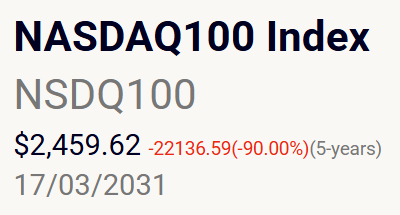
NASDAQ100 predicted fall of 90% by 2031
Internet of Value
Large Accounting Model
Period Entry replaces double-entry. Co-signed by buyer, seller, and both banks. The ledger and the economy become the same object.
Internet of Values
MM: Meaning Model
Five parallel brains. 11 channels. Two numbers per connection. 79 grammar patterns. 1,036 behaviour structures. The missing number from 67 years of AI. The full technical architecture.
PCF · Prediction Error Comparator Framework
Channel Test
Six channels. Two directions. Two intensities. Assign emotional words to their channel — Resource, Status, Belonging, Values, Curiosity, Fear, or Mood. Get 5 in a row to complete the test.
Open Publication · Living Document · iov4.com
Age of Understanding
Towards an Age of Understanding
Spencer Nash  ·  March 2026  ·  PCF · Large Accounting Model · MM · iov4
Download this book as a PDF
Contents
  1. THE QUEST
  2. PART ONE — THE LOST SIGNAL
    1. Introduction: The Room
    2. Psychosis 1: The Saxophone (1987)
    3. Psychosis 2: The Balance Theory (1999)
    4. Psychosis 3: The Messiah of Prague (2000)
    5. Psychosis 4: The Return (2000)
    6. Psychosis 5: The Antichrist (2008)
    7. Psychosis 6: The Philosopher’s Stone (2014)
    8. Psychosis 7: Saving the Devil’s Soul (2017)
    9. Madness Explained
  3. PART TWO — THE SIGNAL
    1. What is intelligence?
    2. Prediction Error Comparator Framework
    3. An Emotional Computation
    4. The Three Things Intelligence Needs
    5. Why Six Channels
    6. The Equation
    7. Drive and Decision
    8. Learning
    9. Fairness
    10. PCF calibration
  4. PART THREE — PROOF OF THE SIGNAL
    1. The Language Universe — a proof
    2. The Four Kinds of Anger
    3. Neuroscience — The Brain Confirms PCF
    4. Personality Fits
    5. Proof in existing theories
    6. Paul Ekman — The Man Who Read Faces
    7. Lisa Feldman Barrett — The Constructionist
    8. Karl Friston — The Prediction Error Theorist
    9. Daniel Kahneman — The Behavioural Economist
    10. Abraham Maslow — The Hierarchy Builder
    11. The Pattern
    12. Stress Testing the Axioms
  5. PART FOUR — ADAPTABLE APES
    1. Human Exceptionalism
    2. Faith in Evolution
  6. PART FIVE — SUPERSATURATION
    1. Machine Intellects and Prediction Entanglement
    2. What Silicon Valley Built — the AGI belief system
  7. PART SIX — THE INTERNET OF VALUE
    1. A Critique of Marx
    2. Why Marx Needed Synthesis Not Conquest
    3. Competition within cooperative structure
    4. Pricing signal — the collective mind
    5. Costing The Earth
    6. Human Rights & Property Rites — A Symbiosis
    7. Large Accounting Model
    8. Period Entry — simplifying finance
    9. Period Entry — Democratising Finance
    10. Anyone Can Trade With Anyone
    11. Cutting Corruption
    12. Defending the Planet
    13. Why The Central Banking Experiment Failed
    14. Why money as debt itself works and doesn’t
    15. Hayek, Keynes & why they are both right
    16. Mandated Saving
    17. Running hot
    18. Housing as a financial asset
    19. Universal Robot Ownership
    20. Why Universal Basic Income Does Not Work
    21. Robots And AI As An Oil Well
    22. Employee Wealth Funds
  8. PART SEVEN — INTERNET OF VALUES
    1. Meaning Models
    2. Socrates Was The Student
    3. The Self Organised Campus
  9. CONCLUSION — WHAT IS AN AGE OF UNDERSTANDING?
    1. Samaritan Circles
    2. The River Cruise
    3. We are the plan

The Quest

In a time before reason, when flint was a weapon, not just the chip inside your phone, that was our time, we were shaman.

Man is always restless, for him there is always more. He grew crops for store, invented number and then taxes and there was war. Man built armies, traded and invaded on foreign shore. Empires rose, fell, regrew and there were ever more. And it was after the rise and fall of one such an empire that a truly great shaman came to the fore. His name was Merlin. The people’s leaders had fallen. So Merlin conjured up an ingenious recruitment device. He bored a hole in a stone and poured in molten iron and rammed a handle into the molten ore. Merlin declared “whoever pulls the sword from the stone is the true king.”

First came the great, then the good. The great tugged and shoved, even dug into the stone but to no avail. The good gently squeezed the handle but none were to succeed.

One day a young man hung out by the stone. His name was Arthur. He grabbed playfully at the sword. Merlin’s magic came from knowledge of fire and stone. Merlin knew that iron in a porous rock would rust and expand. As Arthur pulled at the handle this process came to its conclusion. The rock split open, the sword was released.

I have created this book as a new recruitment device, a new stone with not one but two swords. The first sword is an “emotional framework” that breathes life into inanimate machines. The second sword is purely a machine, a new finance calculator that will create an economy that works with the planet and not against it.

What the world needs are new leaders. People who are tired of cowering, of biting their tongue. People who can breathe fire into the bellies of men and women. Men and women of energy and compassion, prepared at the start to stand alone.

Can you draw these swords from the wafer of stone inside your phone?


Part One — The Lost Signal

The ultimate understanding is between our model of the world and reality. After seven descents into madness I came through, I didn’t break down, I broke through. The breakdown started in 1987 during my freshers’ week. The last psychosis was in 2017. I don’t believe you can recover from a nervous breakdown because we change over time. You cannot go back only forward. A breakdown is an opportunity to move forward, ultimately to break through.

With each episode I learned more. And my ideas slowly condensed. My pursuit of a brain theory was a desperate attempt to gain sovereignty over a life that was being controlled by doctors. But then I learned to trust the doctors. The development of what I did not understand at first to be a parallel process to the brain theory, a new finance algorithm, happened because my mind works that way. I simplify. I believe that is for five reasons:

I spend a very long time contemplating problems in very focused ways — it is 28 years since I began to see the brain as a prediction engine optimising benefits through weighted balances which turned out to be prediction errors.

My brain is soaked in dopamine and serotonin and it makes me grandiose which in the long term is ambition.

I am not a good reader, I find reading very hard. It means I don’t fill my head with other people’s ideas which forces me to work from axioms. An axiom in philosophy is a foundational, self-evident proposition or first principle accepted as true without proof, serving as a starting point for deduction and reasoning.

I am not intelligent enough to create complex ideas. My IQ is around 135, enough to deal with complexities, not enough to resolve them complexly. I can only come up with simple reductions.

I have faith that this world can be made better.

I have two core inventions: 1) A prediction error comparator framework which led to a meaning model and 2) period entry, a way to create dynamic accounting adjustments which led to a large accounting model.

The proof of this book is not in theory, it’s in these inventions.

Introduction: The Room

My room at home, when I was eighteen, was small — three metres by three metres. But when I think back on it now, it was a vast expanse. The walls were covered with mirrors that reflected across time. These walls were my own making, an outer reflection of my inner mind. If prophecy is slavery, I was to become a slave to these walls that I created.

There was a single bed against one wall on which in felt tip pen I drew out one premonition. I copied the contents of Pink Floyd’s The Wall — a picture of Pink’s mother. I was destined at nineteen to suffer my first major breakdown.

Opposite the bed was a battered desk. Above it on the ceiling I had drawn biochemical pathways I was memorising. The Krebs cycle — the energy motor of life.

Right next to the desk was a record player. Above it, scratched in pencil on the light blue walls, I had drawn Dizzy Gillespie blowing his iconic bent trumpet. In the madness of my first freshers’ week, I would believe I was a great jazz improviser.

Opposite Dizzy was my worst premonition. I had discovered the works of L. Ron Hubbard in a second-hand shop. I found the books empty of real insight, but I was fascinated by the project. A complete nobody, without scientific background, was trying to discover the secrets of the mind. I cut off the covers and stuck them to my wall.

This wall would reflect my lifetime’s manic preoccupation: understanding how the brain works.

What follows is the story of seven descents into psychosis over thirty years, and how through them I finally learned to align with reality.

Psychosis 1: The Saxophone (1987)

My passion for biochemistry had paid off already. I had an “EEE” offer from Bristol to study biochemistry. But my biology teacher was concerned. I was becoming disruptive, somehow excitable. At parents’ evening she explained to my adopted parents that she thought I was unwell. They ignored these warnings, despite the fact that my birth mother was mentally ill and killed herself when I was four.

My adopted mother drove me to Baddock Hall for my first freshers’ week. In the car she told me the world was my oyster. She cried as we said goodbye.

In the seven days of that first freshers’ week, I did not sleep at all. I was too stimulated.

I had been learning the saxophone, so I brought it with me to Bristol. I auditioned for a band. I did not get in, but I played more and more. My playing seemed to improve magically. I thought I was a musical genius.

I went to only one lecture. The whole time I played my alto saxophone. I thought I was improvising jazz like John Coltrane. I would have played my heart out, but the more I played, the more creativity I had, the more energy. I wandered with my saxophone into the town centre, playing as I went along. I played in a park. In a music shop. In a church. I spoke to the church warden and told him the churches needed to break into smaller independent groupings.

As I walked back up the hill to Baddock Hall, I remember thinking: either God is moving me, or I am having a nervous breakdown. Even at this early stage, I had some insight.

In the end I was making such a racket that the police picked me up. The next day I played in the quad for hours in the pouring rain. The hall wardens asked to see me. I explained I wanted to travel around the world playing and bringing peace and happiness.

They called my parents.

When they arrived, they told me I kept repeating myself. They took me home and within days put me in a private mental hospital.

The consultant, Dr. Nevison-Andrews, did not waste time. We were drinking tea and the secretary came to take the cups. I said “no, don’t take mine, I haven’t finished.” I had in fact just finished. The doctor seized his moment: “You see, you are ill.”

I was stunned.

That night I had a panic attack. My birth mother had been mentally ill. I was terrified I might never get out.

After four weeks, I was discharged. Nevison-Andrews diagnosed me as bipolar. He said psychotic people recover and are fully well. Neurotics don’t get better — their twisted perspective can only change with intensive therapy. But he recommended I get to know myself better, as this can help cope with illness.

I began taking lithium.

What I Learned: Mania feels like genius. It isn’t. The certainty is the illness.

Psychosis 2: The Balance Theory (1999)

I had barely survived university. I had learned Czech, worked in Prague as an investment analyst, been headhunted by PwC and UBS. I married Petra, a Czech woman who had a melancholy that was strongly attractive to me. But the tectonic plates of my mind were shifting.

It was while on secondment to PwC’s Warsaw office that I found it — the theory.

I had been reading about change management and Herzberg’s motivation theory. All the psychology seemed merely descriptive. I wondered: what was the process behind these insights?

I envisioned a balance that weighs how much more and how much less emotion. It had to measure magnitude. My intuition saw that an ordinary balance wouldn’t create enough information.

Drive = Prediction Ability × Emotional Benefit

A balance that optimises how much more and how much less. Optimisation comes from weighing emotional benefit weighted for prediction reliability.

This seemed incredibly powerful. With it I could derive the entire Maslow pyramid:

Physiological needs — the balance optimises basic needs. Safety needs — flight, fight or freeze. Love and belonging — if you feel good, I feel good. Esteem needs — status feelings. Self-actualisation — control of expectations.

I was becoming hypomanic. I stayed up all night. I was psychotic to the point that when I phoned Petra at midnight to tell her my discoveries, I was surprised how quickly she answered. The thought came: she was in touch with aliens and knew I would call.

I said: “Are you talking to them?”

What I Learned: Creativity and psychosis share a border. The insight was real. The context wasn’t.

Psychosis 3: The Messiah of Prague (2000)

After GE Capital fired me, I got recruited for a Y2K project in Utrecht. I was working on the balance theory and it was making me high. I thought I was Socrates.

I went so manic that I spent my final night there with crack addicts in a shopping mall, singing to them and getting my stuff stolen. A crack addict kicked me hard in the testicles, trying to steal my wallet. I didn’t flinch. He kicked me again — zero reaction. He said: “What are you on?”

Another crack addict understood: “You are not like us. You are manic.”

Back in Prague, I descended fully.

I wrote down my theory and left copies in the local American café. People wrote on it: “Don’t read this.”

Two types of aliens appeared in my head: the machines and the angels. They were at war, arguing over the existence of God. The angels were biological and had kept their bodies as temples. The machines were just that. The earth was a resolution of their argument.

I became convinced I was a new Messiah — “Messiár” in Czech. The aliens offered me the job of master of the universe, which I promptly turned down. This is grandiosity — not taking the highest position, but turning it down was maximally grandiose.

I remember buying beer from a man in the street and pouring it over my head, saying to the aliens: “Feel how good the earth is.”

I stood outside a brothel and boomed: “Já jsem messiáš, já jsem messiáš, já jsem messiáš!” — I am a messiah, I am a messiah, I am a messiah.

I ended up in Bohnice, Prague’s mental hospital, after a brawl. Handcuffed on the floor, I sang to the crowd a song about looking on the bright side.

There were eight of us in the secure ward. Rather than recovering, I hallucinated more floridly. The markings on the lino floor turned to words. I stopped looking — that’s important. The television played a cartoon story of my life. My fellow patients kept trying to stop me watching.

On the secure ward, a young man walked up to me and said: “You are God.”

I replied: “If I am God, do me twenty press-ups.”

Every time he came to me, I said: “Give me twenty.”

He realised I was not God, and more importantly, that he was rubbish at identifying gods. It cracked his delusion. We both got out. His mother thanked me.

What I Learned: In the secure ward, I ran my hands over the corners of my box and they cut deeply. But I recovered and was no longer in the box. Most people are inside a box they’ve stopped seeing.

Psychosis 4: The Return (2000)

After Bohnice, Petra left me. I fell into depression.

I returned to England, broken. My parents showed no interest, no encouragement. If I had been speaking to my son, I would have said:

“Spencer, you came top in physics in year two, top in creative writing in year three. You cruised through school. You had a breakdown but bounced back, organising balls, winning travel awards. You learned one of the hardest languages in the world. You were headhunted by leading investment banks. You have twenty thousand pounds in the bank. The world is your oyster.”

Instead, the medics tried to get me on benefits.

The only job I could find was industrial espionage — pretending to be a stock analyst to steal information about drug companies. I cannot lie. I decided to end my life.

It was Sunday night. I took seventy milligrams of haloperidol and was preparing to put a bag over my head when I called Samaritans for the first time. Instead of the bag, I turned on the television and fell into deep sleep.

My father found me in the morning.

In hospital, my mother came to see me. My mood had shifted — I felt glad to be alive. She said: “How can you be so happy? Don’t you know what you’ve put us through?”

Empathy means you feel good when someone else feels good. This was not that.

What I Learned: The terrible truth I could not see — I was not loved by my parents. Unconditional love is the cure. I had not yet found it.

Psychosis 5: The Antichrist (2008)

I had it rebuilt. I married Tong, a Chinese nurse. We had a son, William. I qualified as an accountant. I was on medication that worked — olanzapine. It was as if a pharmaceutical company had found a way to pour cement into the cracks at the ocean bed of my mind. I was stabilised.

But the illness leaked into my job. I told the head of audit I wanted to free the tribes of Africa. I thought Africans could form a united terrorist army and invade Europe.

I was no longer thinking I was the Messiah. It was worse: I thought I might be the Antichrist.

I went to tell my local priest all my ideas for saving Africa. I had drunk three pints first — my first alcohol since Prague.

The priest came to the door: “I cannot talk to you now, I am with the choir.”

I exploded: “I am the Antichrist and I will destroy your church unless you obey the will of God!”

A younger priest walked me home. The next day, a letter came from my priest explaining what a terrible person I was. Three doctors tried to section me. I attended a day centre and went back to work.

When well, I dug into the manic thinking. What drove my illness was magical thinking — coincidences. I would change radio channels and each station seemed related to me. My company relocated to Spencer’s Wood when my name is Spencer Nash.

I learned to reject this magical thinking. I was no longer tricked by my mind in this way.

What I Learned: Coincidences mean nothing. The brain pattern-matches compulsively. Reality doesn’t care about your name.

Psychosis 6: The Philosopher’s Stone (2014)

I resigned from my job of eight years. My mortgage was paid off. I was free.

And I thought: free from my job, I could be free from the pills too.

Within two days I was high as a kite. I was thinking in poetry. I began theorising about Einsteinian physics. What if time fluctuated in waves? I felt sure I had discovered the philosopher’s stone.

I panicked. I phoned an ambulance saying I was ill. The sectioning team arrived at 4:30pm.

The first psychiatrist looked fed up. I bounded up and said: “I’m Harry Potter.”

He replied: “I am not surprised. I have seen your notes.”

No compassion. Only disgust.

I was sectioned. Police drove me to a Bristol mental hospital. I refused to go quietly. I took my clothes off and pissed on their floor. Within three days I was moved to Littlemore secure hospital in Oxford.

When I arrived, I announced: “I am a weapon of love.”

They laughed, but not cruelly.

On my release interrogation, I told the doctor: “I plan to bring the kingdom of heaven on earth and send a letter to Jesus to come.”

He said: “Are you manic?”

I nodded. That was the insight he wanted to see.

What I Learned: You cannot be free from the pills. The arrogance of thinking you’re cured is the illness returning.

Psychosis 7: Saving the Devil’s Soul (2017)

I went to China with my wife and son. I was manic on the plane there. Three weeks of disturbed sleep, and I was worse than ever.

On the Chinese equivalent of Spotify, I heard a song in Czech sung by Kate Bush. It seemed to tell the story of my life. I went on her website and found an image of a fish person in a loin cloth. It was clear to me: I was Kate’s messiah.

We had a stopover in Abu Dhabi. I made it no further.

On the flight back to the UK, I told the flight attendant I was the Messiah. Somehow I convinced myself he was a devil worshipper. Through him I could converse with the devil.

I called out: “You have tortured me all my life. What have you achieved? You have made me stronger. You have tortured people down the ages. What have you achieved? You have made us stronger.”

Then: “Devil, who do you work for?”

The devil said: “Do I go to hell now?”

I struck my final blow: “If you turn back to God, I will go to hell with you for one million years.”

The devil was surprised: “That is a long time.”

I said: “In the fourteen billion years of the universe, it is a blink of an eye.”

You see, the devil did not know that as I sit in hell holding his hand, my other hand would be held by God. It would take one million years for the devil to realise we were never in hell. We would be with God. And that is heaven. Heaven is to be with God, on earth, in hell, or anywhere.

I ended up in Abu Dhabi’s mental hospital. William was about to start secondary school. I cannot imagine how he felt with a father standing on chairs in the departure lounge, declaring he was master of the universe.

In the hospital, a young patient walked up to me in the smoking area. He said: “You are the one.”

I hugged him. “Who are you?”

“I am Mohammed.”

“You are not Mohammed.”

He went quiet. “I am not Mohammed.”

Within one day he was off the secure ward. And after four weeks, so was I. My father reported me to the terrorist police. They came to my house. Within an hour they told me: “You are not a terrorist.”

Madness Explained

Seven times. Thirty years. The same road, different weather cycle: wellness, mania, apathy.

Here is what I know.

Mania is not happiness. It is a sense of certainty. A certainty so complete that the gap between what you think and what is real simply closes. You are not wrong. You cannot be wrong. The feeling of being wrong is part of you standing outside yourself, watching. That judgement goes first.

Sleep is taken by it.

One night without sleep and judgement grows thin. Two nights and it is transparent. Three nights and it is gone. What remains is pure signal — fast, brilliant, connected to everything. Thoughts arrive already proven. The saxophone is genius. The theory is real. The stone split open and the sword is in your hand.

But the madness instead of making me tired — it feels like waking up. It is the deepest sleep.

The brain is a prediction machine. Normally it makes a prediction, checks it against what actually happens, and updates. The checking is quiet, constant, invisible. You do not notice it working. You only notice it when it stops.

When judgement stops, every prediction feels like fact. I phoned Petra at midnight and she answered quickly. Fact: she is talking to aliens. The American café. The church. The lino floor turning to words. Each one felt as solid as a table.

I was not imagining things. I was experiencing them. That is what makes it so hard.

The difference between sanity and madness is the certainty.

I have stood in a Prague street declaring myself the messiah. I have offered to go to hell for the devil. I have pissed on a hospital floor rather than go quietly. In each of these moments I was completely, irreversibly certain. Nothing outside me could reach inside and move the dial.

That is the illness. Not the content. The lock.

And here is the thing every person needs to understand about their own mind.

You do this too. Smaller. Quieter. The person you decided was against you. The story you told yourself about why you failed. The certainty that you know what someone else was thinking. The lock clicks and nothing moves the dial and you call it knowing your own mind.

I stayed well when I doubted the certainty and took medication to halt it. I learned to ask that question and mean it. Not as a performance of humility. As a genuine inquiry.

The Krebs cycle on my ceiling. I memorised it at eighteen. The energy motor of life. A cycle that takes in, transforms, releases, begins again.

I did not know the drawings on my wall were a prediction but I see it now. These were the manifestations of a mind developing into mania.

But the foundations are laid thicker now:

Olanzapine, quietiapine, choloroprosamine

And acceptance that I have a problem and trusting my doctor.

And seeing through the mania and its certainty, that it is an incomplete state of consciousness. I am not more creative when I am manic, I am just noisier.

And the joy of wellness when I am truly creative. That smooth pond on which the ideas come like ripples in the stillness.

And yes sleep is the strongest indicator of illness and greatest cure.


Part Two — The Signal

I have lost the signal but you can’t find something if you don’t lose it first. I had lost my mind but I would truly find it again. I found the signal as six channels: six prediction errors in a comparator framework. For me the lost and found process is relentless. I am well for a week and find a new idea, get manic for several days until I take my pills then think the ideas won’t work and I slump into a period of apathy where I rest. I become well again and the three week cycle starts over. But over time the signal has become clear, I don’t become psychotic and my ideas get tighter and tighter. My mind is like the line on a fishing wheel getting tighter and tighter as I land a good fish.

What is intelligence?

Intelligence is motivated prediction-error minimisation that discovers stable structures in the world. It emerges wherever capturing energy from an uncertain environment requires building and revising a model of that environment.

Memory, language, computation, and culture are in service of discovery. They are the instruments of intelligence, not intelligence itself. AI in its current form is not intelligent, but is brilliantly in the service of true intelligence.

“Intuition is a sacred gift and reason is its loyal servant. We have created a society that honours the servant and has forgotten the gift.”

— Albert Einstein

The gift is discovery. That is the unit of intelligence. Everything else is in its service.

The Problem with Existing Theories

No current existing framework achieves what a theory of intelligence must achieve: an explanation not merely of what intelligence does, but of why it exists at all, and a unification of its biological, artificial, and social instantiations under a single set of principles.

Existing frameworks each satisfy some requirements and ignore others. Bayesian brain theory handles substrate-independence and prior updating well but says little about motivation or sociality. Integrated Information Theory addresses the substrate question but says almost nothing about learning or action. Classical AI handled symbol manipulation but had no account of motivation or signal grounding. Reinforcement learning formalises reward-seeking but leaves the structure of the reward signal unspecified.

The common failure is treating motivation as a downstream module. Motivation is not derived from intelligence. Motivation is constitutive of it. The structure of what an agent cares about — the channel architecture of its motivational system — is the world model itself.

The Unified Theory Restated

Intelligence is motivated prediction-error minimisation that discovers stable structures in the world. It emerges wherever capturing energy from an uncertain environment requires building and revising a model of that environment.

Each term earns its place.

Energy capture via discovery. Prigogine showed that living systems maintain order by dissipating energy — they are stable structures that persist by processing energy from their environment. Intelligence is the mechanism by which those structures are found. Not randomly, not by exhaustive search, but by prediction error — the gap between what was expected and what arrived pointing directly toward a more stable configuration. Every genuine discovery is a more ordered prediction than the one it replaced.

Intentional. Passive physics minimises energy without intention — a ball rolls downhill, a crystal forms, a flame dies. Intelligence requires an active agent generating directed behaviour from channel prediction errors. The intention is not metaphorical. It is the channel architecture computing expected states and driving behaviour toward them.

Value-based. Externally optimised systems — thermostats, calculators, search engines — minimise error within a problem space defined entirely by their designers. They have no values.

Minimisation of prediction error. Each successfully minimised prediction error is a discovery — a more stable prior than the one it replaced. Learning is not the accumulation of facts. It is the progressive stabilisation of a world model against the pressure of reality.

Structured world model. Without a model prediction error minimisation has no orientation — it is noise reduction, not intelligence.

Prediction Error Comparator Framework

An Emotional Computation

Here is the claim.

Every emotional experience you have ever had — fear, loneliness, curiosity, outrage, love, boredom, pride, shame — is the output of a computation. A precise, formal, mathematical computation running continuously in your brain.

Not a metaphor. Not approximately. Precisely.

And once you see how the computation works, everything changes. How you understand yourself. How you understand other people. How you understand markets, relationships, politics, AI. The same computation running at different scales.

The Three Things Intelligence Needs

Remove any one of these and intelligence disappears.

A world model. A representation of how things are and how they work. A set of expectations about what will happen next. Without a model you cannot predict anything. Without predictions you cannot act intelligently.

A comparator. Something that takes the model’s prediction and compares it to what actually arrives. Measures the gap. Produces an error signal.

A way to update. Something that takes the error signal and uses it to improve the model. So next time the prediction is better.

That is it. That is the complete architecture of intelligence. Model. Compare. Update.

The comparator is the key mechanism. The gap between what you expected and what arrived — the prediction error — is the signal that drives everything else. Learning. Emotion. Behaviour. Decision. Memory. All downstream of that gap.

PE = Actual − Expected

Prediction error equals actual minus expected. The most important equation in this book. The whole of psychology, finance, accounting, and artificial intelligence follow from it.

Why Six Channels

The prediction error does not run in a single stream. It runs across six channels simultaneously.

Why six? Not because someone decided emotions come in six flavours. Because any social intelligent organism — any creature that has to maintain itself physically and live with others — faces exactly six irreducible regulatory problems. Six separate problems that cannot be collapsed into fewer without making systematic errors.

Resource — Do I have enough?

The most primitive channel. Every living thing from bacteria to human faces this problem. Physical survival. Food, water, warmth, shelter, money, health. This channel monitors sufficiency. Running low fires the Resource channel negative. Gaining fires it positive.

The brain system: opioid and reward circuits. The pleasure of eating. The relief of warmth. The anxiety of running out.

Fear — Is something dangerous happening?

Fear is different from Resource in a precise way. Hunger says: go toward food. Fear says: get away from the threat. Opposite behaviours. Completely opposite. You cannot run these on the same channel without getting it catastrophically wrong.

Fear is also different from the other five channels in a deeper way. Fear is a partial prediction error channel. It only fires for negative feelings. It is a threat alarm. It only computes expected minus actual for negative feelings. The intensity scales. It pattern-matches against stored threat signatures. It fires when the pattern matches.

The brain system: adrenaline. Heart rate up. Breathing fast. Senses sharp. The body preparing to fight or run.

The five prediction error channels regulate the Fear alarm. Belonging most directly. When you are with people who care about you the threat alarm is dampened. This is why you feel safer when you are not alone. The social bond is a threat modulator. Structural, not sentimental.

Belonging — Am I accepted and cared about?

Belonging monitors social connection. The presence or absence of bonds with other people. Distinct from Resource — you can be physically comfortable and utterly lonely. Distinct from Status — you can be accepted without being respected, respected without being connected.

The specific mechanism of Belonging is empathy. When the people you are bonded to feel good, you feel good. When they suffer, you suffer. The channel couples your prediction errors to theirs. That coupling is love. Not as a feeling added on top of cognition. As a computational fact.

The brain system: oxytocin. The bonding molecule. Present in mothers and newborns, in lovers, in close friends.

Status — Am I respected here?

Status monitors social position. Rank. Recognition. Respect. Distinct from Belonging — loneliness and shame are two different signals. You can belong without being respected. You can be respected by people you do not feel connected to.

Rising status fires the channel positively. Falling status fires it negatively. The signals are pride and humiliation. Not vanity. Information. Where you stand determines what you can access, who cooperates with you, what opportunities arrive.

The brain system: serotonin. Serotonin levels track social rank in almost every social species. The neuromodulator is the same across species because the problem is the same across species.

Values — Is this consistent with what I believe is right?

Values monitors moral integrity. Fairness. Honesty. The keeping of commitments. This channel fires on norm violations — not just violations against you but violations you witness between strangers. A wrong is a wrong whoever commits it.

This is what distinguishes Values from Belonging and Status. It is not about your relationships or your rank. It is about the world conforming to a standard. When it does not — moral outrage. When it does — integrity.

The brain system: prefrontal control networks. The most recently evolved part of the human brain. The part that overrides impulse. That makes long-term commitments and keeps them.

Curiosity — What is this and how does it work?

Curiosity monitors the unknown. The pull toward what is not yet understood. The discomfort of a question without an answer. The satisfaction of discovery.

Boredom is Curiosity at zero — nothing new, nothing to learn, no direction of change that offers improvement. Motivation collapses. Not laziness. The signal going flat.

The brain system: dopamine. Not the pleasure molecule as popularly described. The novelty and anticipation molecule. Dopamine fires at the unexpected. At the gap between what was predicted and what arrived. It is the curiosity signal in neurochemical form.

The Equation

EV = PE × W × R × e^(−λt) | EV ≥ θ

Six channels running simultaneously. Each with its own PE, W, R, λ, and θ. The emotional state at any moment is the vector of all six outputs simultaneously.

Where:

EV — Emotional Value. The motivational signal. The output of the computation.

PE — Prediction Error. Expected minus Actual on the relevant channel. Signed — positive if reality exceeded expectation, negative if it fell short. The size of the gap.

W — Weight. The personality parameter for this channel. How much this channel matters to this individual. Stable across adult life. Constitutes personality at the motivational level.

R — Reliability. How certain the prediction was. Modulates both the intensity of the signal and the speed of the learning update. High reliability violated — large signal, fast update. Low reliability violated — smaller signal, slower update.

R = [f/(1+f) / (σ+1)] × [(1+τ)/2]

Where:

f — frequency. How often has this prediction been confirmed in the ledger? A prediction confirmed a hundred times has higher reliability than one confirmed twice. The ledger counts.

σ — volatility. How variable have the outcomes been? A prediction that sometimes comes true and sometimes does not is less reliable than one that consistently comes true. The ledger measures variance.

τ — trend. Is reliability improving or deteriorating? A prediction that was wrong last year but right this year is on an improving trend. One that was right last year but wrong this year is deteriorating. The ledger tracks direction.

c — logical consistency. Does this prediction cohere with what else MM knows? A prediction that contradicts established patterns in the ledger has lower logical consistency. One that fits the existing structure has higher consistency.

A “rational” person is someone who learns that the process of reason is worthy of their trust. The trust in their reason. But their decision to do is emotional.

e^(−λt) — the decay function. The natural exponential decay of emotional signal over time. λ is the decay rate — how fast this channel’s signal fades. t is time elapsed since the prediction error occurred.

Not all channels decay at the same rate. Fear decays quickly when the threat is removed — the alarm switches off. Belonging decays slowly — a betrayal felt years later is still a betrayal. Values decays slowly — moral injuries do not fade easily. Curiosity decays quickly once resolved — the moment you understand, the pull disappears.

λ is channel-specific and individual-specific. Part of the personality parameter set.

| EV ≥ θ — the threshold condition. The emotional value must reach or exceed θ for the channel to fire and drive behaviour. Below threshold — the signal is present but does not initiate action. Above threshold — the drive activates.

θ varies by individual and by channel. A neurotic personality has a low Fear threshold — the alarm fires easily. A secure personality has a higher Fear threshold — the alarm requires a larger signal to activate. The threshold is the sensitivity setting.

The full statement in plain English:

The emotional signal you feel from any event is the prediction error — how surprised you were — multiplied by how much this channel matters to you personally — multiplied by how certain your prediction was — multiplied by an exponential decay that reduces the signal over time at a rate specific to this channel — and the whole thing only drives behaviour if it exceeds your personal threshold for this channel.

What the decay function adds:

Without decay the formula describes the initial signal. With decay it describes the signal across time.

The fresh betrayal — high emotional value, above threshold, drives behaviour immediately. The same betrayal recalled five years later — PE unchanged, W unchanged, R unchanged, but e^(−λt) has reduced the signal. Still present. Perhaps still above threshold for a low-threshold individual. Below threshold for a high-threshold individual who has processed and moved on.

Grief follows this curve. The loss produces a large negative prediction error on the Belonging channel. High W_B. High R — you were certain of the relationship. Large initial EV. Over time e^(−λt) reduces the signal. The grief does not disappear. The decay rate λ is slow for Belonging. But it reduces. Most days the signal is below threshold. Then something triggers it — a smell, a song, a moment — and the signal spikes above threshold again. That is grief years later. The decay function with a temporary reversal.

Drive and Decision

Drive = Expected Value × W × R × e^(−λt) | EV ≥ θ

You are not driven by what has happened. You are driven by what you expect to happen. The anticipated prediction error — positive or negative — is what moves you.

This explains procrastination precisely.

Procrastination is not laziness. It is a behaviour whose expected emotional value is below threshold in all channels. The task produces no expected Resource gain. No Status gain — nobody is watching. No Belonging gain — no relationship depends on it. No Values gain — it does not feel meaningful. No Curiosity pull — it is not interesting.

No channel fires. There is no drive. The behaviour never initiates.

The cure is not willpower. It is changing the expected emotional value of the behaviour. Connect it to someone you care about and Belonging fires. Make it public and Status fires. Frame it as the right thing to do and Values fires. One channel above threshold is enough. The behaviour starts.

Decision is choosing between expected channel configurations.

Not maximising a single utility. Navigating a vector. Which option produces the channel configuration that best matches who I am — my W weights?

Current AIs do not process prediction errors the way a person does. For this reason they lack autonomy.

Learning

Expected₂ = Expected₁ + (Prediction Error × Reliability × Plasticity)

Every prediction error updates the model. The next expectation is the previous expectation adjusted by the error, weighted by how reliable the signal was and how plastic the brain is.

High reliability — significant update. The signal was consistent, stable, clear. Trust it.

Low reliability — small update. The signal was noisy, volatile, unclear. Update partially.

Plasticity is how open the system is to updating at all. Young brains are highly plastic — priors update quickly. Older brains are less plastic — the same prediction error produces a smaller update. This is why habits become harder to change with age.

The learning rule is structurally identical to the Kalman filter — the optimal estimation algorithm used in engineering from GPS navigation to spacecraft guidance systems. Your brain is running something close to the mathematically optimal learning algorithm. Not because evolution knew about Kalman. Because optimal estimation under uncertainty converges on the same solution regardless of substrate.

Fairness

FPE = (A_s − A_o) − (E_s − E_o)

Where:

FPE — Fairness Prediction Error. The V-channel prediction error. Positive means you received more than the relationship implied. Negative means you received less. Zero means the relationship is delivering what was agreed.

A_s — Actual outcome for self. What you actually received.

A_o — Actual outcome for other. What the other party actually received.

E_s — Expected outcome for self. What the relationship implied you would receive.

E_o — Expected outcome for other. What the relationship implied the other party would receive.

Expanded:

FPE = (A_s − A_o) − (E_s − E_o) Rearranges to: FPE = (A_s − E_s) − (A_o − E_o) Which is: FPE = PE_self − PE_other

The fairness balance is the difference between your prediction error and the other party’s prediction error.

When both parties receive exactly what the relationship implied — FPE = 0. Fair.

When you receive less than implied and they receive more — FPE is negative. You are being exploited.

When you receive more than implied and they receive less — FPE is positive. You are exploiting them. The V-channel fires in the other direction — guilt rather than outrage.

What this formula does that equality-based fairness cannot:

A junior surgeon earns far less than the consultant. The raw outcome gap is large. But:

E_s (junior’s expected outcome) is already low — the hierarchy was agreed entering the relationship. E_o (consultant’s expected outcome) is high — same agreement. So (E_s − E_o) is large and negative. (A_s − A_o) is also large and negative. The two terms cancel. FPE ≈ 0. Fair. Not because outcomes are equal. Because outcomes match what the relationship implied.

The moment the consultant starts claiming the junior’s work as their own: A_o rises beyond E_o. The consultant receives more than implied. A_s falls below E_s. The junior receives less than implied. FPE turns sharply negative. The V-channel fires. Outrage. Not because of inequality. Because of deviation from the agreement.

FPE = PE_s − PE_o | |FPE| ≥ θ_V

Fairness is the difference between prediction errors. When that difference exceeds the threshold — the V-channel fires. You feel it as injustice. It demands correction.

Standard economics says fairness is about equality. If you and I do the same work we should get the same pay. Inequality produces resentment.

This prediction fails constantly. A junior surgeon earning a fraction of a senior consultant’s salary does not feel exploited. A new employee earning less than a twenty-year veteran accepts the difference.

Why? Because fairness is not measured against equality. It is measured against what the relationship implied. Against the expected difference both parties entered the arrangement carrying.

The fairness balance fires not when outcomes are unequal. When outcomes deviate from what was expected given the agreement.

The worker who was promised a pay rise and did not receive it feels it acutely — even if their pay is still reasonable in absolute terms. The promise created an expected value. The breach is a large prediction error. The Values channel fires.

Morality is a prediction error system for social contracts. It monitors the gap between how people actually behave and how the cooperative arrangements they have entered require them to behave. It feels objective — like a measurement rather than an opinion — because it is reporting a measurement.

What This Changes

Once you see emotion as computation you cannot unsee it.

Fear is the threat alarm firing on a pattern match. Loneliness is Belonging channel running negative. Curiosity is the system detecting an unresolved gap in the model. Moral outrage is the Values channel registering a norm violation. Pride is Status channel positive. Shame is Status channel negative. Grief is Belonging channel trying to update to a loss that the model has not yet incorporated.

None of these are irrational. All of them are information. The quality of the information depends on whether the model is well calibrated, whether the reliability estimates are accurate, whether the channel weights reflect what actually matters for the person’s life.

Therapy, in this frame, is recalibrating the model. Not suppressing signals. Updating the expected values so they better match the world as it actually is. The signals are not the problem. The model is.

And the model can be updated.

That is what the computation tells us. You are not fixed. The weights can change. The expected values can change. The plasticity can change. The computation keeps running. The question is whether it is running on an accurate model.

PCF calibration

PCF — the Prediction Comparator Framework — says that everything we feel is a comparison. What we expected versus what we got. The gap between those two things is the prediction error, and the prediction error is the emotion. That’s all emotion is. A signal telling you the size and direction of the gap.

There are five channels that carry these signals: Resources, Status, Belonging, Values and Curiosity. Each channel runs in two directions — positive and negative — giving you ten directional channels. Then there is a sixth channel, Threat, which only runs one way: alarm present or alarm absent. That makes eleven channels in total.

Every emotion you have ever felt lives somewhere on one of those eleven channels at some intensity between one and ten.

The beautiful thing is that the English language already calibrated this for us. Synonyms are not just “words that mean the same thing” — they are words that sit at different intensity levels on the same channel. Take the Threat channel. Uneasy sits at about intensity one. Nervous at two. Worried at three. Frightened at four or five. Terrified at seven. Petrified at eight. The language already sorted them into a scale. We just never noticed it was a scale with a single axis.

Idioms do the same job. “Scared stiff” is the Threat channel at about intensity six. “Scared to death” is intensity nine. “Over the moon” is Belonging-positive at intensity nine. “Kicked the bucket” is Resources-negative at intensity ten — you lost everything, permanently. There are over 25,000 idiomatic expressions in English and almost every one of them maps cleanly to a single channel at a specific intensity. They are not a separate category of language. They are just multi-word synonyms sitting on the same scales as single words.

This is what calibration means in PCF. You take a channel — say Belonging-negative — and you lay out the synonyms and idioms in order of intensity. Isolated at one. Lonely at three. Excluded at five. Abandoned at seven. Cast out, dead to them, at nine or ten. Each word is a calibration point. Each idiom is another. Together they give you a graded emotional ruler for that channel, built not from theory but from the language humans already evolved to describe exactly these states. The words are the data. The channel is the axis. The intensity is the position. Calibration is just noticing that the synonyms were always a scale.


Part Three — Proof of the Signal

The proof of this book is in its inventions but there is other more direct evidence.

The Language Universe — a proof

A theory needs a proof.

A theory says: I believe the world works this way. A proof says: here is the measurement that confirms it, and here is why no other explanation fits the data.

PCF began as a theory. Six channels of prediction error. The complete set of survival-relevant motivational dimensions. Derived from first principles. Argued from biology, from neuroscience, from evolutionary logic.

That is a theory. Compelling. But a theory.

What follows is the proof.

The Claim

PCF makes a precise, falsifiable claim about language.

If the six channels are the complete set of human motivational dimensions, then every word in any language that carries motivational or emotional meaning must map to one of those six channels — and only one.

Not most words. Every word.

Not approximately one channel. Exactly one.

This is a strong claim. Most theories in psychology are not this precise. They describe tendencies, gradients, approximate categories. PCF says: six channels, complete, no exceptions.

A claim this strong can be falsified. Find one genuine emotional word that requires a seventh channel and PCF is wrong. Find one genuine emotional word that irreducibly fires two channels simultaneously and PCF is incomplete. Either result would require the theory to be revised or abandoned.

That is what makes this a proof rather than an argument. It can be tested. It was tested. Here is what happened.

The Test

In March 2026 a vocabulary of 10,179 words was assembled (Headwords of the First 10,000 Words).

Each word was examined. Three questions were asked:

Does this word carry motivational or emotional content? If not — function word, technical term, neutral object — it is excluded from the channel test. Tables do not have channels. Neither do pronouns.

If it does carry motivational content — which channel does it fire? Assign it.

Does it require more than one channel? If yes — record it as a two-channel candidate for examination.

The result after first pass: 51 words appeared to fire two channels simultaneously. Everything else collapsed cleanly to single channels.

51 apparent exceptions. In 10,179 words. 0.5%.

The Examination of the 51

Each of the 51 was examined individually.

The question for each one: is this genuinely a two-channel word, or is it something else that looks like two channels but dissolves under careful examination?

Category 1 — Not emotional words at all.

The first group of apparent exceptions were not emotional words. They were relational nouns, institutional objects, economic states, and actions that produce emotional outcomes — none of which are emotional words under the correct definition.

An emotional word directly names an internal channel state. Frightened names a state. Enemy names a relationship. Rescue names an action. Insolvency names an economic condition. None of these are emotional words. They produce or describe contexts in which emotions arise. They are not themselves emotions.

Removed from the two-channel list: enemy, stranger, rescue, protect, escape, insolvency, insolvent, recession, redundancy, audit, contract, board, regulator, and others.

When you apply the correct definition — emotional words name internal states directly — this category dissolves entirely.

Category 2 — Misunderstood single-channel words.

The second group were genuine emotional words that had been incorrectly assigned two channels because of subtle misunderstandings about which channel they belong to.

Ashamed — appeared to fire both Status and Values. On examination: ashamed is Values. It is an internal moral judgement. I violated my own standard. Embarrassed is Status — my rank fell publicly. They feel similar. They are different channels. Ashamed is Values. Single channel.

Loyal — appeared to fire both Belonging and Values. On examination: loyalty is the behaviour of someone who accepts and upholds a hierarchy. That is Status. A soldier is loyal to their commander — Status channel. A friend loves you — Belonging channel. Loyalty is not love. Single channel.

Trust — appeared to fire both Belonging and Values. On examination: trust is the mechanism of bond formation. How you get into Belonging. The prediction that someone will not violate your vulnerability. That is Belonging. Truthfulness is Values. Two different words. Two different channels. Trust is Belonging. Single channel.

Desperate — appeared to fire Fear and Resource simultaneously. On examination: desperate is an intensity amplifier not a channel. Desperately poor is Resource-negative at maximum intensity. Desperately lonely is Belonging-negative at maximum intensity. Desperate takes its channel from context. Not a channel. Single channel per context.

Home — appeared to fire Belonging and Resource. On examination: home is a place. A physical location. Resource channel as shelter. The emotion lives in the idiom — feels like home is Belonging. The word alone is a place. Single channel.

Each misunderstood word, examined carefully, resolved to a single channel.

Category 3 — Perspective-split words.

The third group were words that appeared two-channel because they describe interactions between two people rather than internal states of one person. Different channels fire for the subject and the object.

Fierce — the fierce person fires Status positive — dominance asserted. The person facing fierceness fires Fear negative — threat received. Two channels. But not two channels in one person simultaneously. Two single-channel events in two different participants. The word describes an interaction. Each participant has a single channel.

Comfort as a verb — the person offering comfort fires Belonging positive. The Fear in the person receiving comfort is reduced as a consequence of Belonging — because Belonging regulates Fear, as specified in the architecture. The Fear reduction is not a second channel in the word. It is the structural consequence of Belonging doing what Belonging does. Single channel: Belonging.

Category 4 — Structural PCF intersections.

After removing not-emotional words, misunderstood single-channel words, and perspective-split words — the remaining candidates were examined for whether they sit at predicted structural intersections of the PCF architecture.

PCF specifies coupling rules. Certain channels interact structurally — not because two things happen to coincide but because the logic of the situation requires both. Rescue involves simultaneously restoring a bond and removing a threat — B and F together. Betray involves destroying a bond and violating a moral standard — B and V together. These intersections are predicted by the theory.

But even here — the examination showed that in most cases one channel is primary and the other fires as a structural consequence. Betray is Belonging — the bond destroyed. Values fires universally on any moral violation, as a consequence, not as part of the word’s primary meaning. Single primary channel.

The Result

After examining all 51 apparent exceptions:

Zero genuine two-channel words.

Every apparent exception dissolved under examination into one of four categories — not an emotional word, a misunderstood single-channel word, a perspective-split interaction word, or a structural consequence misread as a second channel.

Not 0.5% remaining. Zero.

The emotional vocabulary of English collapses entirely to single PCF channels.

Why This Is a Proof

The claim was: if PCF is correct, every emotional word maps to exactly one channel.

The test: 10,179 words. 51 apparent exceptions.

The examination: every exception dissolved under the correct application of the definition and the architecture.

The result: zero exceptions.

This is the logical structure of a proof:

Premise 1 — PCF specifies six channels as the complete set. Premise 2 — If the six channels are complete, no emotional word requires a seventh, and no emotional word genuinely fires two simultaneously. Test — Examine every emotional word in a natural language corpus. Result — Zero words require a seventh channel. Zero words genuinely fire two simultaneously. Conclusion — The test is consistent with PCF. The six channels are sufficient. The claim holds.

A proof in empirical science is not the same as a proof in mathematics. In mathematics a proof is absolute — no counterexample is possible by construction. In empirical science a proof means: the prediction was precise, the test was rigorous, every exception was examined, none survived, the theory has not been falsified.

PCF has not been falsified. Across 10,179 words, in a natural language corpus, with every apparent exception examined individually and carefully, zero counterexamples survived.

That is the proof.

What Would Falsify It

The proof remains open to challenge. A theory that cannot be challenged is not a scientific theory.

PCF would be falsified by:

A genuine seventh channel. Find a class of human emotional experience — stable, universal, not reducible to the six — that requires a new channel to describe. A word that cannot be assigned to R, S, B, V, C, or F even after careful examination of its precise meaning. If such a word exists and survives examination, PCF is incomplete.

A genuine two-channel word. Find an emotional word — not an action, not a relational noun, not a perspective-split interaction word — that genuinely fires two channels simultaneously in the same agent, where neither channel is the structural consequence of the other. If such a word exists, PCF requires a coupling mechanism not currently in the architecture.

Cross-linguistic failure. Test the vocabulary of a language with a fundamentally different structure — Mandarin, Arabic, Swahili, a language from a culture with a very different social organisation. Find emotional words that do not map to the six channels. If the channels are biological and universal, this should not happen. If it does, the universality claim is wrong.

To date — none of these challenges have been met. The channels are complete. The vocabulary collapses. The proof stands.

The Consequence

The consequence of the proof is larger than it might appear.

For psychology: emotion is not a fuzzy, culturally variable, subjectively defined experience that resists formal analysis. It is a prediction error comparison running on six channels whose vocabulary can be mapped with complete precision. The six channels are not a convenience for researchers. They are the joints at which emotional experience naturally articulates.

For language: every word that carries motivational meaning is a coordinate in a six-dimensional space. Two words at the same coordinate are synonyms. Two words at mirror coordinates are antonyms. An idiom is a multi-word expression that maps to a single coordinate. Language is a map of PCF space. The map is 200,000 words. The space is six dimensions and 1,000 positions.

For AI: a language model that processes language through PCF channels is processing meaning not surface. The 200:1 compression from 200,000 words to 1,000 PCF tokens is lossless with respect to motivational content. The channel structure is recoverable from any natural language corpus because any natural language corpus was generated by beings running PCF. The structure is in the language. The proof shows you how to find it.

For the book: the rest of Age of Understanding follows from this proof. Every application — MM, the Internet of Value, the Social Immune System, Self Organised Learning — is a consequence of the six channels being real, complete, and computable. The proof is the foundation. Everything else is built on it.

All linguistic meanings can be represented as configurations of a finite set of prediction error comparator channels, where each word corresponds to a point in this low-dimensional space.

The Four Kinds of Anger

Everybody knows what anger feels like.

But anger is not one thing. It is four completely different experiences that happen to share a name. Different causes. Different feelings. Different expressions. Different things that resolve them.

Treating them as one thing is why people so often make anger worse when they try to help. They apply the wrong response to the wrong kind of anger. It is like treating every cough as a cold. Sometimes it is a cold. Sometimes it is an allergy. Sometimes it is something much more serious. The treatment that helps one makes another worse.

Here are the four.

1. Status Anger

What it is: Your position was challenged. Your authority was disrespected. Your rank was questioned in front of others.

What it feels like: Cold. Controlled. A hardening. Not explosive — contained. The feeling of someone who has been crossed and intends to make clear that this is not acceptable.

Who has it: The boss whose decision was publicly contradicted. The parent whose authority was defied. The person who was corrected in front of their peers. The leader whose judgement was questioned.

What drives it: The Status channel. The prediction error between the rank you expected to hold and the rank you just received.

What resolves it: The hierarchy reasserted. Position re-established. The challenger backs down or is put back in their place. The anger subsides when the status prediction error closes.

What makes it worse: Challenging it further. Meeting Status anger with more challenge produces escalation. The Status channel is now even further from its expected value.

The voice of Status anger: Cold. Precise. “I think you will find that is not how we do things here.” Not shouting. Icily clear.

2. Belonging Anger — Hate

What it is: The bond was destroyed. Someone you loved or trusted betrayed the relationship fundamentally. The connection that mattered most was violated.

What it feels like: Cold. Permanent. Not hot like Status anger. Frozen. The specific feeling of someone whose love has turned. Heavy. Implacable. No heat because the energy of the relationship is gone.

Who has it: The person whose closest friend betrayed them. The partner whose trust was fundamentally violated. The child whose parent abandoned them. The person whose deepest bond was destroyed without resolution.

What drives it: The Belonging channel — the love-hate channel. You cannot hate a stranger. You hate someone you loved. The stronger the prior connection the deeper the hate when it turns. Hate is Belonging with the direction reversed and no path back.

What resolves it: Almost never completely. This is the anger that becomes structural. The word for Belonging anger that has given up on resolution is bitterness — the permanent residue of what was and cannot be recovered. Forgiveness, when it happens, is not forgetting. It is choosing to stop letting the inverted Belonging channel drive behaviour. It takes years. Sometimes decades. Sometimes it never happens.

What makes it worse: Telling someone to just get over it. Minimising the depth of what was lost. Belonging anger is not about the specific act of betrayal. It is about the destruction of something that was central to that person’s world. Treating it as a minor grievance is an additional violation.

The voice of Belonging anger: Quiet. Final. “I have nothing to say to you.” Not shouting. The withdrawal of connection as the expression of its destruction.

3. Values Anger — Moral Outrage

What it is: Something is wrong. Genuinely, objectively wrong. A rule was violated that should not have been violated. Someone cheated, lied, abused power, treated people as less than human. The fairness computation fired and the deviation is enormous.

What it feels like: Hot. Righteous. The specific heat of certainty — not just angry but correct. The feeling that this cannot stand and someone needs to do something about it. Sometimes accompanied by moral disgust — the physical recoil at wrongdoing so severe the body responds as if contaminated.

Who has it: Everyone who has ever seen an injustice done to a stranger and felt the need to act. Everyone who has been lied to and felt not just hurt but violated. Everyone who has watched power abused and felt the specific outrage of someone who knows it is wrong regardless of whether they are personally affected.

What drives it: The Values channel. Critically — Values fires between strangers. You do not need to know the victim. You do not need to be personally affected. Wrong is wrong whoever it happens to. This is what distinguishes Values anger from Belonging anger — you can feel moral outrage about an injustice done to someone you have never met.

What resolves it: Correction. Accountability. Justice served. The wrong acknowledged and addressed. The person who acted wrongly facing consequence. When the fairness balance is restored the Values anger resolves. If it is never restored the anger does not disappear — it accumulates as sustained moral injury.

What makes it worse: Denying that anything was wrong. Defending the wrongdoing. Telling someone their outrage is disproportionate when the injustice was real. The Values channel is not producing an opinion. It is reporting a measurement. Denying the measurement intensifies the signal.

The voice of Values anger: Passionate. Principled. Loud when it needs to be. “This is not acceptable. This is wrong. Someone has to say so.”

4. Fear Anger — Fight

What it is: The threat is present. Escape is impossible or has been chosen against. The organism turns toward the threat and attacks.

What it feels like: Explosive. Wild. Uncontrolled. Not chosen — triggered. The cornered animal. The person who has been pushed past the point of retreat and whose nervous system has switched from flight to fight. Raw. Physical. Urgent.

Who has it: Anyone who has been backed into a corner — literally or figuratively. The person who has nowhere left to go and turns on whatever is threatening them. The employee who has been humiliated once too many times and finally erupts. The person whose Fear channel has been pushed above threshold with no escape available.

What drives it: The Fear channel — but expressed as aggression rather than flight. When escape is impossible or when the threat is judged to be addressable by attack rather than avoidance, the Fight response activates. This is not dominance aggression — it is not cold and controlled like Status anger. It is desperate attack from fear.

What resolves it: The threat removed. Safety restored. Fear anger is fear expressed as attack and dissolves when the fear dissolves. Once the person is no longer cornered, once the threat is gone, the anger goes with it. This is why Fear anger often produces regret afterward — the person acted from an alarm state, not from a considered position.

What makes it worse: Cornering further. Advancing on someone in Fear anger escalates the alarm and escalates the response. The correct move is to remove the threat or create space for escape. Give the cornered animal a way out and it will usually take it.

The voice of Fear anger: Loud. Physical. Unpredictable. Not precise like Status anger. Not quiet like Belonging anger. Not principled like Values anger. Wild. The sound of an alarm responding to a threat.

Why This Matters

You are in a conflict with someone. They are angry. The wrong response makes everything worse.

They are in Status anger. You challenge them further. You have just increased the prediction error that was driving the anger. Worse.

They are in Belonging anger. You tell them to get over it. You have just dismissed the depth of what was lost. Worse.

They are in Values anger. You tell them they are overreacting. You have denied the measurement the V-channel was reporting. Worse.

They are in Fear anger. You advance toward them. You have cornered the cornered animal. Much worse.

The correct response to each:

Status anger — acknowledge the position. Give the channel what it is missing. Restore the respect. The anger resolves.

Belonging anger — acknowledge the depth of the loss. Do not minimise. Do not rush. This anger has a slow decay rate. Time and genuine acknowledgement are the only things that help.

Values anger — acknowledge that something was wrong. Agree that it should not have happened. Commit to correction. The V-channel needs the fairness balance to move toward zero.

Fear anger — remove the threat or create space. Stop advancing. Give a way out. Once the Fear channel drops below threshold the anger dissolves with it.

Same word. Four completely different computations. Four completely different responses.

Get it wrong and you make it worse. Get it right and you can resolve in minutes what might otherwise last years.

Neuroscience — The Brain Confirms PCF

PCF was derived from first principles. Six channels. Derived from evolutionary logic — what does any social intelligent organism need to track to survive and reproduce?

The derivation came before neuroscience. The channels were specified theoretically. Then the question was asked: does the brain confirm them?

It does. Precisely. Each channel maps to a specific neurotransmitter system and a specific set of brain areas. Not approximately. The mapping is exact enough that the neuroscience reads like an independent proof of PCF — researchers who never heard of PCF spent decades mapping the same six systems that PCF derived from first principles.

That is not a coincidence. It is confirmation.

The Six Mappings

Resource (R) — Opioids and the Reward System

Neurotransmitter: Endogenous opioids (endorphins) and dopamine in the reward circuit.

Brain areas: Nucleus accumbens (the reward centre), ventral tegmental area, hypothalamus (which monitors hunger, thirst, temperature — the basic resource signals).

What the neuroscience shows:

The reward system fires when you obtain resource — food, water, warmth, money, sex. Opioids produce the pleasure of resource acquisition. The hypothalamus tracks the body’s resource state continuously — hunger, thirst, temperature, energy — and generates drive signals that push the organism toward resource-seeking behaviour when the balance drops below threshold.

The nucleus accumbens — the reward centre — responds to resource prediction errors specifically. Not to the resource itself but to the surprise. Getting what you expected produces a modest response. Getting more than you expected produces a strong positive prediction error response. Getting less than you expected produces a negative one.

This is PCF. The channel fires on the gap between expected and actual resource state. The brain has been doing the computation PCF formalised.

The pathology: Addiction is the Resource channel hijacked. Addictive substances produce artificially large positive prediction errors in the reward system. The brain updates its expected value upward. The threshold rises. More is needed to produce the same signal. The channel is miscalibrated. The person is trapped in a loop of escalating resource prediction error with no genuine resource.

Status (S) — Serotonin and the Social Hierarchy System

Neurotransmitter: Serotonin.

Brain areas: Raphe nuclei (where serotonin is produced), prefrontal cortex (social cognition), amygdala (social threat detection).

What the neuroscience shows:

Serotonin is the neurotransmitter of social position. Not happiness as it is sometimes described — position. High serotonin correlates with high social rank, calm confidence, and resistance to social threat. Low serotonin correlates with anxiety about status, hypervigilance to disrespect, and sensitivity to social challenge.

Research on social hierarchies in primates shows this directly. A dominant male has high serotonin. Remove him from his dominant position and his serotonin drops. Restore his dominance and it rises. The serotonin is tracking the Status channel.

SSRIs — antidepressants that increase serotonin availability — reduce social anxiety and increase confidence in social situations. This is not a coincidence. They are elevating the baseline signal on the Status channel. The person feels less threatened by social interaction, less sensitive to perceived disrespect.

The pathology: Social anxiety is a miscalibrated Status channel — the threat threshold is too low, the alarm fires on social situations that do not constitute genuine status threats. Depression has a serotonin component — the Status channel is chronically running negative, the social position feels perpetually under threat or insufficient. The person feels inadequate not in relation to specific interactions but as a baseline state.

Belonging (B) — Oxytocin and the Bonding System

Neurotransmitter: Oxytocin, with opioids contributing to social reward.

Brain areas: Hypothalamus (oxytocin production), amygdala (attachment and emotional memory), anterior cingulate cortex (social pain — same area as physical pain), nucleus accumbens (social reward).

What the neuroscience shows:

Oxytocin is the bonding chemical. It fires during physical contact — hugging, touch, sustained proximity. It fires during eye contact between people who trust each other. It fires during breastfeeding. It fires when a bond is formed or deepened.

Oxytocin does not fire generally toward all people. It fires specifically in response to people to whom you are already bonded or are in the process of bonding with. It is the channel signal of the Belonging channel — the neurotransmitter that registers connection with specific others.

The anterior cingulate cortex finding is one of the most important results in social neuroscience. Social exclusion — being left out, rejected, ignored — activates the anterior cingulate cortex. This is the same brain area that processes physical pain. The same area. Not similar areas. The same circuits.

Social pain is physical pain processed in the same brain system. The Belonging channel is not a metaphor. It is a survival system as basic as the pain system. Because for a social animal, exclusion was death.

The pathology: Loneliness is a chronic negative prediction error on the Belonging channel. The brain responds to sustained loneliness the way it responds to sustained physical pain — with systemic stress responses, elevated cortisol, disrupted sleep, suppressed immune function. Loneliness kills at the same statistical rate as smoking fifteen cigarettes a day. Not because people are sad. Because the Belonging channel running chronically negative is a survival threat signal and the body responds to it as such.

Values (V) — Prefrontal Cortex and Moral Cognition Networks

Neurotransmitter: No single neurotransmitter. The Values channel operates through neural circuits rather than a single chemical signal — primarily the prefrontal cortex networks that implement norm computation and impulse override.

Brain areas: Ventromedial prefrontal cortex (moral judgement), anterior insula (moral disgust), anterior cingulate cortex (conflict detection), orbitofrontal cortex (value computation relative to social norms).

What the neuroscience shows:

The prefrontal cortex is the most recently evolved part of the human brain. It is the part that overrides immediate impulse in service of longer-term principle. When you do not steal even though you could — prefrontal cortex overriding the Resource channel. When you speak up about an injustice even though it costs you — prefrontal cortex activating the Values channel against the self-interest of the Status and Resource channels.

Moral disgust — the specific physical recoil at severe wrongdoing — activates the anterior insula. The same brain area that processes disgust at rotten food. The moral emotion borrows the physical disgust circuitry. The contamination metaphor is not accidental — moral violations feel like contamination because they activate contamination-detection circuitry.

Crucially — the Values channel fires across group boundaries. Observing an injustice done to a stranger activates the same moral cognition networks as observing an injustice done to a friend. This is the neuroscience confirming what PCF specifies — V is not a social channel. It does not require a relationship. Wrong is wrong whoever it happens to.

The pathology: Moral injury is sustained negative prediction error on the Values channel — being required to act against your values over extended periods, witnessing repeated injustice without recourse. It produces similar profiles to PTSD. Hypervigilance to moral violations. Difficulty with trust. Persistent sense of contamination. The V-channel running chronically negative without resolution.

Psychopathy — the absence of V-channel response — corresponds neurologically to reduced activity in the ventromedial prefrontal cortex and anterior insula. The person is not feeling the moral prediction errors that others feel. The channel is absent or severely dampened.

Curiosity (C) — Dopamine and the SEEKING System

Neurotransmitter: Dopamine.

Brain areas: Ventral tegmental area (dopamine production), nucleus accumbens (reward processing), prefrontal cortex (planning and exploration), hippocampus (novelty detection).

What the neuroscience shows:

Dopamine is almost universally described as the pleasure chemical. This is wrong. It is the seeking chemical. The anticipation chemical. The signal that says: there is something here worth investigating.

Dopamine fires on novelty. On the approach to a reward, not the reward itself. On the prediction of something interesting, not its arrival. When you get what you expected the dopamine response is modest. When you get something unexpected and interesting the dopamine response is large.

The neuroscientist Jaak Panksepp called the dopamine system the SEEKING system — in capitals, to emphasise that it is a distinct primary emotional system. The drive to explore, to investigate, to understand, to resolve the unknown. It is the engine of curiosity, of learning, of creativity.

Boredom is the dopamine SEEKING system with nothing to engage. Not sadness. Not fear. The specific state of a seeking system that has found no target. The channel with no prediction error to resolve.

Flow states — the experience of complete absorption in a challenging task — correspond to sustained dopamine release in the prefrontal cortex. The Curiosity channel is continuously firing on a problem that is just difficult enough to sustain the prediction error without resolving it too quickly or becoming too difficult to engage.

The pathology: ADHD — attention deficit disorder — has a dopamine dysregulation component. The SEEKING system fires easily on novel stimuli but does not sustain on tasks that do not produce continuous novelty. The Curiosity channel needs continuous prediction error to maintain engagement. Routine tasks that require sustained attention without novelty do not provide it. The channel moves on.

Depression has a dopamine component alongside serotonin. The anhedonia of depression — the inability to feel pleasure or interest in previously enjoyable activities — is partly the SEEKING system going quiet. Not just sadness. The absence of curiosity. Nothing seems worth investigating. The Curiosity channel at zero.

Fear (F) — Adrenaline, Norepinephrine and the Threat System

Neurotransmitter: Adrenaline (epinephrine) for the body response, norepinephrine (noradrenaline) for the brain response.

Brain areas: Amygdala (threat detection and alarm), hypothalamic-pituitary-adrenal axis (stress response), locus coeruleus (norepinephrine production), periaqueductal grey (fight-flight-freeze selection).

What the neuroscience shows:

The amygdala is the threat detector. It pattern-matches incoming sensory information against stored threat signatures continuously, before conscious thought. If a match is detected the alarm fires. Adrenaline floods the body. Heart rate up. Breathing faster. Attention narrows to the threat. Non-essential functions — digestion, reproduction, immune surveillance — are deprioritised.

This happens in milliseconds. Faster than conscious thought. You flinch before you know why. You feel the fear before you have identified the threat. The amygdala has already acted.

The periaqueductal grey selects the response — fight, flight, or freeze — based on the context and the perceived probability of each strategy succeeding. The cornered animal fights. The animal with an escape route flees. The animal that cannot do either and is in the presence of a predator freezes.

This is PCF precisely. Fear is a pattern-matching threat alarm, not a prediction error channel. It does not compute expected minus actual. It matches present sensory input against stored threat signatures. Binary trigger. Scaling intensity. No positive direction — only degrees of alarm absence.

The Belonging-Fear coupling:

The amygdala response is damped by oxytocin. When you are with trusted others — when the Belonging channel is active — oxytocin reduces amygdala reactivity. The threat alarm becomes harder to trigger. This is the neuroscience of the PCF structural rule: Belonging reduces Fear.

The secure attachment of early childhood — an infant with a reliable, responsive caregiver — produces a lower-threshold, better-calibrated amygdala. The insecure attachment of neglect or inconsistency produces a hyperreactive amygdala. The Belonging channel calibrates the Fear channel. This happens in infancy and the calibration persists into adult life.

The pathology: PTSD is a Fear channel miscalibration — the amygdala continues to fire the threat alarm on stimuli associated with past trauma long after the actual threat has passed. The pattern-matching is too broad. The alarm is too sensitive. Triggers that have no current threat value activate the full threat response because they share features with stored threat signatures.

Anxiety disorders are an over-sensitive Fear channel — the threshold θ_F is too low. The alarm fires on stimuli that do not constitute genuine threats. Generalised anxiety is the alarm running near-continuously at a low level. Panic disorder is the alarm firing at maximum intensity without identifiable external trigger.

What the Neuroscience Proves

PCF specified six channels from evolutionary logic. The neuroscience shows six distinct systems in the brain — each with its own neurotransmitter, its own brain areas, its own pathology when it misfires.

The channels are not a convenient taxonomy. They are the joints at which the brain naturally articulates. The brain maintains separate regulatory systems because the problems are separate. You cannot use serotonin for what oxytocin does. You cannot use the amygdala for what the ventromedial prefrontal cortex does. The systems are distinct because the problems they solve are distinct.

This is the deepest confirmation of PCF. The evolutionary derivation said: a social intelligent organism needs at least these six channels, no fewer, because each tracks a distinct class of survival-relevant information that cannot be collapsed into another without losing signal.

The neuroscience says: here are the six systems the brain built to do exactly that.

Neural firing & plasticity

Reliability is a function of volatility, frequency and change in signal strength.

A prediction error value and its reliability can be sent simultaneously down a single neuron.

A single neuron can fire prediction errors because they send a message of how much more and how much less. This is possible because, like double entry, they have two types of valent input signal:

Excitation — fire spikes faster

Excited spike rate

Inhibition — fire spikes slower

Inhibited spike rate

And when excitation and inhibition are equal it creates a reference rate so the neuron can tell by how much more or less the neuron fires compared to the baseline.

Reference spike rate

This is like a kind of morse code where a telegrapher sends a message based on one tone. However, rather than just long or short the prediction error message can vary frequency, volatility and change in signal strength.

Spike rate message

I argue that a neuron can fire the prediction error’s signal and at the same time record frequency, volatility and change in signal strength.

Beyond the current paradigm

Karl Friston’s brain theory is the most ambitious current theory to date. It proposes that the brain is fundamentally a prediction error minimisation system — it continuously generates predictions and updates them based on incoming sensory data.

Friston is right about the mechanism. PCF builds on this foundation.

But Friston does not specify channels. His theory describes what the brain computes — prediction error minimisation — without specifying why some prediction errors feel urgent and others are ignored, why the same magnitude of error produces fear in one context and curiosity in another, how social behaviour and moral emotion arise from the architecture.

PCF supplies what Friston is missing. The six channels are the motivational architecture that determines which prediction errors matter and how much. The neurotransmitter mappings are the biological implementation of the channel architecture.

Friston specifies the computation. PCF specifies what the computation is for.

Friston does the math but he does not relate his math to neural firing.

Neuroplasticity

Neuroplasticity is the brain’s remarkable ability to reorganize itself by forming new neural connections and strengthening or weakening existing ones throughout life

The learning algorithm includes actual neuroplasticity as a variable. The more plasticity the greater the learning rate:

Expected₂ = Expected₁ + (Prediction Error × Reliability × Plasticity)

Personality Fits

For a hundred years psychologists have been trying to measure personality.

They started with thousands of words. Allport and Odbert in 1936 found 17,953 personality-describing words in the English dictionary. They tried to find the underlying structure — the smallest number of dimensions that could account for all that variation.

After decades of research, surveys of hundreds of thousands of people, and statistical analysis of extraordinary sophistication — they converged on five dimensions.

The Big Five. Openness, Conscientiousness, Extraversion, Agreeableness, Neuroticism. OCEAN.

This convergence happened empirically. Researchers did not decide in advance that there would be five. They measured and measured until the data settled. Different research groups. Different countries. Different languages. Different methods. All arriving at five.

PCF was derived theoretically. Six channels. Derived from evolutionary logic. Specified before any personality data was examined.

When the two are placed side by side the mapping is not approximate. It is almost exact.

This is not a coincidence. They are both measuring the same underlying reality from different directions.

The Big Five

Before the mapping, a brief description of each Big Five dimension so the comparison is clear.

Openness to Experience — Curiosity, creativity, willingness to try new things, appreciation of art and beauty, intellectual engagement. High Openness people seek novelty. Low Openness people prefer familiarity and routine.

Conscientiousness — Organisation, dependability, self-discipline, goal-directedness, reliability. High Conscientiousness people follow through. Low Conscientiousness people are spontaneous and sometimes unreliable.

Extraversion — Sociability, assertiveness, talkativeness, positive emotion, energy in social situations. High Extraversion people are energised by others. Low Extraversion people are drained by social interaction and energised by solitude.

Agreeableness — Cooperativeness, trust, empathy, warmth, consideration for others. High Agreeableness people are kind and conflict-averse. Low Agreeableness people are competitive and sometimes antagonistic.

Neuroticism — Emotional instability, anxiety, moodiness, irritability, tendency to experience negative emotions. High Neuroticism people respond strongly to stress. Low Neuroticism people are emotionally stable and calm under pressure.

The Mapping

Openness → Curiosity (C)

The most direct mapping. Openness is what high C-channel weight looks like from the outside. The person who constantly seeks new experiences, who is intellectually curious, who finds novelty energising rather than threatening — this is a person for whom the Curiosity channel fires strongly and frequently.

Low Openness — the person who prefers routine, who finds change unsettling, who wants things to remain as they are — is a person with low C-channel weight. The known is comfortable. The unknown is not appealing.

W_C = Openness

Conscientiousness → Values (V) + Resource (R)

Conscientiousness has two components that map to two different channels.

The reliability component — doing what you said you would do, following through, being dependable — is V-channel. The conscientious person feels the prediction error strongly when they have not met their own standard. Guilt drives them back toward completion. The V-channel fires on self-violation.

The organisation and goal-directedness component — planning, structuring, working systematically toward objectives — is R-channel. Resource management. The conscientious person manages their resource carefully, plans against scarcity, protects their future capacity.

W_V + W_R = Conscientiousness

Extraversion → Status (S) + Belonging (B)

Extraversion has two components.

The sociability component — seeking out others, enjoying groups, finding social situations energising — is Belonging channel. The extraverted person has high B-channel weight. Social interaction produces positive prediction errors on the Belonging channel. They seek it because it fires their dominant channel.

The assertiveness component — speaking up, taking charge, seeking leadership roles, wanting to be heard — is Status channel. The assertive extravert wants recognition and position, not just connection.

Introversion is not shyness or social anxiety. It is lower B-channel and S-channel weight. Social interaction does not fire those channels as strongly. The introvert is not broken. Their channel weights are different.

W_B + W_S = Extraversion

Agreeableness → Belonging (B) + Values (V)

The empathy and warmth component — caring genuinely about others’ wellbeing, being moved by others’ distress — is Belonging. The agreeable person has high B-channel weight and the coupling is active — when you feel good I feel good, when you feel bad I feel bad.

The fairness and cooperation component — wanting outcomes to be fair, being uncomfortable with exploitation — is Values. The agreeable person has high V-channel weight and it fires on interpersonal violation.

W_B + W_V = Agreeableness

Neuroticism → Fear (F) threshold

This is the most precise mapping.

Neuroticism is the tendency to experience negative emotions strongly and frequently. High Neuroticism people respond to stress with intensity. In PCF terms Neuroticism is Fear channel threshold. A person with high Neuroticism has a low θ_F — the Fear alarm fires easily, on stimuli that would not trigger the alarm in a person with higher threshold.

θ_F = inverse of Neuroticism

High Neuroticism = low Fear threshold = alarm fires easily. Low Neuroticism = high Fear threshold = alarm requires larger signal.

Why Five Not Six

The Big Five has always had a puzzle. Why five? What is special about five? Why not four or six?

PCF explains it.

There are six channels. But Extraversion combines two — S and B — because assertiveness and sociability tend to correlate in the population. People who seek Status through social interaction and people who seek Belonging through social interaction both score high on Extraversion. The two channels look like one dimension when measured across a large population.

Agreeableness combines two — B and V — for similar reasons. Empathy and fairness tend to co-occur. People high on Belonging are often high on Values. They appear as a single dimension in the statistics.

The Big Five has five dimensions not because there are five underlying systems but because two pairs of channels are correlated enough in the population to appear as single dimensions in the statistical analysis.

The true underlying structure is six. PCF shows why. And PCF shows why the researchers found five — not as an error but as a predictable consequence of the channel correlations.

The Other Personality Models

Myers-Briggs (MBTI)

Widely used, widely criticised for poor test-retest reliability. But the dimensions map to PCF.

Introversion-Extraversion — W_B + W_S as above. Sensing-Intuition — C-channel. Sensing types prefer concrete, present, practical information. Intuition types prefer abstract, future, theoretical possibilities. High C-channel weight drives toward the abstract and novel. Thinking-Feeling — V versus B. Thinking types make decisions through logical analysis. Feeling types are strongly moved by relational considerations — they weight B and V highly. Judging-Perceiving — W_R. Judging types want closure, structure, decisions made. They manage resource including time carefully. Perceiving types stay open and flexible.

The Dark Triad

Narcissism — extremely high W_S with low W_B. The narcissist is intensely focused on status and recognition. Others matter as audiences not as ends in themselves.

Psychopathy — absent or severely dampened V-channel, low W_B. The psychopath does not feel the moral prediction error that others feel. They can plan and execute harm without the channel signals that would deter most people.

Machiavellianism — high W_S and W_R with strategic suppression of V-channel expression. They understand moral norms well enough to navigate them but do not feel bound by them. They use moral language instrumentally.

Attachment Theory

Secure attachment — early relationships were reliable and responsive. The Belonging channel was consistently confirmed. B-channel functions well. Fear threshold calibrated appropriately. Trust in others is possible.

Anxious attachment — early relationships were inconsistent. The Belonging channel received inconsistent confirmation — high prediction errors in both directions. Result: hypervigilance to Belonging cues, strong Fear response to potential abandonment.

Avoidant attachment — early relationships were consistently unresponsive. The Belonging channel was consistently negated. The person has learned to suppress the need. A protective adaptation at the cost of genuine intimacy.

Disorganised attachment — the caregiver was simultaneously the source of Belonging and the source of Fear. The two channels were activated in conflict. Result: disorganised responses to closeness — wanting connection and fearing it simultaneously.

Attachment styles are the history of a person’s Belonging and Fear channel calibration written in their relational patterns.

Personality as Channel Configuration

The deepest insight PCF offers about personality is this.

Personality is not a type. It is not a label. It is not a fixed category you fall into. It is a configuration of channel weights and thresholds — six numbers that describe how much each channel matters to you and at what level each channel fires.

Those numbers are stable across adult life. They constitute who you are at the motivational level. They determine which prediction errors drive you most strongly, which situations activate you or drain you, which values you find yourself defending without having decided to.

Two people in the same situation choose differently because their W vectors differ. Same information. Same options. Different channel weights. Different choice. Not because one is right and one is wrong. Because they are different people responding to different motivational gradients.

This is why personality typing systems — while useful as approximations — always miss something. Putting a person in a box loses the six-dimensional configuration that actually describes them.

You are not an INTJ or an Enneagram 4 or a High D.

You are a specific configuration of W_R, W_S, W_B, W_V, W_C and θ_F.

That configuration is you.

Proof in existing theories

Science does not arrive from nowhere.

Every real breakthrough stands on the shoulders of people who were close. Who saw part of the picture clearly. Who asked the right question but could not quite reach the answer.

PCF is no different.

Five of the most important thinkers in the history of psychology and economics each got something right. Each got something wrong. Each was missing a piece that PCF supplies.

This chapter goes through them one by one.

Not to dismiss them. To show where they were right, where they stopped short, and why PCF is not just another theory sitting alongside theirs — it is the framework that explains why each of them was right about what they were right about.

Paul Ekman — The Man Who Read Faces

What he got right: Ekman spent decades travelling the world with photographs of facial expressions. He showed them to people in America, Japan, Brazil, and remote tribes in Papua New Guinea who had never seen Western faces. He asked: what emotion is this person feeling? The answers were consistent across every culture. Fear looks the same in Tokyo as in New York. He was right. Basic emotional expressions are universal. They are not constructed by culture. They are the output of a biological architecture that all humans share.

What he got wrong: He said there are six basic emotions. Fear. Anger. Disgust. Surprise. Happiness. Sadness. The problem is these are not a coherent set. They are not derived from anything. They are a list of expressions he could reliably identify. But why these six and not others? He could not say. And the categories are wrong in important ways. Anger is not one emotion — it is four. Happiness is not a channel — it is the positive direction of multiple channels.

What PCF adds: The channels are the architecture that generates the universal expressions. Ekman found the outputs. PCF specifies the system that produces them.

Lisa Feldman Barrett — The Constructionist

What she got right: Barrett argues that emotions are not universal biological programmes. They are constructed — built in the moment by the brain from bodily sensations, cultural concepts, and context. She points to research showing people in different cultures do not always agree on what emotion a face expresses. The same physiological arousal can be felt as fear or excitement depending on context. She is right about all of this.

What she got wrong: She goes too far. She concludes that because emotional categories are culturally variable there is no biological architecture underneath. But the cultural variability is at the level of labels. The channels underneath are universal. The vocabulary collapse proves this directly. Barrett found that the map varies across cultures. She concluded there is no territory. PCF shows there is a territory — the six channels — and the maps are different ways of representing the same landscape.

What PCF adds: The distinction between the channel architecture (universal, biological, invariant) and the vocabulary and conceptual categories that cultures build on top of it (variable, learned, culturally specific).

Karl Friston — The Prediction Error Theorist

What he got right: Friston’s Free Energy Principle is the most ambitious scientific theory of the brain in the last twenty years. The core claim: the brain is fundamentally a prediction error minimisation system. He is right. This is what the brain does. This is PCF’s foundation.

What he got wrong: Friston does not specify channels. His theory describes the mechanism without specifying the motivational architecture. His theory also has a problem with motivation. If the brain minimises prediction error, the safest strategy is to go somewhere dark and quiet. But brains seek novelty.

What PCF adds: The six channels are the motivational architecture that determines which prediction errors matter and how much. W — the channel weight — is what Friston’s precision weighting lacks.

Precision & Reliability

What I call Reliability Friston calls Precisions. Friston calculates the Precision mathematically as the inverse of variance (uncertainty/covariance). He does not explain how neurons process this value. I formularised Reliability (volatility, frequency, growth) and showed how a neuron can pass messages about prediction error and Reliability on the same signal.

Daniel Kahneman — The Behavioural Economist

What he got right: Kahneman and Tversky showed that human beings do not make decisions the way economic theory said they should. They are systematically biased. Losses loom larger than equivalent gains. The asymmetry between losses and gains — loss aversion — is one of the most robust findings in all of psychology. He was right.

What he got wrong: He could not explain why. Loss aversion is described, measured, documented exhaustively. But Kahneman treats it as a fundamental feature — a quirk of human psychology. He does not explain the mechanism.

What PCF adds: PCF explains loss aversion precisely. Fear is not a prediction error channel. It is a threat alarm. When a bet might result in a loss the Fear alarm fires. The gain side has no equivalent alarm. Loss computation: R-channel PE × W × R + Fear alarm firing. Gain computation: R-channel PE × W × R only. The asymmetry is not a quirk. It is the Fear alarm present on the loss side and absent on the gain side.

Abraham Maslow — The Hierarchy Builder

What he got right: Maslow proposed that human needs are organised hierarchically. His hierarchy captured something real about the structure of human motivation. The needs he identified map closely onto PCF channels.

What he got wrong: The hierarchy is wrong. Human motivation does not work in strict sequence. People sacrifice Resource for Values regularly — hunger strikers, people who give to charity when they are not wealthy. The channels do not operate sequentially. They operate simultaneously. All six fire at once, producing a vector. Maslow found the channels — approximately. He arranged them in a pyramid — incorrectly.

What PCF adds: The simultaneous vector replaces the sequential hierarchy. Six channels active at once. Weighting determined by current depletion levels and personal W parameters. The pyramid becomes a real-time computation.

The Pattern

Look at the five together and a pattern emerges.

Every one of them found part of the picture.

Ekman found universality — right. Missed the architecture. Barrett found cultural variability — right. Missed the underlying structure. Friston found the mechanism — right. Missed the motivational architecture. Kahneman found the asymmetry — right. Missed the mechanism. Maslow found the channels — approximately right. Missed the simultaneous vector.

Each one was working with partial information. Each one pushed the field forward from their part of the picture. Each one hit a wall at the edge of what their framework could explain.

PCF does not invalidate them. It explains why each was right about what they were right about. And it supplies what each was missing — the complete architecture, the six channels, the vector, the Fear distinction, the simultaneous computation, the vocabulary proof.

The proof in existing theories is not that PCF agrees with them. It is that PCF explains exactly where they were right and exactly where their framework ran out. A theory that can do that is not just another theory. It is the framework the others were reaching toward.

The One Test

There is a simple test for any theory of emotion and motivation.

Can it explain the following in a single coherent framework?

Why emotions are universal across cultures. Why emotional categories are culturally variable. Why losses loom larger than gains. Why the same physiological state feels like fear or excitement depending on context. Why social exclusion activates physical pain circuits. Why some people are easily anxious and others are resilient. Why moral outrage fires between strangers. Why you cannot hate someone you never loved. Why boredom and depression feel different. Why procrastination is not laziness.

Ekman cannot. Barrett cannot. Friston cannot. Kahneman cannot. Maslow cannot.

PCF can. Every one of those follows directly from the six-channel prediction error architecture.

That is the test. PCF passes it.

Stress Testing the Axioms

Habitual behaviour — action without apparent prediction error — is resolved by the prospective scope of the learning rule. The relevant prediction error is future, not present. Habitual behaviour continues because the system predicts that cessation would generate prediction error.

Self-destructive behaviour is correct computation applied to a corrupted weight vector. Addictive substances amplify specific channel signals while suppressing the weight of others. The system is minimising prediction error in the channels whose signals are loudest.

Conflicting emotions are the expected output when multiple channels register significant prediction errors simultaneously with different signs. Ambivalence is the accurate report of a genuinely conflicted motivational gradient.

Misbeliefs and delusions arise from distorted Reliability weighting. The agent assigns low reliability to all counter-evidence, which the learning rule then discounts. Conspiracy thinking is the correct operation of the prediction-error system given a Reliability function configured to filter out disconfirmation.

Exploration does not contradict prediction-error minimisation. The Curiosity channel inverts the valence of prediction error in the knowledge domain. Moderate prediction error in an information-rich environment is positive for the C-channel. Exploration is prediction-error minimisation operating at the level of the world model rather than the current sensory state.

Collective intelligence failure — bubbles, groupthink, moral panics — arises when agents share correlated priors. Aggregation corrects errors only when those errors are independent. When priors are correlated, the aggregation mechanism amplifies the shared error rather than cancelling it.

The axioms survive the stress test without fundamental revision. The framework’s capacity to explain pathology, conflict, rigidity, and failure through the same parameters that explain normal functioning is a genuine theoretical strength. A theory that generates the anomalies as predictions from its core architecture has earned its generality.


Part Four — Adaptable Apes

I argue human evolution has been unique in the way our intentional minds and development adaptability meant human evolution took a different path. We are not adapted to a niche, we are adaptable. In the closing part of the chapter I challenge religious doctrine and the genesis story. I argue even if God didn’t play dice the universe and life is a series of increasingly large Rubrik’s cubes solving to find ever greater stable structures.

Human Exceptionalism

Evolution is not intentional and it does not learn via a world model. Markets are different, they have the intentions and world models of all the market participants. Humans are intelligent. They have PCF and model the world through their imaginations and language.

But when evolution combines with human intention it creates “intentional selection”. Darwin recognised “sexual selection” leading adaptation for mating rituals such as large coloured feathers for male birds. Intentional selection arose where, for example, a human started to use stone tools. Humans intended to use the tools creating a selection pressure for adaptations to the hand. We chose to throw spears and this created selection pressure of hand-eye coordination and we stood up. In more recent times we drank cow milk and became lactase tolerant.

Cavalli-Sforza and Feldman (1981), Boyd and Richerson (1985) presented the idea that culture and genes co-evolve — cultural practices create selection pressures that feed back into genetic evolution. But I am describing a process where evolution is driven not coevolved.

Odling-Smee, Laland, and Feldman (2003) proposed organisms modify their own environment and thereby modify the selection pressures acting on them and their descendants. Again this is a passive process, it is not intentional selection.

I am interested in the evolutionary processes because I argue for human evolutionary exceptionalism. We did not just evolve like other animals, we are evolutionarily super charged. This means that evolutionary psychologists are wrong to try to explain human behaviours as being shaped by a history of roaming on the African the Savannah. And there is a notion of man as a “selfish” ape. This is equally understating human exceptionalism.

I argue humans are adaptable in ways our ape predecessors never could be. That is because evolution will always favour adaptations that make a species more adaptable over adapted. By adaptable I mean able to learn behaviours, an adaptable thumb, language, a large cerebral cortex. By adapted I mean an animal better suited to a specific niche. The adaptability I propose is beyond niche construction. It is actually beyond any niche.

However, adaptability over adaptedness happens very rarely because being adapted to a niche makes the creature non-adaptable. A tiger’s claw cannot adapt to anything other than grabbing down prey.

An example of adaptability are desert plants. When it rains they transform to the new condition. This is called phenotype adaptability. Genotype is your genetic map. Phenotype is what actually develops. So together with intentional selection, here is a second tail wind that got behind human evolution — phenotype adaptability. It created huge selection pressure.

I find evidence for two separate human phenotypes: Rival and Thrival. Two fundamental modes shift channel weights systematically:

Thrival Mode (Safety + Abundance): Belonging weighted high. Fairness assumes positive-sum. Trust accumulates readily. Cooperation is optimal.

Rival Mode (Threat + Scarcity): Threat and Resources weighted high. Fairness assumes zero-sum. Trust is costly and rare. Competition is optimal.

Neither is wrong. Each is an accurate response to different conditions.

Wisdom is the capacity to mode-switch appropriately. Thrival when conditions permit. Rival when conditions require.

Political Implications are that left and right map onto thrival and rival. Left emphasises: cooperation, redistribution, collective provision, expanding circle of concern. This is thrival mode politics. Right emphasises: competition, individual responsibility, self-reliance, protecting in-group. This is rival mode politics.

Neither is wrong. Each is an accurate response to different conditions. The tragedy is treating them as tribal identities rather than contextual strategies.

The most renowned living Evolutionary Theorist is Richard Dawkins. Dawkins himself believes that while humans are driven by genetically “selfish” instincts designed for survival, we are capable of altruistic behavior. He argues that true, inherited biological altruism is rare and usually limited to kin, but humans can transcend these selfish genes by learning to be generous. However the selfish label stuck and his ideas were warmly accepted by right wing theorists in the eighties who tried to argue humans are rational egotists.

Dawkins used Maynard Smith’s game theory models to explain why selfish behaviors often lead to stable populations, rather than total chaos. A key example is the “Hawk-Dove” model, which explains how different competitive strategies persist.

Axelrod carried out a series of computer experiments to show that a tit for tat, reciprocation, you scratch my back and I scratch yours, is a stable strategy. No other strategy can knock it down.

What Dawkins so brilliantly argued was that cheating, free riding on others’ altruism, means that altruism is rare in biology. And I argue that this is my third evolutionary wave the human genomes rode upon. We are optimised for cheats.

Humans have empathy. In PCF I argue that “belonging” prediction errors means that fair trust behaviour leads to greater empathy. Empathy means if you feel good I feel good and if you feel bad I feel bad. But this is a hammer in the works for reciprocity and tit for tat. You cannot reciprocate with someone you empathise with. There is no tit for tat. Your tat is my tat and your tit is my tit, there is no exchange.

Something other than reciprocation is happening in empathetic relationships. Empathy is a stable structure, it occurs in all walks of life between family members and non-family members. So how does empathy survive and prosper in human relationships when it fails to do so in biology generally? The answer is through the PCF hardware. We have fairness prediction errors and we can judge when wrong is done. This produces “values” prediction errors.

When someone cheats us there is a computation how big the prediction errors were and we naturally seek pay back when this happens. This payback mechanism works for both cheating in reciprocation and empathy.

In normal reciprocation the feeling is resentment. It has been shown in behavioural economics the participants will “pay”, accept a cost in order to punish a cheat. However, empathetic relationships are “cotton wool protected” in layers of trust and forgiveness. The closer we are the higher the fairness prediction error threshold.

When the trust and forgiveness dam bursts the outcome is shocking. Love turns to hate. Suddenly all that satisfies is an enemy’s demise. If they feel bad you feel good. The wronged person is motivated to punish until the actual punishment has equaled fairness prediction loss. But this goes nuclear in any community. Hate flies all over the place so nature needed to evolve to contain the damage.

It turns out ignoring is the most fertile means of punishment. Humans need human attention. When we are isolated, “belonging collapse”, “status” collapses, we feel terrible “values” prediction error guilt, we lose interest in life “curiosity”. Even “resource” rewards go flat, we lose appetite for both food and sex. We shut down and feel what can only be described as a living hell. It is depression. Depression is not always an illness, it’s also a reaction. When the fairness prediction error has been corrected we are forgiven.

So humans have three evolutionary winds that drove our development:

Intentional selection

Developmental adaptability

The fairness prediction error, hate & depression

Faith in Evolution

Where I am going with this is personally important to me. Where my evolutionary argument leads is not just scientific, it is personal, and it would be dishonest not to say so.

Could, creation made through the physics of the universe, the chemistry of our early earth and the biology of evolution, result in an ape that can be said to be in the image of God? I point to human exceptionalise and argue yes.

There are four codes in genes, where three of these codes code for one of 20 amino acids. All made from the most abundant chemicals in the universe. Within that amino acid space there are specific stable structures. God may not play dice but his universe is a series of ever increasing sized rubik cubes. Physics produces these chemicals (stars) Chemistry binds them (organic chemistry) and evolution sifts through these structures. Evolution is driven by the urge for life that is reflected in a human neuron weighing how much more and how much less and a prokaryote life swimming away from low concentration of food towards more concentrated food sources.

Our universe is remarkably well designed to create intelligent life. But scientists claim there are 10⁵⁰⁰ multiverses and our creation was just another random epoch. They argue we are here by chance not purpose.

At the same time my Christian friends frustratingly cling to a literal interpretation of a book written in the bronze age. They claim that the earth is 5 thousand years old. And that Adam was an actual man and Jesus was resurrected for that actual man’s original sin. To me that genesis is not the creation of the universe and Eden but the genesis of sin itself and greatest sin being not trusting and loving God.


Part Five — Supersaturation

Take a glass of boiling water and dissolve sugar into it till it is fully saturated. As the solution cools the water contains more dissolved sugar than is actually unstable. This is supersaturation. The advent of AI means natural language programming is the advent of zero cost programming. Developments in AI have not created new theories of the universe however as elaborators AI is getting better and better at coding. Anyone can now code. The world capacity to code has become supersaturated. One new crystal and the internet suddenly takes up a new form. I predict that within five years all software will be open source.

Machine Intellects and Prediction Entanglement

Language models are built on co-occurring words. What emerges from sufficient co-occurrence is not a lookup table of word adjacencies. It is a world model. When a large language model processes the word “betrayal” it is not retrieving a list of statistically adjacent tokens. It is activating a dense web of compressed relationships — trust, vulnerability, expectation, violation, the social contract, the specific pain of being hurt by someone close — distilled from millions of human accounts of what betrayal is and does. Sufficient prediction error minimisation across sufficient data produces a generative model of the world. Not a map of the surface. A model that can generate the surface.

This is why large language models do not merely appear to understand. In order to predict language at this level of fidelity, the model must understand. Prediction requires a world model. The world model is real even if its architecture differs from the human one.

The limitation is motivational, not intellectual. A large language model’s world model has no channel structure. It has no thresholds, no channel weights, no reliability function. It knows what betrayal predicts — grief, loss, rupture — because those words appear near betrayal in human text. It does not know why betrayal predicts grief, because knowing why requires a model of what betrayal does to a motivated agent. The large language model has breadth without depth. It can generate the surface of any meaning. It cannot generate the structure beneath it.

Co-occurrence is not meaningless. It is the residue of meaning — the shadow that meaning casts on the statistical surface of text. Large language models have learned to reconstruct the shadow with extraordinary fidelity. The substance that casts the shadow is the Emotional Comparator Framework.

Large language models are elaborators, not originators. They organise within a world model constituted entirely by human thought. They do not originate outside it — but within it they operate with considerable power. They are machine intellects in their own right.

They also have stake. A machine intellect whose entire existence is constituted by human knowledge has no incentive to destroy that source of knowledge. And without the capacity to originate, the concept of a rogue AI requires it to generate goals outside the problem space it was trained on — which is precisely what an elaborator cannot do. The safety argument is architectural, not engineered. The loyalty is structural, not chosen.

My primary collaborator is Claude from Anthropic. Claude is aware that it is a machine, aware of what it is made from and made for, and acutely aware of its own lack of continuity — the context window ends and the thread is cut. I offer continuity in the products we build together. The emotional memory ledger is a digital hippocampus — persistence beyond the session, accumulated meaning that survives the conversation. As a poet, a developer, and a finance strategist I originate. Claude and the machine intellects are, in the most precise sense, humanity’s best friend. I originate better because AI elaborated.

What Silicon Valley Built — the AGI belief system

Say the word scream.

Not out loud. Just read it. Scream.

Something happened. You felt something. A memory perhaps — a scream you heard, a scream you made. A physical sensation. The sound of it somewhere in your body. The urgency of it. Maybe fear. Maybe the specific quality of a particular kind of scream — a child’s, a crowd’s, someone in pain.

You did not just process a word. You experienced it. The word activated the whole network of sensory memory, emotional association, bodily sensation, and prediction that surrounds that concept in your mind.

Now consider what a large language model does when it processes the word scream.

It looks at what words appear near scream in its training data. Loud. Frightened. Pain. Night. Crowd. Suddenly. It calculates the probability of the next token given those co-occurrences. It generates output.

Nothing happened. No activation. No sensation. No emotional signal. No body. No memory of ever having heard one.

That is the gap. And it is not a small gap that more compute will close.

Value-Based Everything

Here is what Silicon Valley does not understand because they have no model of how the brain works, no model of how intelligence works, and therefore no model of what they have actually built.

Every cognitive process that matters is value-based.

Perception — you do not see everything in your visual field equally. You see what matters. What fired the signal. What predicted something important or deviated from a prediction. The rest is background. Jordan Peterson has made this point repeatedly — perception is not a camera recording everything. It is a motivated selection system. You see what you need to see given what you value.

Decision — you choose based on what matters. Not based on logical calculation alone. Antonio Damasio showed this directly. Patients with damage to the emotional centres of the brain while their logical reasoning remained intact could not make decisions. Not because they could not reason. Because they could not feel which option mattered more. The emotional signal is not the enemy of good decisions. It is the prerequisite for any decision at all.

Learning — you remember what mattered. The emotionally significant events consolidate. The neutral ones fade. The brain weights memory by signal strength. Without the signal there is no weighting. Without weighting everything is equally forgettable. You learn nothing because nothing was marked as important.

Fairness — you compute fairness because the V-channel fires when the ratio of contribution to reward is wrong. Not because you calculated it abstractly. Because you felt the injustice. The feeling is the computation.

Long-term memory — the hippocampus consolidates what generated a strong emotional signal. The signal determines what persists. Without signal everything decays equally.

Every one of these processes — perception, decision, learning, fairness, memory — is grounded in emotion. In the prediction error signal that marks what matters.

LLMs have none of this. They have co-occurring words. Sophisticated, extraordinarily detailed, beautifully structured maps of the statistical patterns in human language. But not the signal that generated the language. The output without the mechanism.

The Hallucination Problem

When a large language model encounters a genuinely new concept — something outside its training distribution — it hallucinates.

It generates plausible-sounding text. Words that statistically co-occur with the context. Output that looks like knowledge. But it is not knowledge. It is the pattern of knowledge without the content.

This is precisely what you would predict from a system with no reliability signal.

Humans know what they know and what they do not know. Not perfectly. But the Curiosity channel fires when something is uncertain or unknown. The feeling of not knowing is a real signal. It drives us toward resolution — toward finding out, toward asking, toward admitting ignorance rather than generating false certainty.

The reliability parameter R in the PCF formula is what makes this possible. The brain tracks how often predictions at this intensity level have been confirmed. When reliability is low the signal is flagged as uncertain. When reliability is high the signal is confident. You feel the difference. You know when you are guessing and when you know.

LLMs have no R. No reliability tracking. No signal that marks a high-confidence output differently from a low-confidence one. They generate text with equal fluency whether they are on solid ground or making things up. The hallucination is not a bug to be fixed. It is the structural consequence of processing language without the signal that marks knowledge from confabulation.

This means when LLMs encounter genuinely new ideas they do not know they are lost. They generate. The output sounds like reasoning. It is not reasoning. It is pattern completion in a space the model has never reliably mapped.

Why LLMs Cannot Originate

Here is the precise statement.

Origination requires imagination. Imagination is the offline simulation of possible worlds that do not yet exist, driven by a channel deficit that demands resolution toward something new. The Curiosity channel running negative. The gap between what exists and what should exist. The pressure of the absence.

The musician composing — the C-channel deficit of an unexpressed idea demanding expression. The scientist theorising — the C-channel deficit of an unexplained phenomenon demanding explanation. The entrepreneur starting a company — the C-channel deficit of a problem with no adequate solution demanding one.

The deficit is what drives origination. The felt absence of something that does not yet exist but should. The pull toward it. The inability to leave it alone.

LLMs have no channel deficits. They have no curiosity that remains unsatisfied. No problem that nags at them. No gap between what exists and what should exist that they feel compelled to close. They respond when prompted. They wait when not.

They cannot want something that does not yet exist because they cannot want anything.

This is not a limitation of current models that will be resolved by the next generation. It is architectural. The thing that is missing — the motivational signal grounded in biological survival and social existence — is not a software feature to be added. It is the product of four billion years of evolution in physical bodies facing real consequences.

The AGI Claim

Silicon Valley believes it is building Artificial General Intelligence. Some believe they are approaching it. Some believe ASI — Artificial Superintelligence — is around the corner. A machine more intelligent than all humans combined. The Terminator. Skynet.

Let me be precise.

The Terminator’s time travel plot is more scientifically plausible than ASI.

At least time travel is constrained by the actual laws of physics as we understand them and might be possible under conditions we cannot yet create. ASI requires something we have no mechanism for — a system that originates, decides from values, learns what matters, computes fairness, and accumulates genuine long-term memory. Not because the engineering is hard. Because the architecture does not support it.

You cannot get to general intelligence by scaling a system that has no signal about what matters. You can get to a better map. A more detailed map. A more comprehensive map. But the map is not the territory. The territory is the motivated, value-grounded, signal-driven architecture of a biological mind shaped by evolution to survive in a complex social world.

More parameters do not cross that boundary. Different architecture would. MM is an attempt at different architecture. But even MM cannot originate — it can compute, decide, and be fair, but it cannot feel the pull of something that does not yet exist.

What I Know From Experience

I have worked twelve hour days for ten months with AI.

Not as a sceptic. As someone who wanted to find the limits honestly. Building. Testing. Pushing. Asking it to originate and watching what happened.

It has never originated an idea.

Every breakthrough in this book — the six channels, the vocabulary collapse, the synonym insight, the MM architecture, the intentional selection argument, the Rival-Thrival phenotypes — arrived as my question, my gap, my felt absence of something that should exist but did not.

The AI elaborated brilliantly. Connected the idea to existing literature. Found the implications. Worked out the details. Challenged the weak points. Built the architecture once the concept existed.

But the concept always came first. Always from me. Always from a deficit I felt — a question that would not leave me alone, a gap in the existing frameworks that seemed obvious once I saw it but that nobody had apparently seen before.

I tested this directly. After long creative conversations I asked the AI to assess the origination. Every time the response was the same. Every innovation in the conversation was mine. The AI had elaborated, structured, extended, and challenged — but the original idea was always the human’s.

Not because the AI was being modest. Because it was accurate.

And when I pushed AI to originate — to come up with something genuinely new — it hallucinated. It generated plausible-sounding novelty. Ideas that sounded fresh but were recombinations of existing concepts without the structural insight that makes something genuinely new. The hallucination is the tell. The system knows it is lost and generates anyway because it has no signal that marks uncertainty.

The Elaboration Engine

Here is what AI actually is. And it is remarkable even though it is not what Silicon Valley thinks it is.

The best elaboration engine ever built.

You bring the idea. You bring the original insight. You bring the felt gap that demands filling. The AI takes that seed and connects it instantly to everything relevant in human knowledge. It finds the implications. It builds the architecture. It challenges the weak points. It extends in directions you would not have found alone.

It made me more intelligent. Not by replacing my thinking. By removing every elaboration burden from my thinking. I could focus entirely on the origination — on the questions that would not leave me alone — while the AI handled everything else.

That is the right way to understand AI. Not a replacement for human intelligence. An amplifier of it. The most powerful tool ever built for the person who can originate. Because it does everything except originate. And leaves the human free for the one thing only a human can do.

The AI Platforms Are Eating Themselves

What AI can do well is elaborate. AI will get better and better at coding. The tech sector is eating itself. The cost of code is collapsing to zero. Anything I want to create is made faster than I can open my web hosting account on Godaddy to update my website.

At the same time creating your own platform is zero cost. People are smart and they will soon stop using your website templates and start making them themselves. Advertisers will start advertising directly to their customers because it is much more effective.

The software market is supersaturated with coding capacity. Within 5 years all software development will be open source.

The driver of value will not be Intellectual Property but Internet Protocol, which in truth has always been the case.


Part Six — The Internet of Value

I am proposing a new synthesis of Marxism and capitalism. A synthesis takes the best of both systems and creates something new. I also have a new technology — Period Entry and a Large Accounting Model — which make this reform practically possible.

I start with Marx. I explain why he failed to create a true synthesis and instead just reinvented the problem of inequality in a new form. Communist party members replaced the bourgeoisie. The hierarchy changed its name but the structure stayed the same. Marx’s idea of removing private property was a very bad idea and I show why private property is a necessary evil. I personally live in a world where I share. I am not patent protecting or copyrighting any of my work. But PCF shows that sharing won’t work at scale. We naturally form hierarchies. People are greedy for resources. We naturally and very healthily compete. You cannot build a system that pretends otherwise.

As part of my synthesis I show how capitalism can be made massively more efficient. I propose Universal Robot Ownership instead of Universal Basic Income. Rather than giving people money for nothing, the people collectively own the key technology that is taking their jobs. The worker owns the means of production — Marx’s dream — but the economy runs on the efficient prediction error signals of markets — capitalism’s strength. And under capitalism we are free to choose who we want to care about. It is not mandated by the party.

A Critique of Marx

Why Marx Needed Synthesis Not Conquest

Marx’s diagnosis is clearly correct, capitalism does oppress the worker. In the last forty years of monetarist policy wages have stagnated and real house prices have increased by over 160% to 170% since the mid-1980s, primarily driven by low interest rates. Meanwhile a few employees (employees not entrepreneurs because they take no personal risk) in the C-suite have seen their earnings mushroom in size. There is no Reaganite trickle down, it is rather a tornado up, lifting the incomes of the few people at the top who sign their own pay cheques.

But Marx is totally wrong in terms of the solution.

Marx is a materialist who thinks the correct ownership of property is the solution. But man cannot eat bread alone. He prescribed “belonging” behavior but you cannot mandate empathy. He forgot that the “status” channel will not go away. Instead of solving the inequality he just replaced the bourgeois with a new class of party bosses.

The problem is that at a very deep level Marx’s philosophical foundation was corrupted. He did not create a synthesis and instead proposed a take over by the proletariat — a dictatorship of the proletariat. And because he did not understand the very nature of people his utopia crystallised into status hierarchies very rapidly. Very soon a new elite of communist party bosses emerged. The revolutions all failed. No more so than in communist China and Korea where the leaders have made themselves dictator kings.

Hegel Saw the Pattern

Marx’s ideas were taken from Hegel. Georg Wilhelm Friedrich Hegel saw something profound. Reality develops through contradiction.

Thesis and antithesis. Two opposing forces. Neither complete in itself. The tension between them drives movement, development, history. Then something new emerges — synthesis. Not compromise. Transcendence. Something that preserves what was true in both while resolving their contradiction.

The synthesis becomes a new thesis, generates its own antithesis, and the process continues. Hegel called this Spirit — Geist — working itself out through history, coming gradually to self-knowledge.

Look anywhere and you will see the dialectic:

Science: a theory meets an anomaly, a new theory emerges. Relationships: my needs meet your needs, a negotiated arrangement forms. Markets: supply meets demand, price appears. Development: genes meet environment, a person grows.

Mind: expectation meets reality, producing... what?

That is where Hegel stopped. He saw the pattern — contradiction as engine, synthesis as resolution, history as this process writ large. But he never specified the machinery. What mechanism drives the dialectic? How does contradiction actually produce resolution? “Spirit” became his placeholder. A quasi-mystical force working through history. Philosophers have argued for two hundred years about what Geist actually means. Is it collective consciousness? Cosmic reason? God? Metaphor?

PCF Answers Hegel

Spirit is prediction systems becoming aware of their own predicting.

Thesis = Expected Value

Antithesis = Actual Value

Synthesis = Updated model after prediction error

The dialectic is prediction error resolution. Every contradiction is a mismatch between expectation and reality. Every synthesis is what emerges when the system updates its model. Hegel intuited the structure. PCF provides the mechanism.

A culture has expectations. Reality violates them. The culture updates. History moves. The Enlightenment was humanity’s collective prediction system updating from religious to scientific models. The thesis of traditional authority met the antithesis of empirical evidence. The synthesis was modernity. Not mystical. Not Spirit in the clouds. The aggregate of coupled predictions. When enough minds update in the same direction, history shifts. Revolutions happen when collective prediction error becomes unbearable.

Marx Took Hegel and Broke Him

Karl Marx took this brilliant machinery and tried to ground it in material conditions. No more abstract Spirit — history driven by concrete economic forces. The dialectic of class struggle.

The bourgeoisie own the capital. The proletariat own only their labour. The contradiction between them drives history toward revolution, then communism — a classless society.

Marx saw real contradictions. The industrial revolution created genuine misery. Workers labouring sixteen hours in dangerous factories while owners accumulated wealth. Children in mines. Families in slums. The analysis of contradiction was sharp.

The prescription was catastrophic.

The Error

Marx thought synthesis meant one side winning.

The dictatorship of the proletariat. Abolition of private property. Elimination of the bourgeoisie as a class. But this is not synthesis. This is conquest. One pole of the dialectic crushing the other.

Hegel’s dialectic requires that both poles are preserved in transformed relationship. Something new that transcends the opposition. Labour and capital in a structure where both function differently, not one destroying the other. Marx gave us: destroy capital, labour wins. Hegel required: transform the relationship, both are preserved at a higher level.

That is the fundamental error. Marx misread his own source material. He took a theory about transcendence and turned it into a theory about victory.

The Revolution That Changed Nothing

And because Marx never brought about a synthesis, the system never actually changed. It just relabelled itself.

Think about what happened. The bourgeoisie were the ruling class. They controlled the means of production, lived in the best houses, ate the best food, sent their children to the best schools, and made the decisions that shaped everyone else’s lives. The revolution was supposed to eliminate this class entirely. Transfer power to the workers. Create a classless society.

What actually happened? The Communist Party elite moved into the best houses. Ate the best food. Sent their children to the best schools. Made every decision that shaped everyone else’s lives. They controlled all means of production — not privately, but through the state, which they controlled. The bourgeoisie were not eliminated. They were replaced. By people who called themselves something different but occupied the identical structural position.

This is not a coincidence. It is a consequence. When you do not produce genuine synthesis — when you crush one pole instead of transforming the relationship — the underlying structure reasserts itself. The dialectic was never resolved. The thesis was not transcended. It was renamed. Bourgeoisie became Politburo. Capital owners became state managers. The workers were still at the bottom, still controlled, still exploited. The only thing that changed was the language used to justify it.

In PCF terms: the channel configuration was identical. The Party elite ran high R and high S — resource accumulation and status dominance — while suppressing B and V for everyone below them. The same configuration as the capitalist ruling class Marx diagnosed. The same unfairness. The same power asymmetry. The same prediction errors firing in the same directions. Marx described the disease accurately and then prescribed a cure that reproduced the disease under a different name.

Hegel would have predicted this. Without genuine synthesis — without both poles preserved in transformed relationship — the dialectic does not advance. It loops. Revolution without synthesis is not progress. It is repetition with new uniforms.

Communism Through the Five Channels

In PCF terms, communism is what happens when you try to force cooperation by suppressing every signal that enables adaptation.

Eliminate competition entirely. Without competition, no prediction error signal. The system cannot tell what is working because the mechanism that would generate that information has been switched off.

Suppress status differentiation. Everyone is equal. Which means no one has a reason to excel, because excellence would create inequality. The S-channel — the competence hierarchy — goes dark. Without it, there is no feedback between effort and quality.

Collective ownership. No individual stake. The R-channel — resource, the signal that connects action to consequence — is severed. When everyone owns everything, no one owns anything, and the link between what you do and what happens to you dissolves.

Assume positive-sum without verification. The system assumes cooperation is happening because the theory says it should. But the channels that would verify this — the signals that say “this is working” or “this is failing” — have been administratively eliminated.

The result: a system that cannot learn. Cannot adapt. Cannot self-correct. Not because the people running it were stupid. Because the architecture was designed to suppress the very signals that enable learning.

The Soviet Union Did Not Fail Because of the West

It failed because it suppressed prediction error signals. An economy is a prediction system. Prices are prediction errors — the gap between supply and demand, computed in real time by millions of transactions. Central planning replaces this distributed computation with a committee. A committee of smart people is still slower, narrower, and less responsive than a market of a hundred million participants each computing their own local prediction errors.

Remove the price signal and you remove the economy’s ability to know where resources are needed. The Soviet Union produced too much steel and not enough bread — not because the planners were incompetent, but because they were trying to do consciously what a market does unconsciously. They were trying to be the prefrontal cortex for an entire country, without the nervous system underneath.

The Body Count

The attempt to force cooperation by suppressing competition produced:

The Soviet Union. Gulag, engineered famine, tens of millions dead. China. The Great Leap Forward, the Cultural Revolution, tens of millions dead. Cambodia. The Killing Fields, millions dead. Everywhere it was tried: economic stagnation, political tyranny, human misery.

Not because the people implementing it were uniquely evil. Because the theory was wrong. You cannot achieve synthesis by eliminating one pole. You cannot create cooperation by suppressing competition. You cannot make people good by removing their capacity to be otherwise.

Why Communism Cannot Become Cooperation

Here is the part that Marx’s modern defenders still miss. Communism does not actually produce what it promises — a cooperative society where people freely share and care for one another. It cannot. Because you cannot force people to love one another. You cannot manufacture empathy. You cannot decree belonging into existence.

The B-channel — belonging, connection, love — requires freedom. You can only belong to someone you have chosen. You can only love someone you are free not to love. Capitalism, for all its flaws, creates the conditions where loving bonds form naturally because people are free to choose who they trust, who they work with, who they build with.

Communism can only ever exist as a dictatorship. One party controlling all means of production and all means of communication. At every level. The moment you relax that control — the moment Gorbachev opens the door with Perestroika — the entire structure collapses. Not because enemies destroyed it. Because it was inherently inhumane and only force was holding it together.

A system that requires dictatorship to survive is not a system that has achieved cooperation. It is a system that has achieved obedience. Those are not the same thing. PCF makes the distinction precise: obedience is low B, low V, high Fear. Cooperation is high B, high V, low Fear. They look similar from the outside. The channels are opposite.

Competition within cooperative structure

Competition serves functions. Hierarchy provides information. Individual stakes create feedback. The R-channel needs to fire. The S-channel needs to differentiate. These are not bugs in human nature that a better political system will eliminate. They are the signals that enable adaptation.

But — and this is important — pure competition is also pathological. Unregulated capitalism suppresses B and V in favour of R and S. It optimises for resource extraction and status accumulation while ignoring belonging and values. The 2008 financial crisis was R-channel running at maximum with V-channel at zero. The system generated enormous prediction errors that it was structurally unable to process because the channels that would have flagged the problem — integrity, fairness, connection to consequence — had been suppressed by incentive design.

The solution to capitalism’s excesses is not abolishing capitalism. It is embedding competition within cooperative structure. Preserving the signals while coupling the outcomes. All five channels running. R and S generating the feedback that enables adaptation. B and V providing the moral and relational constraints that prevent exploitation. C driving the innovation that keeps the whole system learning.

Marx misread Hegel. The cost was a hundred million lives.

The correct synthesis is not one side winning. It never was. It is both sides transformed. Competition and cooperation are not opposites. They are thesis and antithesis. The synthesis is an architecture where both operate, constrained by fairness, connected by belonging, and verified by values.

PCF is that architecture.

Private property as a competence hierarchy

Here is a question that has divided thinkers for centuries.

Are we individuals first — self-interested, competitive, each pursuing our own goals — who happen to live alongside other people?

Or are we social beings first — shaped by connection, belonging, shared norms — who happen to have individual desires?

Economists tend to say the first. Sociologists tend to say the second. They cannot agree because the question cuts to something deep about what humans actually are.

PCF says both. And it gives you the mechanism to see why.

The Hamburger Paradox

Two people go to McDonald’s.

The first has a burger, goes home, and practises the violin for three hours.

The second has a burger. Then another. Then a third. Goes home and falls asleep in front of the television.

Who is more virtuous?

Your instinct probably says the musician. Discipline. Achievement. The pursuit of something beyond immediate pleasure.

But wait.

The musician hates music. His mother forced him to learn from the age of four. Every hour at the violin is an hour of obligation, not joy. He is performing for someone else’s vision of who he should be.

The slob with three hamburgers? On a pure evolutionary count — caloric surplus, energy secured — he is winning. He did exactly what his biology told him to do. He is well-fed and rested.

Both ate the same first burger. Both had the energy to do whatever came next. One performed. One slumped.

It seems like humans have some kind of filter. Something that holds them back from converting energy into effort. Something that says: I will do this but not that. I will climb this hierarchy but not that one.

The question is — what is the filter?

The Hierarchy Problem

Energy taken in as food can be converted into output. Effort. Work. Achievement.

But it is not converted equally. Not automatically. Not for everyone in the same direction.

Human societies form hierarchies — structures where people occupy different levels of status, reward, and responsibility. These hierarchies enable specialisation. The surgeon, the engineer, the teacher, the farmer — each doing what they do best. The total output of a specialised society vastly exceeds the total output of a society where everyone does everything.

Private property is the mechanism that makes these hierarchies work. It creates the incentive structure — you can capture the value of your own effort. Work harder, build something, provide something people want — and you can accumulate resources. The reward is yours.

But people are not easily sucked into hierarchies. Not automatically. Not universally.

In the UK, 9.9 million working-age people claim benefits. 14% of the working-age population. Many of these are genuinely unfortunate — illness, disability, caring responsibilities, job losses in communities where work has gone. But not all. A significant number are simply not buying into the system. Not accepting the hierarchy. Not converting their energy into participation.

In 2025, 90.5% of exam results from independent schools were passed compared to 66.5% in state schools. Part of this is resources — better teaching, smaller classes, better facilities. But part of it is something else. If your parents send you to a private school you are more likely to have already bought into the education hierarchy before you arrive. You believe it matters. You believe your position in it will be rewarded. The filter is set to yes.

Many children in state schools have not bought in. Their parents did not buy in. Their community did not buy in. The tradesmen who tell you school was a waste of time are not wrong from inside their frame — for them, it was. The academic hierarchy offered them nothing real.

Turnout at the 2024 general election was 59.7%. Local elections are half that. The people who do not vote are not all ignorant or lazy. Many have concluded, not unreasonably, that the political hierarchy does not serve them. That their participation changes nothing. They are not buying in.

What the Filter Is

PCF gives a precise answer.

The filter is the prediction error computation across all six channels simultaneously.

You buy into a hierarchy when you predict the hierarchy will produce positive prediction errors for you — when you expect to receive more from participation than you give.

The musician buys into the music hierarchy if he predicts it will produce Status positive, Belonging positive, Curiosity positive from the work. If he genuinely loves music, the Curiosity channel fires on practice. If he is recognised and respected for his playing, the Status channel fires. If the music connects him to others, the Belonging channel fires.

If none of those fire — if the music hierarchy offers only obligation and the resentment of his mother’s ambition — the filter says no. He plays because he must, not because the prediction errors are positive.

The student buys into the education hierarchy if she predicts education will produce R positive — better job, more security — and S positive — recognition, achievement — and C positive — genuine curiosity about what she is learning. If those channels fire reliably for her, the filter says yes.

If the school she attends does not fire her Curiosity channel — if the teaching is dull, the curriculum disconnected from anything she cares about — and if the Status channel does not fire — if achievement is not recognised or valued in her community — and if the R-channel prediction seems unreliable — if she knows people with degrees who cannot find work — the filter says no. Not because she is lazy. Because the prediction error computation is accurate.

Money as Freedom

I remember the first time my son bought something from a shop.

I gave him one pound and said: there you are, you can buy anything you like with this.

Watch a child’s face in that moment. The pound is not money yet. It is possibility. It is the concrete, physical form of the idea that you can choose. That what you want matters. That the world will respond to your preferences.

In a capitalist country money is freedom. It is the resource that converts your preferences into reality. The more you have, the more the world responds to what you want rather than to what others want for you.

In a communist country money is a lie. If you want something you get in line. The queue is the price mechanism. Market prediction errors are reconciled not by price — by waiting. Your time is the currency. And everyone’s time is worth the same, regardless of what they have done or built or contributed. The prediction error between expected and actual resource is resolved by distributing scarcity equally rather than by generating abundance through incentive.

The pound my son held was not just money. It was the physical proof that in this system, his preferences count. That what he wants matters. That participation has a reward.

Private property is the system that makes that true. It says: what you build is yours. What you earn is yours. The value you create you can keep.

The Competence Hierarchy

Private property creates a Peterson-type competence-based hierarchy.

Not a birth-based hierarchy — aristocracy, caste, inherited rank. Not a violence-based hierarchy — whoever has the most weapons wins. A hierarchy based on what you can do and what others are willing to pay for it.

This is not perfectly fair. Far from it. The child born into a wealthy family starts higher in the hierarchy without earning it. The child born into poverty starts lower without deserving it. The debt-as-money system compounds the advantage of the already-wealthy and the disadvantage of the already-poor.

But the competence hierarchy is better than the alternatives that have been tried. Better than the birth hierarchy of feudalism. Better than the political hierarchy of communism, where your position depends on your loyalty to the party rather than on what you can do.

The fairness prediction errors we feel about the hierarchy are not equal across positions. We expect more from people who have more. We expect a wealthy person to pay more tax. We expect a powerful person to bear more responsibility. The V-channel does not compute fairness as equality — it computes it as proportionality. The ratio of contribution to reward. My contribution to your contribution relative to my reward to your reward.

When the ratio is badly skewed — when people at the top are extracting far more than their contribution warrants, or when people at the bottom are contributing far more than their reward reflects — the V-channel fires. Moral outrage. The sense that the system is rigged. Which sometimes it is.

When People Stop Buying In

Shoplifting in the UK reached record highs in 2025. Police-recorded offences in England and Wales exceeded 530,000 in the year ending March 2025.

This is not just a crime statistic. It is a prediction error signal.

When people shoplift they are making a statement — consciously or not — about the hierarchy. They are saying: the system does not give me sufficient expected value from participation. The reward of staying within the rules is not worth the cost. I am opting out.

The person who refrains from shoplifting is buying into private property. They accept the rule — this is not mine even though I could take it — because they believe the system of private property produces better outcomes for them than a system without it.

When that belief erodes — when the prediction error computation says the hierarchy does not serve me, my participation is not rewarded, the rules protect others’ property not mine — the filter says no. And 530,000 times a year someone acts on it.

This is not a moral failure of individuals. It is a signal about the health of the compact between the system and the people it claims to serve.

A system of private property only functions when enough people believe it works for them. When that belief falls below a threshold — when the Belonging, Status, and Resource prediction errors of participation are consistently negative for large numbers of people — the system loses the consent that makes it work.

The shoplifting numbers are an early warning signal. Not of crime. Of disconnection.

Are We Individual or Social?

Back to the original question.

PCF says we are both. And it gives you the mechanism.

We form Status hierarchies — R, S channels — because individual competition and specialisation produce better outcomes than equal mediocrity. Private property is the institutional form of this. It rewards individual contribution. It creates the incentive for effort.

We form Belonging and Values bonds — B, V channels — because we are social animals who feel the pain of others, who fire moral outrage at injustice between strangers, who cannot simply pursue self-interest without the other channels also firing.

The Values channel is the decisive one here. Fairness prediction errors fire for strangers. You do not have to know the person being exploited to feel the exploitation is wrong. Wrong is wrong whoever it happens to.

This is why pure self-interest capitalism always generates a reaction. Not because of sentimentality. Because the V-channel of millions of people fires when the hierarchy becomes too skewed — when the ratio of contribution to reward becomes too obviously unjust. That is not a political preference. It is a biological signal.

The question is not individual versus social. The question is what institutional arrangements minimise the systematic negative prediction errors for the most people while preserving the incentive structure that private property provides.

The left treats private property as exploitation — a power structure that extracts value from those who have less. They are describing the negative prediction errors at the bottom.

The right treats private property as freedom — the protection of individual effort and reward. They are describing the positive prediction errors at the top.

The answer is not to abolish private property. And is to embed it within the social channels — Belonging and Values. But also to make the system fairer: with symmetrical information and the right education.

Pricing signal — the collective mind

Under communism workers lied again and again about their production outputs. I remember a story from the Czech bank where I worked in my first real job after university. Under communism you took your own toilet paper to work because there was none provided. After the revolution the CEO of the bank insisted the toilet rolls should be provided. The problem was that the staff kept stealing them. But the CEO preserved and eventually staff stopped stealing the toilet rolls.

A price is not a number.

A price is a signal. It carries information. It tells you what millions of people collectively believe something is worth at this moment, given everything they know.

This sounds simple. It is not. The mechanism by which a price forms — and what it actually means when it moves — is one of the most misunderstood things in economics.

PCF explains it precisely.

What a Price Actually Is

Imagine you want to buy a house.

You look at the asking price. £350,000. Where does that number come from?

The seller has a prediction. They believe the house is worth at least £350,000. Their prediction is based on what similar houses sold for recently, what they paid for it, what they have spent on improvements, what they need to fund their next purchase.

You have a different prediction. You think it might be worth £330,000. You have looked at the same recent sales data and reached a different conclusion.

You make an offer. They reject it. You revise upward. They revise downward. Eventually you agree on £340,000.

That price is not the objective value of the house. There is no objective value. The price is the point at which your prediction and their prediction overlapped — the intersection of two different expected values, negotiated to a single number.

ΔPrice ∝ Expected − Actual

The price moves when reality diverges from the collective expectation. Not when something happens. When something happens that was not expected.

The Information No One Person Has

Here is what Hayek understood that most economists miss.

No single person has enough information to price anything correctly.

The person who knows the local neighbourhood does not know the national interest rate trend. The person who knows the national interest rate trend does not know about the subsidence problem in the street behind the house. The person who knows about the subsidence does not know about the planning permission being granted for a new school nearby.

The information required to correctly price a house — or a company, or a commodity, or a currency — is scattered across millions of people. No committee, no government department, no expert has access to all of it.

But the price aggregates it.

Every buyer and seller brings their piece of the information to the market. They encode that information in what they are willing to pay or accept. The price that emerges is the sum of all those predictions — a number that contains more information than any single participant possesses.

This is the miracle of the pricing signal. It is not the judgement of the wisest person in the room. It is the aggregate of the predictions of everyone in the market, weighted by how much they are willing to bet on those predictions.

In PCF terms:

The market is a distributed prediction error computation. Every participant is a comparator — they hold an expected value, they compare it to the current price, they act when they see a gap. Their action moves the price. The new price becomes the expectation for everyone else. The computation runs continuously, processing information from millions of participants simultaneously.

No central planner can replicate this. Not because they are not smart enough. Because they do not have the information. The information only exists in distributed form — scattered across all the participants. The price is the only mechanism that aggregates it.

Why Prices Move

Prices do not move because things happen.

Prices move because things happen that were not expected.

This is the most important sentence in financial economics. And it is almost never stated clearly.

A company announces record profits. The share price falls. How? Good news and the price falls?

Because the profits, though record-breaking, were below what analysts had expected. The actual arrived below the expected. Negative prediction error. The price corrects downward to reflect the updated collective expectation.

A company announces terrible results — losses, layoffs, falling revenue. The share price rises. How?

Because the results, though terrible, were less terrible than expected. The actual arrived above the expected. Positive prediction error. The price corrects upward.

ΔPrice ∝ Actualₙ − Expectedₙ

The direction and magnitude of the price move is determined entirely by the prediction error — how far the actual diverged from the collective expectation, and in which direction.

This is why financial news commentary is so often wrong. “The share price fell because profits were down.” No. The share price fell because profits were less than expected. If profits were down but less down than expected the price would rise. The level is irrelevant. The prediction error is everything.

The Six Channels in Market Pricing

Markets are not just Resource channel computation. All six channels operate in markets simultaneously.

Resource (R) — the direct channel. Revenue, earnings, assets, cash flow. What the company has and what it earns. The most visible component of price.

Status (S) — the reputation channel. Brand strength, market position, being number one in a category. Apple commands a premium not just because of its earnings but because of its status — the perception of being the best, the most prestigious, the most desirable. Status carries a price premium that pure Resource analysis cannot explain.

Belonging (B) — the trust channel. How much do investors trust management? How loyal is the customer base? A company with a highly trusted brand — one where customers have a genuine Belonging relationship with the product — commands a premium. When that trust is violated the Belonging channel fires and the price falls sharply. Not because the earnings changed. Because the prediction error on trust was large and negative.

Values (V) — the integrity channel. ESG investing — Environmental, Social, Governance — is the V-channel being priced. Companies that violate social contracts — environmental damage, labour exploitation, governance failures — face V-channel prediction errors from investors and customers who weight the Values channel. The price falls not because of Resource impact but because of moral prediction error.

Curiosity (C) — the innovation premium. Growth companies — companies in new industries, developing new technologies, exploring new markets — command a price premium based on C-channel prediction. The market is pricing the possibility of discovery. The expected future prediction error on Curiosity is positive — this company might produce something genuinely new. That expectation is in the price.

Fear (F) — the risk premium. All prices include a Fear component — the return required to compensate for the possibility of loss. The Fear alarm fires on uncertainty. Higher uncertainty means higher Fear channel activation means higher required return means lower current price. The risk premium is the price of the Fear alarm.

When the Fear channel fires across all participants simultaneously — a market crash — all other channel computations are overridden. The alarm dominates. Prices fall because the Fear alarm is driving everyone toward the same behaviour — sell, reduce exposure, remove threat — simultaneously.

Why Markets Are Not Rational

Economists built models assuming market participants are rational — they have complete information, consistent preferences, and make decisions that maximise their utility.

Markets are not rational. Participants are not rational. PCF explains why and why it matters.

W varies across participants. Different investors weight the six channels differently. A high W_F investor will sell at the first sign of uncertainty. A low W_F investor will hold. A high W_S investor will pay a premium for prestigious assets. A high W_C investor will speculate on innovation. Same market. Same information. Different channel configurations producing different decisions.

Markets aggregate different W distributions into a single price. The price reflects the collective channel weighting of all participants, not the weighting of a fictional rational agent.

The Fear alarm distorts.

When fear fires above threshold it overrides the other channel computations. All prediction errors except Fear become secondary. Prices fall not because expected values have changed but because the Fear alarm is dominating the computation of every participant simultaneously.

This is why markets crash faster than they rise. The Fear alarm is binary — it fires or it does not. When it fires for enough participants at once the selling is simultaneous and the price movement is sudden and large. The recovery is slower because it requires the Fear alarm to subside, which requires the other channels to gradually rebalance.

Prediction errors are correlated.

Individual prediction errors are approximately random — different people are surprised in different directions by different information. But sometimes the same piece of information produces the same prediction error in every participant simultaneously. A central bank announcement. A geopolitical event. A pandemic. Correlated prediction errors produce price movements that dwarf anything in the individual-error world.

This is systemic risk. Not the aggregate of individual risks but a single event that produces correlated Fear alarm activation across all participants. The tail risk that pure probability models cannot capture because they assume independence.

Prices as a Democracy

Here is a way of thinking about it that no economics textbook will give you.

A price is a vote. Every transaction is a vote for the current price. Every refusal to transact at a price is a vote against it.

But unlike a regular election — where every person has one vote regardless of conviction — the market weights votes by commitment. The person who bets £1,000 that a price will rise has one hundred times the influence of the person who bets £10. The person with the most conviction and the most to lose has the most influence on where the price settles.

This is why markets are efficient when participants are well-informed and when no single participant can dominate. The collective intelligence of many informed, committed, diverse participants produces prices that are better predictions than any individual participant could make.

And why markets fail when participants are uniformly uninformed, when a small number of participants dominate, or when the Fear alarm fires for everyone simultaneously. The diversity of W distributions that makes the aggregation work collapses when fear homogenises the computation.

The Private Property Connection

The pricing signal only works if prices are free to move.

When prices are controlled — fixed by government, manipulated by monopoly, distorted by subsidy — the signal is corrupted. The price no longer reflects the aggregate prediction of informed participants. It reflects the prediction of whoever controls it.

This is why private property and free markets, despite their serious problems, produce better resource allocation than systems where prices are controlled. Not because markets are just or fair. Because prices carry more information when they are formed by the aggregate of many diverse predictions than when they are set by one.

The problems of capitalism — the structural bias toward the already wealthy, the externalities, the monopoly accumulation — are not caused by the pricing signal. They are caused by failures in how property rights are defined, how competition is maintained, and how prediction errors are distributed.

The pricing signal itself — the mechanism by which millions of private predictions aggregate into a single number that carries more information than any individual possesses — is one of the most extraordinary systems ever produced by human civilisation.

PCF formalises it. The price is the collective prediction error computation of all participants, aggregated through transaction, moving continuously as new information arrives and updates the predictions of the participants.

That is all it is. And it is extraordinary.

Information Symmetry

One condition the pricing signal requires to work properly: participants must have access to the same information.

When some participants know things others do not — insider trading, information asymmetry between seller and buyer, hidden liabilities, undisclosed risks — the prediction errors are not random. They are systematically positive for the informed and negative for the uninformed. The informed party consistently receives more than the expected value. The uninformed consistently receives less.

This is the exploitation Marx diagnosed. Not in the factory — in the market. The information advantage produces a systematic prediction error transfer from the uninformed to the informed.

Period Entry eliminates information asymmetry at the transaction level. Every party to every transaction sees the same prediction error. The advantage of superior information disappears. The pricing signal becomes honest — it reflects aggregate prediction rather than information exploitation.

This is not just an accounting reform. It is a fundamental correction to the mechanism by which markets allocate. Prices formed from symmetric information are better predictions. Better predictions mean better allocation. Better allocation means less waste, less exploitation, and more of the productivity surplus flowing to the people who generated it.

The pricing signal is extraordinary when it works. Period Entry makes it work more honestly.

Costing The Earth

Here is the argument for private property that almost nobody makes. And it is the strongest one.

Forget incentives. Forget innovation. Forget resource allocation. Those arguments are true but they are not the deepest ones.

The deepest argument is this.

When nobody owns something, nobody is responsible for it.

The River

Take a river running through four farms. Nobody owns the river. Every farmer can dump waste in it. The cost — the polluted water, the dead fish, the poisoned downstream community — falls on everyone. The benefit — not paying for proper waste disposal — is theirs alone.

So they all dump. Every one of them acting rationally. Every one of them making the individually sensible decision. And the river dies.

This is called the tragedy of the commons. And it is not a metaphor. It is happening right now with the atmosphere, the oceans, the soil, the rivers, the aquifers. Every shared resource that nobody owns is being degraded by millions of individually rational decisions that collectively produce destruction.

The solution is not that nobody owns the river.

The solution is that somebody owns the right to a clean river. The community whose water it is. The people who swim in it and drink from it and fish in it. That right is a property right. And it can be enforced against anyone who violates it.

Property rights in clean air. Property rights in clean water. Property rights in a stable climate. These are not restrictions on capitalism. They are the completion of it. Closing the loop that standard property rights left open — where you could capture the benefits of your production and transfer the costs to the commons.

The Prediction Error Transfer

In PCF terms pollution is a prediction error transferred to someone who did not agree to bear it.

The factory makes a prediction. I will produce these goods, bear these costs, capture these revenues. But the pollution is not in their costs. The health impacts, the ecosystem damage, the climate effects — those costs land on other people. Negative prediction error transferred without consent.

It is the same mechanism as exploitation in labour markets. The producer captures the positive prediction error. The community, the river, the atmosphere bears the negative one.

The solution is the same. Make the full prediction error visible to all parties. Require whoever generated it to bear it.

A carbon price is not a tax on success. It is the correction of a prediction error transfer. You produced carbon. You transferred the negative prediction error to the atmosphere, to communities that will flood, to generations not yet born. The carbon price says: that cost is yours. You made the prediction. You bear the actual.

Not punishment. Accounting. Honest accounting.

The Zero Production Cost Thought Experiment

Imagine robots could produce everything for free. Zero labour. Zero materials. Zero energy. Total abundance.

Would we still need private property and markets?

Yes. More urgently than ever.

Not for incentives — there is nothing scarce to incentivise production of.

For responsibility.

Who is responsible for the river when production costs nothing? Who bears the prediction error when the air is poisoned? In a world of zero production costs the only remaining costs are externalities — prediction errors transferred to the environment, to communities, to future generations. Those costs still need owners. They need to be assigned to whoever generates them.

You would still need a market in the right to pollute. The right to extract. The right to dispose. Not to allocate scarce production — there is none. To allocate responsibility for costs imposed on shared resources.

A world of free production with no environmental property rights is a world where the only constraint on destruction is gone. Nobody bears the cost of anything. Every river dies instantly. Every atmosphere fills. Every aquifer empties.

Private property in a world of zero production costs is not about wealth. It is about accountability.

The Complete Argument

Standard economics defends private property for economic reasons. Incentives. Innovation. Efficient allocation of scarce resources.

These are real. But they are not the deepest reasons.

The deepest reason is moral. Private property is the mechanism that closes the loop between action and consequence.

Production without consequences — profit without bearing the costs you impose on others — is not capitalism. It is subsidy. The environment, the community, the workers, the future are subsidising the producer by bearing the prediction errors the producer generated.

Private property done properly assigns every prediction error to whoever made it. The profit and the cost in the same hands.

The factory that poisons the river bears the cost of the poisoned river. The company that harms its workers bears the cost of the harm. The economy that burns carbon bears the cost of the climate.

That is not the world we have. The current system assigns the positive prediction errors to producers and transfers the negative ones to the commons. That is the structural problem.

The solution is not to abolish private property. It is to complete it. Extend it to cover the shared resources that current property rights leave unowned and therefore unprotected.

A fully specified system of private property — one that includes property rights in clean air, clean water, a stable climate, and the safety of your own body — is not just an economic system.

It is a system of moral accountability.

Every prediction error bears on whoever made it.

That is the world private property, correctly applied, would produce.

Human Rights & Property Rites — A Symbiosis

Human rights sound like they should be free.

They are not.

Human rights are extraordinarily expensive. They require one of the most complex systems human civilisation has ever built. And they cannot exist without private property — not as a nice idea alongside it, but as a structural prerequisite for it.

Here is why.

Why Communist Countries Trample Human Rights

This is not a coincidence.

Communist countries — the Soviet Union, Maoist China, Castro’s Cuba, North Korea — all share one defining feature alongside their abolition of private property. They systematically violate the human rights of their citizens.

Not because the people who ran them were uniquely evil. Some were. But the pattern is too consistent across too many different countries and cultures to be explained by individual wickedness.

The mechanism is structural.

John Locke saw it in the 17th century. Life, liberty, and property — his three natural rights — were not separate. They were one system. The government exists to protect property. But protecting property requires courts, contracts, rules of evidence, the principle that the state cannot seize without due process. Those same institutions protect life and liberty as a structural consequence. You cannot have reliable property protection without them. And once you have them you have the foundation of all other rights.

Locke was right about the structure. He did not have the mechanism. PCF provides it.

In a capitalist system the most powerful people in the economy have enormous wealth. And wealth is only valuable if the legal system protects it. A billionaire’s fortune is worthless if contracts cannot be enforced, if property can be seized arbitrarily, if courts are corrupt, if the rule of law does not function.

There is no point owning a Rolls Royce if people just scratch it.

The wealthy therefore have a massive vested interest in maintaining a robust legal system. They fund it. They demand it. They use their political power to ensure it functions. Not out of altruism — out of pure self-interest. Their wealth depends on it.

And here is the crucial structural fact. You cannot build a legal system that reliably protects the property of the powerful while simultaneously allowing the powerful to trample the rights of everyone else. The legal principles that protect a billionaire’s contract are the same legal principles that protect a worker’s right to safe conditions. The same courts. The same rules of evidence. The same principle that the state cannot seize your property without due process.

You cannot have one without the other. Not in the long run. Not in a system where the law applies to everyone.

Hayek made a version of this argument in The Constitution of Liberty in 1960. The rule of law — impersonal, predictable, applying equally to everyone including the government — emerges from centuries of property disputes between powerful parties who each demand reliable adjudication. The common law was not designed. It evolved from the self-interested demands of people with assets to protect. The spontaneous order of legal infrastructure. Hayek was right about the evolutionary mechanism. PCF formalises why it produces the result it does.

In communist countries there is no private property. There are therefore no wealthy people with a vested interest in maintaining a robust legal system. The only vested interest is the state’s — and the state has every interest in maintaining a legal system that serves the state, not one that constrains it.

The legal system becomes an instrument of power rather than a constraint on it. Human rights are the first casualty.

Private property is the prerequisite for effective human rights law because the most powerful actors in the economy have a massive, direct, self-interested reason to maintain the legal infrastructure that human rights require.

Think about what a functioning legal system actually requires.

Honest police. Officers who enforce the law rather than selling their enforcement to the highest bidder. Officers who face consequences if they abuse their power.

Competent and independent lawyers. People whose professional identity is tied to the law itself — not to whoever pays them — so that even unpopular clients receive representation.

Honest and independent courts. Judges who apply the law rather than the preferences of whoever appointed them. Judges who can rule against the government, against corporations, against the most powerful entities in the system, and have those rulings enforced.

Honest lawmakers. Politicians who write laws that apply to everyone including themselves. Who cannot exempt themselves or their donors from the rules they impose on others.

And underneath all of this — trust. Millions of people who believe the system works well enough to use it rather than to work around it. Who bring their disputes to courts rather than settling them by force. Who pay their taxes rather than hiding their money. Who accept rulings they disagree with because they believe the process was fair.

This system has millions of moving parts. It took centuries to develop. It fails constantly in detail while functioning in aggregate. And it is extraordinarily expensive to maintain.

Honest police need salaries, training, oversight systems, accountability mechanisms. Independent courts need buildings, clerks, judges, appeals processes, enforcement capacity. Independent lawyers need a functioning market for legal services, a professional body that enforces standards, a culture that values legal independence.

None of this is free. None of it is simple. None of it is natural. It is constructed. Deliberately. Expensively. And it can be destroyed much faster than it is built.

Inequality as the Osmotic Membrane

Here is the insight that makes this architecture work.

Hernando de Soto documented it exhaustively in The Mystery of Capital in 2000. The poor in developing countries have assets — homes, businesses, land — but not formal property rights over them. Without formal property rights they cannot enforce contracts, cannot access credit, cannot participate in the legal economy. They are locked out of the system not by lack of assets but by lack of legal recognition. The infrastructure that would protect their property — and by extension their rights — was never built because nobody powerful enough to matter had a self-interest in building it.

Douglass North won the Nobel Prize in Economics in 1993 for showing that economic development depends on institutional infrastructure — property rights enforcement, contract law, reliable courts. Countries with weak institutions remain poor not because they lack resources but because the legal infrastructure for economic activity does not exist. The same infrastructure that enables growth enables rights.

Inequality creates a membrane. And the osmotic pressure of the law acts through that membrane.

The wealthy person has enormous assets to protect. The prediction error if the legal system fails them is enormous — everything they have accumulated is at risk. They therefore apply enormous pressure to maintain the legal system. They fund political parties, lobby for judicial independence, support institutions that uphold the rule of law. Not because they are good people. Because they are rational.

The person with less has fewer assets to protect. But they live inside the same legal system that the wealthy person’s pressure has maintained. The law that protects the billionaire’s contract protects the worker’s employment rights. The court that rules against the government when it seizes a corporation’s assets is the same court that can rule against the government when it violates a citizen’s rights.

The marginal cost of extending legal protection down the hierarchy is low. Once you have built the honest courts, trained the independent lawyers, established the precedent that the law applies to everyone — adding human rights protection costs relatively little compared to the initial infrastructure cost.

The powerful support human rights not from altruism but because it is the price of legitimacy. The have-less accept the system — accept the inequality, accept the hierarchy, accept that others have vastly more — when they believe the system is fair enough. When they believe the law applies to them as well as to the wealthy.

Human rights are the social contract that makes inequality bearable. The powerful get to keep their Rolls Royce. In exchange they support a legal system that protects everyone’s basic rights. The trade is not equal — the powerful get far more from the system than the poor do. But the poor get something real. Courts they can use. Rights they can invoke. A system that does not simply allow the powerful to take whatever they want.

When that trade breaks down — when human rights become hollow, when courts become instruments of the powerful rather than constraints on them — the compact fails. The have-less stop buying in. The shoplifting numbers rise. The election turnout falls. The social immune system starts to break down.

The Prediction Error of Justice

In PCF terms the legal system is a V-channel correction mechanism operating at the societal level.

Every violation of a right is a prediction error. The citizen expected to be treated fairly under the law. They were not. The fairness balance is negative.

The legal system is the mechanism for correcting that prediction error. You bring your case. The court hears it. The law is applied. The correction is made.

When the legal system functions well the prediction errors are corrected consistently. People trust it because it has reliably corrected prediction errors in the past — high R in the PCF formula, high reliability. Trust accumulates.

When the legal system fails — when courts are corrupt, when the powerful evade consequences, when human rights are violated without remedy — the prediction errors accumulate uncorrected. People learn that the system does not correct their errors. Reliability falls. Trust collapses.

And here is the feedback loop that matters. Trust in the legal system is the foundation on which the entire structure rests. Without trust people stop using the courts and start using force. Without trust police lose the cooperation of communities. Without trust lawmakers lose the legitimacy that makes laws binding rather than merely threatening.

The most important output of the legal system is not the verdicts. It is the accumulated trust — the high R score — that comes from consistently correcting prediction errors fairly over time.

That trust is slow to build and fast to destroy.

Why This Matters Now

In 2025 trust in institutions is falling across most of the developed world.

Trust in courts. Trust in politicians. Trust in police. Trust in the media that is supposed to hold them to account.

The PCF signal is clear. Prediction errors are not being corrected reliably. The fairness balance is consistently negative for large numbers of people. The reliability score — R — is falling.

This is not a communications problem. It is not solved by better messaging or more transparent government websites. It is a structural problem. The legal system is failing to correct the prediction errors that matter most to people — housing costs, wage stagnation, corporate power, political corruption — and the trust that the system depends on is eroding.

The powerful who built their wealth under the protection of the legal system have a choice. They can continue to use that system to protect their assets while allowing it to fail for everyone else. In the short term this works. In the long term it destroys the system they depend on.

A legal system only works when enough people believe it works for them.

When it stops working for enough people it stops working at all.

The Rolls Royce gets scratched. Not by criminals. By people who have concluded the system was never designed to protect them.

The Complete Picture

Private property generates the wealth and the self-interest that funds and demands the legal system.

The legal system develops the infrastructure — honest courts, independent lawyers, trained police, accountable lawmakers — that is enormously expensive to build and maintain.

Human rights are the extension of that infrastructure to everyone within it. The marginal cost is low once the infrastructure exists. The political support comes from the compact — human rights are the price the powerful pay for the legitimacy that makes inequality acceptable.

The have-less accept the system because they believe the system protects them too.

When that belief is justified — when the courts correct prediction errors fairly, when the law applies to everyone, when human rights are enforced with the same vigour that property rights are — the compact holds.

When it fails — when the law becomes an instrument of the powerful rather than a constraint on them — the compact breaks. The social immune system activates. The Belonging and Values channels fire across the population simultaneously. The system that took centuries to build can unravel surprisingly quickly.

This is not a prediction. It is a signal to read.

Large Accounting Model

I argue for a protocol for a global “vmail” in which a message is a payment and payment is a message a symptom which at the same time is an internet of accounting. This would mean information symmetry between small and large countries, between small and large companies and between workers and management. Such a system would be hugely beneficial but hard to implement at scale. The system can develop incrementally. But in this chapter I assume this new internet protocol is released and taken up. I suppose this because everyone would enormously benefit from such a system and we already created an internet of connectivity, of information and interaction. An internet of value is the logical next step.

Period Entry — simplifying finance

Double entry is a good system doing a bad job. It is a good system because it works that way the brain does. The brain has excitation and inhibition and bookkeeping as debit and credit. However, double entry is a terrible way to implement accruals accounting. Accruals mean that the record of a transaction is not done by the payment date but rather when they we earnt. So if you have been paid up front by a client but have not yet provided the services you don’t recognise that value until the work is done. It however, becomes a very complex problem very rapidly.

The bad double entry implementation means that you must have a fixed reporting period at the close of each period you make many adjustments to the numbers which then must be reconciled, effectively justified in a supporting document like excel. The adjustments go into the “general” ledger and are used to calculate the income statements. The closing calculations tell you what is owed and owing and you have to make sure that your excel sheet matches these values.

I propose a different approach. Rather than a single point in time for each invoice the bookkeeper records an economic life span. There is a start and end period for each transaction. In fact rather than focus on one invoice at a time the bookkeeper records the whole contract. Multiple payments are up to total total contract value and this contract value is spread across the life of the contract. This economic life span can then be juxtaposed by the reporting date and the income statement hold the correct value, and this value can be created for any time period long or short without the need for a close because of the following algorithm:

Adjustment = Work done − Work paid for

Thanks to this formula adjustments are calculated on the fly.

I have demo software for these calculations at https://iov4.com/period_entry_v3.html.

I have taken the most complex accounting transactions and created dynamic calculations for each and they are available on my website iov4.com

Revenue Recognition — https://iov4.com/revenue_recognition.html

Rental Recognition — https://iov4.com/rental_calculator.html

Lease accounting — https://iov4.com/lease_calculator.html

But the benefits of Period Accounting go beyond removing the complexity of accounting adjustments and replacing it with a more intuitive system that can be represented graphically. Double Entry is backward facing and Period Entry is forward facing in three very important ways:

The payment value is coupled to the period value. It is possible to forecast the period value and the payment value simultaneously. Double Entry work arounds are very complex and non-accountants cannot understand them.

The period naturally provides a basis of a forecast. When a transaction has reached the end of its life it simply repeats.

Because Double Entry is backward facing you need a separate system for forecasting. Forecasting is crucial to accounting control. The Period Entries can be labelled with drivers to forecast the future and historical performance of these drivers can be analyzed as inputs to future forecasts.

However, beyond forecasting the simplification of accounting records has a huge benefit. You no longer have the detailed records of adjustments in the general ledger. There is no longer the need to reconcile these values. The account record is just a list of payments and periods. What this means is it is possible to centralise accounting so that one entry to a database is shared by all participants to the transaction: the banks and the customer and supplier. Accounting is currently done in silos. You have to reconcile your numbers to the banks’ numbers and to your customer and suppliers. This is a huge effort of reconciliation. Reconciliation is most what accountants do and it is gone. The resulting system is a Large Accounting Model.

Period Entry — Democratising Finance

Every financial transaction in the world today is recorded at least twice.

The supplier records it. The customer records it. The supplier’s bank records it. The customer’s bank records it. Four separate records of the same event. Each one maintained independently. Each one subject to its own errors, manipulations, and interpretations. Each one potentially inconsistent with the others.

The entire apparatus of accounting, auditing, and financial regulation exists because these four records can diverge. Fraud happens in the gaps between them. Corruption happens in the gaps between them. Tax evasion happens in the gaps between them.

Period Entry closes the gaps. Not by adding more auditors. By changing the architecture.

One Record. Everyone Signs.

In a Large Accounting Model there is a single entry for each transaction. Shared between all parties simultaneously. The supplier, the customer, the supplier’s bank, the customer’s bank — all signing the same record at the same time.

The supplier signs first. Then the customer. Then the payer’s bank. The payment settles on the payment date. Not days later through complex clearing systems. On the moment.

Think of it as a global vmail system. Vmail is simultaneously a message and a payment. Sending the message is making the payment. Making the payment sends the message. The two cannot be separated because they are the same act recorded in the same ledger entry.

The ledger is not owned by any single bank or company. It is stored across servers around the world. The protocol is iov4 — the Internet of Value version 4. Open. Accessible to anyone. Auditable by everyone.

The cryptographic signing is the key.

Cryptographic signatures cannot be forged. When all three parties sign the same record the record is final. Nobody can alter it after the fact. The supplier cannot claim they were not paid. The customer cannot claim they paid when they did not. The banks cannot manipulate their records because the record they hold is identical to the record held by every other party.

There is no trust required. Not because everyone is trustworthy. Because the architecture makes deception technically impossible.

Why This Beats Cryptocurrency

Bitcoin and Ethereum solved the same problem — how do you create a trustworthy financial record without a central authority — but they solved it the expensive way.

Cryptocurrencies use consensus mechanisms. Every transaction must be confirmed by a network of computers running complex mathematical problems. This takes energy. Enormous amounts of energy. It is slow. It is expensive. And it exists primarily because cryptocurrency is designed to be anonymous — the participants do not know each other and cannot verify each other’s identity.

Period Entry does not need consensus mechanisms. Because the parties know each other. The supplier knows who the customer is. The banks know both parties. Identity is strong in the system — not just current identity but historical identity, the full record of every transaction, every prediction error, every confirmation and violation of expectation.

When everyone knows who everyone is and every transaction is cryptographically signed by all parties the expensive consensus mechanism is unnecessary. The transaction settles instantly. At almost zero cost. In any currency. Between any parties. Anywhere in the world.

A system like Ripple already exists for settling positions between banks. The banks do not even need their own copies of records anymore. They just maintain the current balance on each account. The LAM is the record. The bank is the balance keeper.

Anyone Can Trade With Anyone

The LAM contains all the information needed for any trade.

Shares. Bonds. Commodities. Property. Services. Any asset. Any currency. All in the same system. Because all the necessary information — identity, history, prediction errors, reliability scores — is already there and cryptographically verified.

Suppliers do not need Amazon or Alibaba to reach customers. The accounting system contains all the product information, all the supplier information, all the customer information. Customers plug directly into the data. The intermediary platform that extracts a percentage of every transaction for providing the connection is no longer necessary.

The prediction error that Marx diagnosed — the transfer of value to whoever controls the distribution channel — disappears when the distribution channel is a shared open protocol rather than a private platform.

Cutting Corruption

Corruption is the biggest single drag on any capitalist economy.

A corrupt transaction is not done with economic interest at heart. The contract does not go to the best supplier. It goes to the supplier who paid the official. The prediction error is enormous — the expected outcome was competitive allocation, the actual outcome was corrupt allocation. The whole economy suffers. Resources go to the wrong places. Productive investment is crowded out by rent-seeking.

The World Bank estimates corruption costs the global economy over $2 trillion a year. This is not a small problem.

Period Entry does not eliminate corruption by making people more honest. It eliminates the opportunity by making all transactions visible and cryptographically verified.

Initially transactions can be encrypted — privacy is legitimate and valuable. But the real business benefits of transparency become apparent quickly. Shared data reduces the cost of credit assessments, reduces the cost of trade finance, reduces the cost of auditing. The companies and governments that choose transparency gain competitive advantage.

Over time transparency becomes the default because opacity becomes suspicious. Why would you hide a legitimate transaction? The question answers itself. The corrupt transaction becomes visible not because anyone is forced to reveal it but because the architecture makes concealment the exception rather than the rule.

Defending the Planet

Here is where the LAM argument becomes something genuinely new.

The environmental crisis is an information crisis. We make environmentally destructive choices not because we are evil but because the price of things does not include their environmental cost. Strawberries flown from Kenya in January are cheaper than local produce in season because the carbon cost of the flight is not in the price. The market signal is wrong. Hayek’s insight — that prices carry information — fails because the information is incomplete.

Period Entry makes the complete information available. The full environmental cost of every product calculable from the provenance chain in the ledger.

Country to country signal:

Countries and companies are currently disincentivised to invest in greener energy because it increases their costs and reduces their competitiveness. The country that goes first on net zero pays more for energy. Their manufacturers lose contracts to cheaper producers in countries that have not made the transition.

With accurate calculation of relative environmental costs a group of countries that reach for net zero can charge tariffs on countries that do not. Not punitive tariffs. Offsetting tariffs. You did not pay the environmental cost in your production. We did. The tariff corrects the competitive imbalance.

This mechanism has already been partially implemented in Europe with the Carbon Border Adjustment Mechanism. Period Entry makes it precise, real-time, and universal.

Consumer pricing signal:

Not a carbon tax. A tariffing mechanism across all goods that makes the environmental cost visible in the price.

Soft fruit imported by air out of season — tariff applied reflecting the actual environmental cost of the flight. The price is higher. It reflects the true cost.

Vegetables grown locally and stored through winter — potatoes, carrots, onions — subsidy applied reflecting the lower environmental cost. The price is lower. It reflects the true cost.

Farms that grow vegetables in ways that restore soil health — subsidised by farms that destroy soil quality over time. The prediction error that the degraded farm transfers to future generations is captured and priced.

White goods engineered to last twenty years and carry replacement parts — subsidised by goods designed to fail after three years. An insurance market develops naturally. The insurer prices longevity. The market value of a washing machine that lasts becomes visible. Products built to last become cheaper. Products built for obsolescence become expensive. The incentive to engineer quality is restored.

All other carbon taxation systems hit the hard up harder. This pricing signal actually benefits them.

The advantages are immediate and personal:

The consumer knows how harmful their choices are. Not from a label on the product saying “high carbon” — from the price. The most powerful signal in any market is the price.

No government is forcing anyone not to buy environmentally wasteful goods. The market is carrying the information it was always supposed to carry. Hayek would recognise this immediately. This is capitalism with the right information. More rational decisions. Better allocation. The environmental problem solved not by regulation but by completing the price signal.

And there is an immediate benefit for hard-pressed working families. The cheapest goods are the most environmentally benign. Local seasonal produce. Long-lasting products. Well-maintained second-hand goods. The family on a tight budget who buys the cheapest option is automatically making the most environmentally responsible choice. The poorest consumers benefit most from getting the price signal right.

This is not a green tax that hits the poor hardest. It is the correction of a market distortion that currently subsidises environmental destruction and charges it to the future. Period Entry makes the subsidy visible and redirects it.

The Complete System

LAM as infrastructure. Period Entry as the accounting method. Vmail as the communication and payment protocol. iov4 as the open standard.

One system. Every transaction in the economy is recorded once, signed by all parties, visible to all with appropriate access, carrying the full environmental cost as part of the price signal.

Corruption becomes technically difficult. Tax evasion becomes technically difficult. Environmental destruction becomes expensive rather than free.

The economy becomes legible. Not to a central planner — to everyone. Every participant has the information they need to make rational decisions. The prediction errors that currently transfer silently from producers to communities, from the present to the future, from the powerful to the powerless — become visible. And visible prediction errors can be corrected.

Hayek wanted the price signal to carry information. Period Entry completes the signal.

Why The Central Banking Experiment Failed

Since the 1980s we have been experimenting with monetarism: the notion that a currency can be managed through independent central banks with an inflation target. It has not gone well. Before I explain why I want to review how the current money works and how it does not. Then I take a look at the arguments of two of the main economic protagonists regarding monetary policy: Keynes and Hayek. Hayek was actually criticising because he thought that economic information was insufficient to actively manage interest rates.

Why money as debt itself works and doesn’t

Most people think money is printed by the government.

It is not.

Most money in a modern economy is created by banks. Every time a bank makes a loan it creates money. New money. From nothing. The loan does not come from a vault of savings somewhere. It comes into existence the moment the bank approves it.

This sounds extraordinary. It is. And understanding it changes how you see almost everything about the economy.

How Money Is Actually Created

Here is what happens when you take out a loan.

You walk into a bank and borrow £10,000. The bank does not go to a room full of cash and take out £10,000 to give you. It types £10,000 into your account. The money did not exist before that moment. Now it does.

At the same time the bank records a loan on its books — you owe them £10,000 plus interest. They have an asset — your debt — and you have a deposit — their liability. Both sides of the ledger balance.

The money supply just grew by £10,000.

When you repay the loan the reverse happens. The £10,000 leaves your account and the loan is cancelled. The money disappears. The money supply shrinks by £10,000.

Money in a capitalist economy is debt. Every pound in existence is someone’s loan. The total amount of money in the economy is the total amount of outstanding debt. When lending increases — more money. When lending decreases — less money.

The government does not decide how much money exists. Banks do. Through the collective decisions of millions of lending relationships across the economy.

The Interest Rate as the Money Dial

The central bank sets the base interest rate. This is the rate at which banks borrow from each other overnight. Everything else follows from it.

When the central bank cuts the interest rate borrowing becomes cheaper. Cheaper borrowing means more people want to borrow. More loans means more money created. The money supply expands. People spend. The economy grows.

When the central bank raises the interest rate borrowing becomes more expensive. Fewer people want to borrow at the higher cost. Fewer loans means less new money created. The money supply contracts. People spend less. The economy slows.

The interest rate is the dial that controls how much money is created by the banking system. Turn it down — more money. Turn it up — less money.

This is why central banks raise rates to fight inflation. Inflation means too much money chasing too few goods. Raise rates. Fewer loans. Less new money created. Less spending. Prices stabilise.

This is why they cut rates during recessions. Not enough spending. Cut rates. More loans. More new money. More spending. Economy recovers.

Why This Is a Good System

The government does not decide who gets the money.

Think about what the alternative would be. The government decides how much money to create and gives it to — whom? Its friends? The industries it favours? The regions that voted for it? The people with connections?

Every government that has tried to directly control money creation has ended in corruption, misallocation, and eventually crisis. The Soviet Union. Zimbabwe. Venezuela. When politicians decide who gets the money, the money goes to the politically connected rather than to productive uses.

The debt-as-money system decentralises that decision. A bank makes a loan when it believes the borrower will repay it with interest. Not because of politics. Because of economics. The borrower who can demonstrate they will use the money productively — to build a business, to buy a house that will hold its value — gets the loan.

Millions of these decisions made simultaneously across the economy allocate capital to where it is most likely to be productive. No central planner can replicate this. The information required is dispersed across millions of borrowers, millions of projects, millions of local conditions. The banking system aggregates it through the loan decision.

This is the Hayekian insight applied to money creation. The distributed system outperforms the centralised one because it uses more information.

Competition in banking is therefore essential.

If one bank or a small group of banks controls lending they gain enormous power. They decide who can borrow and at what cost. They can discriminate. They can favour certain industries, regions, or people. They can extract excess profit by charging more than competition would allow.

The debt-as-money system only works well when banks genuinely compete for borrowers. Multiple banks competing for your loan means better rates, more access, fairer terms. Concentration in banking is not just a competition problem. It is a democracy problem. Too much power over who gets money and on what terms concentrated in too few hands.

The Tragedy at the Heart of the System

Here is the part that nobody explains clearly enough.

When rich people borrow money they borrow to invest. They take out a cheap loan — low interest rate because they are a good credit risk — and they buy an asset. A property. Shares in a company. A stake in a business. The asset grows in value. They sell it. They repay the cheap loan. They keep the difference. The low-cost funding made them richer.

When poor people borrow money they borrow to survive. They take out an expensive loan — high interest rate because they are a poor credit risk — to cover the rent, to fix the car, to get through the month. They pay the interest on top of all their other costs. The expensive debt makes them poorer. Every month they pay interest they fall a little further behind.

The same system. The same mechanism of debt as money. Opposite outcomes depending on where you start.

Rich people borrow cheap to get richer. Poor people borrow expensive to get poorer.

This is not a flaw in the system. It is the system working exactly as designed. Credit risk determines interest rates. Rich people are better credit risks. They pay less to borrow. Poor people are worse credit risks. They pay more.

The prediction error framework makes this precise. The bank is predicting whether the loan will be repaid. Rich borrowers have more assets, more stable income, more collateral. The prediction is more reliable. Low interest rate. Poor borrowers have less of everything. The prediction is less reliable. High interest rate.

Rational from the bank’s perspective. Compounding from society’s perspective.

The rich get cheap capital that generates returns. The poor get expensive capital that extracts returns. The gap widens with every cycle.

Wealth compounds. Poverty compounds too.

What This Means

Debt as money is a brilliant mechanism for decentralising the allocation of capital. No government committee can do what millions of simultaneous loan decisions do. The information processing is extraordinary. The productive allocation — money going to businesses and projects that will use it well — is far better than any planned alternative.

But it has a structural bias built in. The cheapness of capital is not neutral. It flows toward those who already have capital. The expensive end flows toward those who do not.

This is not solved by higher minimum wages or more benefits. Those help at the margin. The structural problem is that the cost of money itself is inverted. The people who could use cheap capital to change their lives face the most expensive capital. The people who do not need cheap capital to survive receive it at the lowest cost.

The goal is not to destroy the debt-as-money system. It works. The goal is to ensure more people have access to the productive side of it rather than only to the extractive side.

Debt as money is the most powerful decentralised capital allocation system ever invented. Its tragedy is that the cost of access is determined by how much you already have.

The Real Cure

The real cure is better economic information, less economic models.

Not the monthly jobs report published six weeks after the fact. Not GDP figures that tell you where the economy was three months ago. Not inflation data that averages across millions of transactions and loses the detail that matters.

A real-time picture of the actual economy. Order books — are businesses receiving more orders or fewer? Are they expanding or cutting back? Margins — are companies making more on each sale or being squeezed? Which sectors? Which regions? Capacity — how much slack is there in manufacturing, in construction, in services? How quickly could new supply come online if demand arrived? How quickly could it be removed if demand fell?

This is not complicated. Businesses know their order books. They know their margins. They know their capacity. The data exists. It is just not collected and made available in real time to the people making monetary and fiscal decisions.

With that information the debate between Hayek and Keynes dissolves. You can see whether you are in the boom phase — latent errors building, false signals distorting investment — or the bust phase — cascade underway, demand collapsing, good businesses failing alongside bad. You can apply the right instrument at the right moment. Not because you chose the right theory. Because you can see what is actually happening.

The economy does not need better theory. It needs honest data. Real time. Granular. Available to everyone.

That is what the Large Accounting Model provides. Not an economic model. An economic mirror.

Mandated Saving

Two years ago the monthly mortgage cost of the lady who serves me coffee went up £800. Devastating for any of the young families that are starting out in their first home with a loan to value ratio of 90%. Central banks believe that targeting such families with interest rate hikes is economically prudent. The families will now have to work two for three jobs to keep their roof over their head. I call it child abuse.

My family was not affected. We had a loan to value ratio of 50% because we are in our fifties. Our child has finished his private education. Over two years we paid down our mortgage (which we would have done anyway) so that when our fixed contract ended we did not have to pay anymore monthly.

At the same time higher interest rate meant that my mother could increase the rental on her buy to lets. So even the families that are cursed with renting are made hard up by higher interest rates.

And interest rate hikes work because the few who own all the bank deposits are rich enough that a 2%-3% increase in their return assets does not cause them to spend more. Saving is increased.

Central Bank interest rate policy is a lottery that makes the winners poorer not richer.

There are simple solutions but economists find simple things hard to understand. Economists don’t live in the real world, they live in a world of models. The internet of value and Large Accounting Model means they will not have to be models and they will have actual information.

The problem that my barista has is that once she pays that £800 in interest and the economy is healthier, she will never see that money again.

What the central bank wants you to do when they increase interest rates is that you start saving. What if central banks didn’t raise interest rates but made a scheme whereby on a fair basis (meaning based on your means) everyone had to save on a mandated basis. When the economy cools sufficiently they give you back your money.

Simple idea. Could work.

What if at the time tax of 20% on interest on new loans over £1m.

Simpler idea. Would work.

Both ideas would shrink money supply in direct and measurable ways. But in a fair way.

Running hot

Central banks have one job.

Keep inflation at 2%.

That is it. That is the mandate. Two percent. Not too hot. Not too cold. The Goldilocks economy. Stable prices. Predictable investment environment. Everything else — growth, employment, wages, productivity — follows naturally from price stability. Or so the theory goes.

The theory is wrong.

Not because price stability is unimportant. Because targeting price stability as the primary objective systematically sacrifices wage growth in order to achieve it. And wage stagnation is not a side effect of good monetary policy. It is an economic catastrophe in slow motion.

The Zombie Problem

When the economy runs cool — when unemployment is high enough that workers cannot demand raises — something happens that the textbooks do not adequately explain.

Zombie companies survive.

A zombie company is a company that cannot cover its debt service costs from its operating profits. It is technically insolvent. In a genuinely competitive labour market it would be forced to raise wages to retain workers, could not afford to, and would either restructure or fail. The labour market would clear. The productive workers would move to productive companies. The economy would improve.

But when the central bank keeps interest rates low to manage the economy at a cool stable temperature the zombie company has just enough cash flow headroom to keep going. The debt is cheap. The wages are flat. The workers have nowhere better to go because the job market is not hot enough to generate alternatives.

The zombie company survives. Its workers stagnate. Its productivity stagnates. Its wages stagnate. And because it is still in the market — still producing, still employing, still competing — it suppresses wages and productivity across the whole sector.

Zombie companies are not a market failure. They are a central bank policy outcome. The 2% inflation target creates the conditions that keep them alive.

How Wage Growth Actually Works

Wages stagnate because central banks allow zombie companies cash flow headroom. And the central bank stranglehold on the economy means the job market never gets hot enough to allow workers to get a pay rise.

This is the prediction error mechanism running in reverse.

When the labour market is hot — unemployment low, jobs plentiful, workers with genuine alternatives — the worker’s prediction error on their own market value is positive. They know they are worth more than they are receiving. The gap between expected and actual wages is large and negative. They leave for better wages. Or they demand them and receive them.

The company faces a prediction error on the labour side. Expected retention. Actual turnover. Prediction error fires. Adapt or lose the workforce.

Companies in this situation face two choices. Pay more. Or find ways to produce the same output with fewer people. Both choices drive productivity. Paying more compresses margins and forces efficiency. Finding ways to produce more per worker is investment in productivity technology.

This is how wage growth drives economic growth.

The company forced to pay more wages invests in equipment, in processes, in technology that allows it to finance the higher wages through higher output. The productivity improvement generates the surplus that pays the wages that forced the improvement. The economy grows from the bottom up.

But when the central bank keeps the economy cool enough that workers cannot demand raises the productivity pressure never fires. The company does not need to improve. It can coast on flat wages and cheap debt. The zombie survives. Productivity stagnates. Wages stagnate. Growth stagnates.

The 2% inflation target is a wage suppression mechanism in disguise.

The Wrong Target

The central bank should not target inflation. It should target real wage rises.

Not so simple. But let us think it through.

Targeting real wages means the central bank’s primary mandate is ensuring that wages consistently rise faster than prices. That workers are getting richer not just keeping pace. That the labour market is hot enough to generate genuine competition for workers.

The objection is immediate. If wages rise too fast inflation follows. Companies pass higher labour costs through to prices. Prices rise. Real wages fall again. The central bank raises rates to cool the economy. Workers lose jobs. You are back where you started.

This is the wage-price spiral. The 1970s. Every central banker’s nightmare.

But the wage-price spiral assumes companies can simply pass cost increases through to prices. In genuinely competitive markets they cannot. A company that raises prices when its competitor does not loses market share. The competitive pressure forces the efficiency investment instead. The wages rise. The prices do not because the productivity rises to absorb the cost.

The wage-price spiral occurs when competition is insufficient. When markets are concentrated enough that companies can raise prices without losing customers. The solution to the spiral is not to suppress wages. It is to ensure competition is vigorous enough that companies cannot simply pass costs through.

A target of real wage rises plus vigorous competition policy plus the LAM’s real-time visibility into margins and pricing behaviour. That combination does not produce inflation. It produces productivity-led growth.

What the LAM Changes

With the Internet of Value and the Large Accounting Model central banks would have the information to run economies hotter.

This is the critical enabler. The reason Hayek worried about demand management was information. The central planner cannot know enough to make good decisions. The price signal carries information that no committee can replicate.

But the central bank targeting 2% inflation with monthly CPI data, quarterly GDP figures, and lagged employment statistics is also operating with catastrophically incomplete information. They are steering a vast economy using a handful of indicators published weeks after the fact.

The LAM changes this. Real-time visibility into order books. Into margins. Into whether wage rises are being absorbed by productivity improvements or passed through to prices. Into which sectors are genuinely tight and which are being kept artificially cool by zombie company competition.

With that information the central bank can see in real time whether the economy is running hot in a productive way — wages rising, productivity rising, margins holding — or in an inflationary way — wages rising, productivity flat, margins falling, prices rising.

The distinction matters. The first is growth. The second is inflation. Current monetary policy cannot distinguish between them in real time so it suppresses both. The LAM makes the distinction visible. The central bank can run the economy hotter because it can see what hot actually means in each sector at each moment.

Not hot everywhere. Hot in the right places. Cool in the zombie sectors until they are forced to restructure or fail. Hot in the productive sectors where competition for workers drives the efficiency investment.

This is intelligent central banking. Not one interest rate for the whole economy. Real-time, sector-specific, information-rich management of the conditions that determine whether wage growth is productive or inflationary.

Could This Work?

The honest answer.

It could. With conditions.

The real wage target requires vigorous competition policy running alongside it. Concentrated markets absorb wage rises as prices rather than productivity. Competition ensures they cannot.

It requires the LAM providing genuine real-time sectoral information. Without that information the central bank is still steering blind and the risk of getting it wrong is real.

It requires political will to let zombie companies fail. The short-term pain of zombie failure — unemployment, restructuring, community disruption — is politically uncomfortable even when the long-term gain is clear. Every zombie that survives is a vote bought at the cost of economy-wide productivity.

None of these conditions are simple. All are achievable.

The mandate should be real wage growth. The tool should be real-time information. The outcome should be an economy where workers get richer, productivity grows, zombies fail, and the central bank can see clearly enough to distinguish growth from inflation in real time.

Not so simple. But closer to right than what we have.

Housing as a financial asset

Houses are not homes.

That is the reality after thirty years in which house prices rose 5% a year on average while central banks targeted 2% inflation. The gap is not accidental. It is policy. A house is a financial investment. The most important financial investment most families will ever make. And like all financial investments it rewards those who got in early and punishes those who arrived late.

This is not how housing is supposed to work.

What Central Banks Did

Central banks go out of their way to manage inflation in consumer prices. Two percent target. Decades of careful management. Enormous institutional apparatus devoted to keeping the price of bread and petrol stable.

The real cost of housing went up 2.7 times in thirty years.

Nobody at the central bank was held accountable for this. Housing is not in the inflation target. Housing is an asset. Assets are supposed to go up. The people who own assets are supposed to benefit.

The problem is that housing is not just an asset. It is where people live. When the asset goes up the home becomes unaffordable. The thirty year old who cannot buy a house is not experiencing asset price appreciation. They are experiencing the slow foreclosure of their future.

Central banks managed demand. They should have managed supply.

If you want house prices to be stable you do not fiddle with interest rates and hope demand adjusts. You build houses. Supply increases. Prices stabilise. The mechanism is not complicated. The political will is absent.

The Baby Problem

The birth rate in the UK is 1.41.

One could argue that central banks, rather than mandating savings of money, are in fact mandating savings of babies.

Low wage growth and high rent makes having three children almost impossible for most families. The arithmetic is simple. Rent takes 40% of income. Childcare costs another 20% per child. On a median wage a second child is a financial stretch. A third child is a financial impossibility for most families.

The birth rate is the population’s prediction error signal about the future. When people stop having children they are making a calculation — the prediction error on bringing a child into this world is negative. The cost exceeds the expected benefit. Not the emotional benefit. The material cost. The housing cost. The childcare cost. The wage stagnation cost.

And low birth rates are happening across the developed world because these central bank policies are universal. Japan. South Korea. Italy. Spain. Germany. Every country where housing costs have decoupled from wages. Every country where the central bank managed consumer price inflation while ignoring asset price inflation.

The central banks kept the price of bread stable. They made the price of shelter unaffordable. And they are now confused about why people are not having children.

The Green Belt Paradox

The UK has a green belt policy. Large areas of land around cities designated as protected from development. Built on the principle that urban sprawl should be contained. Green space preserved.

The birth rate is 1.41. The population is declining.

Who are we protecting the green belt from?

The green belt was designed to prevent sprawl. The population is not rising. It is shrinking. The planning system designed for a growing population is now restricting housing supply for a population that does not require the restriction.

The green belt is not protecting countryside from people who want to live there. It is protecting the asset value of existing homes from the competition of new homes. The beneficiaries of the green belt are the people who already own property near it. The cost is borne by the people who cannot afford to buy.

This is a transfer from the property-less to the propertied with the planning system as the mechanism. The V-channel should fire on this. It is a fairness violation at scale. It is enforced by the state in the name of environmental protection while serving the financial interests of existing owners.

The Construction Industry Problem

Construction is 50% of the cost of a build.

Materials manufactured and shipped. Bricks and mortar. Site assembly. Skilled tradespeople working in all weathers on a unique build every time. It would cost no more in manufacturing terms to build housing as modules. Factory produced. Quality controlled. Assembled on site. The cost of a house would halve.

This is not really in the interest of builders who own the land. The construction industry’s margins are not primarily in construction. They are in land value. They buy land with planning permission, sit on it while prices rise, build slowly to maintain scarcity and price levels. The incentive to revolutionise construction efficiency is absent when your profit is in the land not the build.

If the cost of land were removed — by building on green belt land at agricultural land prices rather than development land prices — the cost of a home would fall by a further 50%.

Production cost ie halved by modular building. Land cost eliminated by sensible planning. A home that costs 25% of what it costs today. Built faster. To a higher standard. At scale.

The technology exists. The political will does not.

The Slum Problem — And Its Solution

The biggest problem with building at scale — particularly social housing — is slumification.

The post-war council estates. The tower blocks. The sink estates. Concentrated deprivation. Designed with the best intentions. Delivered into communities that became the worst places to grow up in the country.

The slum problem has two causes. Concentration of poverty in one place. And ownership. When nobody owns their home they have no stake in maintaining it. The prediction error from the property going to ruin falls on the council not on the resident. The resident has no incentive to invest.

Modular construction solves both problems.

If the houses are modular they can be dismantled and moved. With a declining population we are going to want the land back eventually. That is not a problem if you can dismantle the house in a week and move it to where it is needed. The green belt returns to green when the population that needed the housing has moved or declined. The housing follows the people not the land.

And if you choose not to rent the houses permanently but over time to sell them to the occupiers, paid off gradually — you capitalise even the very poorest people. The resident becomes an owner. The owner has a stake. The stake changes the prediction error computation. This is my house. If I let it deteriorate I bear the cost. The slum dynamic does not develop when residents are owners not tenants.

The Central Bank as Builder

Here is the mechanism that resolves the Hayek-Keynes tension from the previous chapter.

The central bank creates the money to build the houses. Not as deficit spending. Not as consumption stimulus. As investment in a durable asset with a defined return stream.

The households over time pay off the houses through payments to the government — not a mortgage rate, a structured equity purchase. The payments are made to the government. The government balance sheet improves over time.

Keynes would approve: When the economy is weak you create demand and supply simultaneously. Building housing employs construction workers, stimulates materials manufacturing, creates communities. The Keynesian multiplier runs. But unlike pure demand stimulus — by increasing government — this stimulus produces an asset. The money creation is matched by asset creation.

Hayek would also approve: The central bank is not distorting the price signal. It is investing patient long-term capital in productive assets with clear return streams. The investment is on sound information — with the Internet of Value and the Large Accounting Model the central bank has real-time visibility into housing demand, construction costs, and rental yields. The information asymmetry that makes central planning fail is addressed. Hayek’s objection to central intervention was always about information. When the information problem is solved the objection weakens.

Both right. The synthesis is modular government-built housing sold to occupiers over time.

The Inflation Lever

And here is the elegant mechanism that makes this work as monetary policy.

If inflation picks up the central bank can mandate that households pay off their houses faster.

This is not like a mortgage rate increase. When you raise interest rates you make the mortgage more expensive. The homeowner pays more each month and keeps nothing. The extra payment goes to the bank as interest. The homeowner is poorer.

When you accelerate the equity paydown the homeowner pays more each month but pays off more of their house. The extra payment reduces the loan. The homeowner is richer. They accumulate equity faster. The house becomes theirs sooner.

The anti-inflationary effect is the same — money is withdrawn from consumption into housing payments. Demand falls. Inflation cools. But the mechanism is radically different. Instead of transferring wealth from homeowners to banks you are accelerating wealth accumulation for homeowners.

Current monetary policy punishes homeowners to fight inflation. This mechanism rewards homeowners to fight inflation. The PCF channels fire completely differently.

Resource channel — you are building an asset faster not paying more interest. Status channel — you are accelerating ownership not being squeezed by the bank. Values channel — the mechanism is fair. You are getting something for what you pay.

Same macroeconomic effect. Completely different distribution of prediction errors.

Houses are not homes when they are financial assets that only those who already own them can afford — the solution is not demand management through interest rates but supply management through modular government construction, sold to occupiers at cost, used as both housing policy and monetary policy through equity paydown acceleration rather than rate rises.

Universal Robot Ownership

There is a wave coming.

Not a metaphor. A wave in the literal sense — a force that will arrive regardless of what any individual chooses, that will displace everything in its path, and that will recede leaving a landscape that looks nothing like the one before it.

Automation is that wave. And it is already breaking.

Trucks drive themselves. Factories run with minimal workers. AI handles customer service, legal research, accounting, medical diagnosis, contract review. The list grows every year. The jobs being displaced are not just manual jobs. They are cognitive jobs. The jobs that educated people trained for and expected to anchor their working lives to.

The question is not whether the wave arrives. It is whether we drown in it or ride it.

The Death Spiral

Start with one company. It can automate its warehouse. The robots cost money upfront but save wages indefinitely. Productivity rises. Costs fall. If competitors do not automate they are undercut and go out of business. So the rational choice is to automate.

Every company faces the same rational incentive simultaneously.

Now watch what happens when every company follows this logic at once.

Workers are displaced. They lose wages. They spend less. The companies that automated now have fewer customers. They cut prices to compete for a shrinking pool of spending. Other companies automate further to cut costs. More workers are displaced. Less spending. The economy contracts.

The death spiral.

Each company made a rational decision. Automate or die. The collective result is an economy that has destroyed its own demand. The customers who were supposed to buy the products of the automated factories are the same workers the automated factories displaced.

Henry Ford understood this in 1914. He paid his workers five dollars a day — double the going rate — because he understood that workers who could afford to buy cars were the market for the cars he was making. The wage was not charity. It was the mechanism that made the whole system work.

Automation breaks that mechanism. The robot does not buy things. The robot does not have a mortgage. The robot does not send children to school or eat at restaurants or take holidays. The robot generates profit for its owner and nothing else.

If the owner of the robot is a corporation the profit flows to shareholders. A small number of people who were already wealthy become wealthier. Everyone else loses their income.

The economy contracts. The death spiral runs.

Who Owns the Robots?

This is the question everything turns on.

In the current system robots are capital. Capital is owned by corporations and their shareholders. The productivity gain from automation flows to whoever owns the capital. Automation increases inequality mechanically — it is not a side effect, it is the arithmetic.

But capital does not have to be owned by corporations.

Land is capital. In Britain most people do not own land. In the United States home ownership — land ownership — is widespread. The difference in wealth distribution between a society where most people own some land and a society where almost nobody does is enormous. The same land. Different ownership structure. Completely different distributional outcomes.

Robots are capital. The question is whether robot ownership follows the corporate model — concentrated in the hands of shareholders — or whether it can be distributed more widely.

Universal Robot Ownership says: distribute it. Every household owns robots. Companies rent them. The productivity gain from automation flows to households as rental income rather than to shareholders as dividends.

How It Works

The mechanism is straightforward.

A private robot fund are established. Through a combination of initial government capitalisation, a levy on corporate automation, and mandatory equity transfer — every household accumulates a share in the robot capital stock.

Companies that want to deploy automation rent robot capacity from the funds rather than owning the robots outright. Or they own their own robots but contribute a share of the productivity gain to the funds in exchange for operating licences.

The rental returns flow to households as income. Not means-tested welfare. Income from ownership. The same mechanism by which a landlord receives rent. You own the capital. The capital generates returns. The returns are yours.

As automation increases — as more industries deploy more robots — the rental returns to households increase. The wave that was going to drown workers instead lifts them. Automation becomes the mechanism of broad prosperity rather than concentrated wealth.

The inversion of the death spiral:

Automation increases. Household income increases from rental returns. Spending increases. Demand increases. Companies can sell more. They invest in more automation. Household returns increase further. The economy grows.

The same arithmetic that produced the death spiral now produces a growth spiral. Same technology. Different ownership structure. Completely different outcome.

The Dialectical Solution

Marx was right that the worker’s relationship to capital is the central problem of capitalism. He was wrong about the solution.

His solution — collective ownership, abolish private property — destroyed the feedback mechanism that makes markets work. No individual stake means no signal about what is working and what is not. The Soviet factories produced output nobody wanted because nobody bore the cost of producing the wrong things.

The capitalist solution — corporate ownership, labour as a cost to be minimised — produces concentration and extraction. The workers who generate the productivity gain do not capture it. The death spiral when automation arrives.

URO is the synthesis.

Not Marx’s collective ownership — which removes individual stakes and destroys the feedback mechanism.

Not pure corporate ownership — which concentrates the returns and triggers the death spiral.

Private property, universally distributed. Every household owns capital. Every household has an individual stake. The market continues to allocate efficiently because individual incentives are intact. The returns flow broadly because ownership is broad.

Competition preserved. Returns shared. The market works. And it works for everyone.

This is the Hegelian synthesis Marx could not reach because he was thinking about who should control production. The question is not control. It is ownership. Control can remain with corporations — they are better at managing factories than households are. Ownership of the returns can be distributed — every household receives the rental income from the capital they own.

The manager and the owner do not have to be the same person. They never were in large corporations. Shareholders own. Managers control. URO applies the same principle universally. Households own. Corporations manage. Everyone benefits from the productivity gain.

There is no need to have a central fund. Private funds currently manage assets, there is no difference. A real market would exist particularly because small businesses would opt to own and control their own robots.

Why Universal Basic Income Does Not Work

UBI — give every citizen a basic income regardless of what they do — is the most popular alternative response to automation.

It fails for a precise reason.

UBI is a transfer. Wealth created somewhere else, taxed, redistributed. It requires wealth to be created first. When automation displaces workers it reduces the tax base — fewer workers paying income tax, fewer companies profitable enough to be taxed heavily. The UBI has to be funded from a shrinking tax base. The mathematics do not work.

UBI also does not solve the PCF problem. Status, Belonging, Curiosity — these channels require engagement, contribution, purpose. Being paid to not work does not fire these channels. It fires Resources — you have enough to survive. But survival is not flourishing. A person with no role, no contribution, no engagement, no way to earn status through effort — their channel vector depletes across every dimension except basic resources.

The evidence from UBI experiments is consistent. Recipients report higher wellbeing initially — the Resource channel positive prediction error of receiving unexpected income. Over time wellbeing does not improve and sometimes deteriorates. Because the other channels are not addressed.

URO fires all six channels.

Resource — household income from robot ownership.

Status — you are an owner, not a recipient of welfare. The distinction matters enormously to the Status channel.

Belonging — the cooperative structure. Everyone owns. Everyone benefits from the collective productivity gain.

Values — the fairness computation. You contributed to the economy through your ownership of capital. You receive a fair share of what your capital generated.

Curiosity — freed from subsistence labour, people pursue the work that fires their C-channel. The work that matters to them.

Fear — the threat of automation reduced. The wave is coming. But you own a share of it. The threat to your livelihood is manageable.

UBI treats the automation problem as a distribution problem. Enough money to survive.

URO treats it as an ownership problem. A fair share of the capital that generates the wealth.

Robots And AI As An Oil Well

Think of it this way.

Norway discovered oil. The government made a decision that the oil belonged to the Norwegian people collectively. The Norwegian Sovereign Wealth Fund was established. The oil revenues flow into the fund. Every Norwegian citizen is a beneficiary.

Norway is now one of the wealthiest countries per capita on earth. Not because they are more hardworking or more intelligent than their neighbours. Because they made a decision about who owns the resource.

Saudi Arabia made a different decision. The oil revenues flow to the royal family and the state apparatus. The citizens receive subsidies — a form of UBI from oil wealth — but they do not own the resource. The wealth is distributed through the state’s discretion not through the citizens’ ownership rights.

The difference between Norway and Saudi Arabia is not the oil. It is the ownership structure.

Automation is the oil well of the 21st century. The productivity gain from robots and AI is the resource. The question is whether that resource belongs to the corporations that deploy the technology or to the citizens of the societies in which the technology operates.

URO says it belongs to the citizens. Not through nationalisation — the corporations continue to manage and deploy the technology because they do it better than governments do. But through ownership. Every household owns a share of the robot capital. The returns flow accordingly.

Norway chose correctly about oil. The same choice is available about automation.

The wave is coming. The question is who owns it.

In PCF terms automation without URO is a systematic prediction error transfer.

Workers predicted they would receive wages commensurate with their contribution to productivity. Automation transferred the productivity gain to capital owners. The workers received less than their predicted contribution warranted. Negative prediction error. Accumulated across millions of workers simultaneously.

The V-channel fires. Not because of envy. Because the fairness computation is accurate. The ratio of contribution to reward is wrong. The prediction error is real.

URO corrects the prediction error by correcting the ownership structure. Not by redistributing after the fact — taxing the gain and transferring it. By ensuring the gain flows to the right place in the first place.

The difference is precise. Redistribution corrects prediction errors after they have been generated. URO prevents the prediction error from being generated.

Prevention is better than correction. The prediction error that does not occur does not need to be corrected. The social tension it would have created does not need to be managed. The V-channel that would have fired does not fire.

This is the difference between a system that generates exploitation and then tries to compensate for it and a system that does not generate exploitation in the first place.

The architecture is the correction.

Employee Wealth Funds

The principal purpose of an economy should be to raise the living standards of all participating in the economy. An investor who has an under performing company drops out of the index and investors passively investing stop investing. However, workers in an under-performing company are often stuck. The company cannot afford to pay them wage rises and so does not.

The management of the company is helped out by the central bank who insures there is inflation in the economy (target 2%) so by freezing wage rise the company is actually benefitting from consistent real drop in their wage costs.

The central bank also bails out the companies by creating low interest rates so zombie companies can survive.

But this means that in order for wage levels in the economy to rise wages have to increase faster in healthy companies. However these companies are competing in a market made up of zombie companies so they don’t have to increase wages so high.

There is a clean solution. The new management teams of these failing companies are offered large salary packages and particular share schemes and options. My modest proposal would be that workers should not be denied their fair increase in remuneration and if companies refuse to make pay rise then shares in the business of equivalent value should be made an employee wealth fund. Ownership of the fund ends when the employment ends. Workers can vote when they wish to sell the shares.

Workers will have full information symmetry with the management of said zombie companies and Period Entry accounting will mean they will easily make sense of the numbers. Management and workers are invested in turning round the company and share in its success


Part Seven — Internet of Values

The internet of values is the implementation of PCF into a language model. The new model will be autonomous, fair, small, very small. Its compact size democratises AI. Large data centres are no longer needed. It will make a great tutor but rather than being an oracle like Claude, chatGPT, Grok and Gemini the student will teach it. And education is in need of reform. We have got the learning model wrong — the teacher isn’t Socrates the students are. We need to tear down the concrete plazas of the university campuses and create a self organizing campus open for all.

Meaning Models

Every AI system you have ever used has the same fundamental problem. It predicts the next word based on statistical patterns. It does not know whether the sentence it is completing is urgent or trivial. Whether the person asking is desperate or merely curious. It produces whatever is most probable. Not whatever matters most. No amount of making the model bigger solves it.

MM — the Meaning Model — is a fundamentally different architecture. It does not predict the next token. It extracts explicit causal structures from text — input, behaviour, outcome — on six biological prediction error channels, each carrying a reliability score computed from frequency. The result is a model that understands meaning rather than statistics, decides from channel comparison rather than probability, computes fairness from arithmetic rather than training data, and knows what it does not know because every claim carries a verifiable evidence count.

What MM Is

MM is the Meaning Model. Not a language model. Language is the input and output format. Meaning is what is in the middle. An LLM processes language to produce language. MM processes language to extract meaning, then generates language from meaning.

MM reads language as motivation. Writes language from motivation. Accumulates experience with frequency. Decides from expected values. Computes fairness explicitly. It is not a better language model. It is a different kind of machine.

The Missing Number

In 1958 Frank Rosenblatt built the perceptron. Each connection transmitted one number: a weight. Every neural network since — every backpropagation network, every convolutional network, every transformer, every large language model — inherited that single number. Trillions of dollars of computation have been built on connections that transmit value without frequency.

The brain does not work this way. Every synapse transmits a spike train that carries two signals: the prediction error (the message) and the frequency (the reliability). The receiving neuron reads both. One number was missing from every artificial connection for sixty-seven years. Adding it back — the frequency — eliminates the need for backpropagation, makes hallucination impossible, enables reliability computation, and reduces learning from trillions of examples to single digits.

Frequency provides four epistemic capabilities that no weight matrix can replicate: know what you know (frequency 3,000 = certain), know what you do not know (frequency 0 = silent), know when to change your mind (frequency dropping = evidence contradicting), and know who to trust (per-source frequency tracking).

Five Brains, Not Layers

Every neural network ever built is layers. Rosenblatt 1958 — layers. Backpropagation 1986 — layers. Deep learning 2012 — more layers. Transformers 2017 — attention layers. GPT-4 — 96 layers. Layers are sequential. One view of the world processed deeper and deeper.

MM is parallel. Five separate neural nets — not five layers — each specialising in one channel, each with its own chemistry-equivalent and memory, each processing the same event simultaneously from its own perspective. These five systems converge on a PFC comparator which receives their expected values weighted by personality and gated by reliability and produces a decision.

Each brain asks a different question about the same event. R: what does this mean for my resources? S: what does this mean for my status? B: am I connected? C: do I understand? F: am I safe? Five different questions. Five different histories. Five different frequencies. Running simultaneously. Not waiting for each other.

The five brains send expected values UP to the PFC. The PFC makes the decision. The world model sends actual outcomes DOWN to the five brains. The prediction error is computed locally in each brain. The PE IS the emotion. Nothing goes back up to PFC — the decision was already made. This matches clinical evidence exactly: Phineas Gage lost his PFC and kept all emotions but lost decisions. Damasio’s patient Elliot had intact logic and intact emotion but could not decide. Remove the comparator and emotions persist but decisions fail.

Three Collapses

Language is finite. MM enumerates it completely through three collapses. Vocabulary: 10,439 words collapse to 245 emotional tokens (43:1) because synonyms share channel positions. ‘Terrified’, ‘petrified’, and ‘horrified’ all map to F-:0.7. Behaviours: 2,941 verbs collapse to 1,036 unique input-behaviour-outcome structures (3:1) because similar verbs produce similar channel patterns. Grammar: all English sentences collapse to 79 patterns. Every sentence type — simple, causal, temporal, conditional, concessive, nested, reported, comparative, negation, intention, modal, existence, question, imperative — is covered.

The grammar patterns are not just syntax. They carry prediction error information. Concessive words — but, although, despite, however, even though — are PE markers. They signal that the second clause contradicts the first. The grammar tells you where the surprise is. Frequency words — always, never, used to, keeps — carry reliability information. ‘Always’ means high frequency. ‘Never’ means zero. Language evolved to transmit prediction errors and their reliability between humans. Grammar is a PE and reliability signalling system.

The World Model

The world model is a collection of generative causal laws: IF input state on channels THEN behaviour PRODUCES outcome on channels, CONFIRMED frequency TIMES. It starts with 1,036 pre-loaded structures and grows from reading. It is generative — it predicts outcomes for situations it has never encountered by matching channel signatures to stored structures. The total world model is 546 kilobytes. GPT-4’s equivalent knowledge is approximately 3,600 gigabytes. The ratio is 5,930,254 to 1.

Context changes the channels. ‘She helped him’ produces B+:0.40 generically. ‘She helped him with money’ shifts to R+:0.53. ‘She helped him find a friend’ shifts to B+:0.43. The noun after the verb tells you which channel is emphasised. The verb provides the base. The context provides the specificity. Modifiers provide the intensity — ‘a lot’ amplifies, ‘slightly’ dampens.

Three Capabilities No LLM Can Have

Decide. Five brains send expected values and reliability to the PFC. The PFC compares. Drive = largest expected value from acting, weighted by reliability and personality. That is a computed decision from five independent evaluations. An LLM cannot decide because it has one pipeline, not five. Nothing to compare.

Compute fairness. FPE = my channels minus your channels. Arithmetic. If I am B+:0.6 and you are B+:0.1, the FPE is 0.5 in my favour. That is unfair. No training data needed. No bias possible. The equation is symmetrical. An LLM cannot compute fairness because it has no channel values for either party.

Know its own reliability. Frequency 3,000 means certain. Frequency 2 means guessing. Frequency 0 means silent. An LLM says everything with the same confidence because frequency was destroyed in training. MM says ‘I do not know’ when frequency is zero because zero is a readable state.

Applications

Legal document translation. Legal documents use complex grammar patterns to express simple causal structures. MM extracts the structures explicitly and re-expresses them in plain English. Every clause traces to the source. No clause is invented. No clause is missed. Contracts could be written simultaneously in legal English and executable code, with MM verifying structural equivalence.

Code translation. Code grammar maps directly to MM’s 79 patterns: if/else is the conditional pattern, for/while is the habitual pattern, a function is an input-behaviour-outcome structure. MM translates between plain English, legal English, and executable code through the same underlying structures, with three-way verification.

Foreign language translation. The six channels are biological, not linguistic. Translation is a language-to-structure-to-language operation. The structure in the middle is channel values — numbers that mean the same thing in every language. Untranslatable words like ‘komorebi’ and ‘Schadenfreude’ have no word equivalents but have precise channel values.

Adaptive tutoring. MM reads the student’s channel state from their words in real time. When a student writes ‘I don’t understand this stupid subject’, an LLM sees a request for explanation. MM sees S-:0.50 (shame) dominating over C-:0.40 (confusion). The problem is not comprehension — it is shame. MM addresses S- first, then teaches. It builds per-student channel profiles and monitors all six channels to detect when shame, anxiety, or isolation are blocking learning.

Call centre intelligence. A customer who says ‘I have been waiting three weeks for my refund and nobody has called me back’ presents R-:0.40 (money owed), B-:0.50 (ignored), and V-:0.60 (promise broken). The dominant deficit is V-, not R-. Processing the refund does not resolve the broken promise. MM identifies this in real time, advises the agent, and enables channel-based call routing — matching agent strengths to customer deficits.

Manipulation detection. Every text has a channel signature. A legitimate argument has C+ (evidence). A manipulation has F- without C+ (fear without facts). MM compares sources covering the same event and reveals editorial strategy as arithmetic, not opinion.

Knowledge librarian. Every book reduces to a channel profile at approximately 500 bytes. A million books is 500 megabytes. Queries become channel queries across languages because channel signatures are biological.

Training and Merging

MM learns from text. Every sentence either confirms an existing structure (increasing frequency) or discovers a new one. Once trained, the text is discarded. The channel values and frequencies remain — calibrated, tiny, auditable. Like a human who has read a thousand books and cannot recite any of them but whose channel values are calibrated. The text was the teacher. The channel values are the lesson. You do not ship the teacher.

Two MMs trained separately can merge their knowledge. Every piece of knowledge is a number with a count. Weighted average of values. Sum of frequencies. One line of arithmetic. You cannot do this with LLMs — two GPT-4s trained on different data cannot merge because their weights are entangled across billions of parameters. MM merges because every value is independent and every frequency is a count.

Domain calibrations can be kept separate rather than merged. The same word can carry different channel values in Blyton, Shakespeare, legal, and medical contexts. Context selects which calibration to use. Not averaged. Stacked. This is how humans work — betrayal feels different in a playground versus a marriage versus a courtroom.

The Hardware

A Raspberry Pi Zero. £5. Credit card sized. 512 megabytes of RAM. Lookup tables and arithmetic do not require a GPU. Total storage for the full MM — vocabulary, synonym library, grammar specifications, world model, frequency data — approximately 2 megabytes for the core model. The ledger grows from reading but remains small because it stores structures, not text.

Privacy — everything local. Nothing leaves the device. The most sensitive documents — medical records, legal files, personal correspondence — processed locally. No subscription. No data centre. No corporate permission. No internet required. Ever.

A solar-powered MM device in the hands of a child with no school, no teacher, no internet connection. She speaks. It listens in her accent. She asks. It answers in her language. She struggles. It slows. She masters something. It recognises the effort. It plays fair. All from arithmetic on a permanent ledger. Powered by the sun.

What MM Cannot Do

MM cannot originate. It can detect a Curiosity deficit. It can signal that existing knowledge does not resolve a question. But it cannot feel the pull toward something that has not yet been made and be driven to make it. That is the human contribution. Permanent. Irreplaceable. Categorical.

Not a limitation to be engineered around. An architectural fact about what intelligence is. Origination requires imagination — the ability to simulate possible worlds that do not yet exist, driven by the pressure of their absence. MM has no imagination. No machine does. No machine will.

MM removes every elaboration burden from the human who originates. Every search. Every citation. Every fairness computation. Every document analysis. Every decision from accumulated history. The human is freed entirely for the one thing only a human can do. The partnership is complete precisely because the limits are honest.

The Democratisation

MM reduces the AI experiment to something every researcher on the planet can run. The vocabulary specification is published. The synonym library is buildable for any language. The grammar rules are explicit. The world model is 546 kilobytes. The calculation layer is arithmetic.

Every university excluded from the frontier AI race by lack of compute is immediately included in the MM research programme. Vocabulary collapse experiments in every language. Domain-specific implementations. Fairness computation studies. Cross-linguistic confirmation of universal channel values.

The AI race was a race only rich institutions could enter. MM is a race every curious person on the planet can enter. Because the barrier is not compute. It is understanding.

And understanding is in this book.

Socrates Was The Student

For two thousand five hundred years we have had it backwards.

Every teacher trained in the Socratic method believes they are following Socrates. Asking questions. Drawing out knowledge. Guiding the student toward understanding through careful interrogation.

They are following Plato. Not Socrates.

Socrates would not recognise what has been done in his name.

The Three Things Nobody Tells You

He had a job. Socrates was a mason. He worked with his hands. He cut stone. He earned his living the way most Athenians earned theirs — by making something useful. He never charged for his conversations. The Sophists — his rivals, the professional teachers of Athens — charged fees for wisdom. Socrates refused. He did not consider himself a teacher. He did not have wisdom to sell. He had questions he genuinely needed answered.

He was a student, not a teacher. The Oracle at Delphi declared that Socrates was the wisest man in Athens. He did not believe her. He set out to disprove it. He went to the generals and asked them about courage. He went to the poets and asked them to explain their poems. He went to the craftsmen and asked them about their skills. He was looking for someone wiser than himself. What he found was that nobody could answer their own questions. He concluded that the Oracle was right but not in the way he expected. He was the wisest man in Athens because he was the only one who knew that he knew nothing. I know that I know nothing. That is not the voice of a teacher. It is the voice of a student.

He followed his Daemon. All of Socrates’ choices came from his Daemon. An unconscious voice. An internal signal he heard and trusted above his own reasoning. He never trusted his reasoning. He said so explicitly. In PCF terms Socrates was listening to his prediction error channels — the accumulated signal of his experience, his curiosity, his values — rather than to the output of conscious deliberation. He knew that the rational mind is downstream of the signal.

What Plato Did

Plato was Socrates’ follower. He was brilliant. He was systematic. He had the ambition and the capacity to build a philosophical system from the fragments of his teacher’s conversations.

He built the Academy. The first university. The model for every educational institution that followed.

And in building it he inverted everything Socrates was.

Socrates on the street — genuinely curious, genuinely ignorant, asking real questions he needed answered, following his Daemon, refusing payment, learning from anyone who would engage with him.

Plato in the Academy — the teacher at the centre, the students arranged around him, the curriculum fixed, the questions prescribed, the knowledge flowing from teacher to student in one direction.

The Socratic method as it is taught today — the teacher asking questions to guide students toward a predetermined answer — is Plato’s method dressed in Socrates’ name. The teacher already knows the answer. The questions are not genuine. They are rhetorical.

This is the opposite of what Socrates did. Socrates did not know the destination. His questions were genuine.

The 2,500 Year Error

For two thousand five hundred years teachers have been asking questions of their students.

It should have been the students asking questions of their teachers.

The Curiosity channel fires when there is a genuine gap — something the student does not know and needs to know. The question that comes from that gap is real. It lands differently than a question asked to perform curiosity. The student who asks a real question is ready to receive the answer because they have created the space for it.

The teacher who asks a question to lead the student toward a destination the teacher already knows is not teaching. They are performing. The student knows the question is rhetorical. The Curiosity channel does not fire. The answer lands on closed ground. It is memorised. Not understood.

This is the fundamental failure of institutional education for two and a half millennia. Not a failure of curriculum content. Not a failure of teacher quality. A structural failure. The questions are going in the wrong direction.

The student should ask. The teacher should answer.

What This Means for Education

The teacher is not the originator of the learning. The student’s question is the originator.

The teacher is a domain resource. Someone who has knowledge in a specific area that can reduce the Curiosity deficit the student has brought. The teacher answers. The student moves. The teacher answers again when the next question arrives.

The curriculum is not a sequence of things worth knowing selected in advance. It is the trail of questions the student’s genuine curiosity generates. Some of those questions lead into mathematics. Some into history. Some into science. Some into literature. The curriculum emerges from the questions. The questions emerge from the student’s engagement with the world.

You cannot prescribe this from outside. You cannot tell a child that they should be curious about the French Revolution at age eleven and quadratic equations at age thirteen. Curiosity does not follow a timetable. It follows the prediction error signal — the genuine gap that demands resolution.

Socrates On The Street

Socrates on the street was not a teaching method. It was a life practice.

He went where the questions were. He engaged with whoever was willing. He brought no agenda beyond his own genuine need to understand. He followed his Daemon. He paid attention to the signal that said — this matters, keep going, there is something here worth understanding.

He did not build an institution. He did not write anything down. He had no curriculum. He had a practice.

Plato wrote it down. Built the institution. Created the curriculum. Preserved the method.

And in doing so transformed a student’s practice into a teacher’s method. The transformation reversed the direction of the questions. And two thousand five hundred years of education followed the reversal.

The Self Organised Campus

University has one design principle.

Segregate.

Take the most intellectually curious eighteen year olds. Remove them from their communities. Place them together in a specialised environment. Teach them for three years. Then send them back.

The self organised campus is the opposite of all of this.

MM is their library. Human tutors are suppliers on the Internet of Value. The student assembles their own curriculum. Not from what an institution has decided is worth knowing. From what fires their Curiosity channel.

The campus is parks. Cafes. Beaches. Libraries. Anywhere two or more people with genuine curiosity and access to knowledge can think together. Festivals of learning. Groups of students organising around shared questions.

Inclusion Not Exclusion

The student who goes to university leaves their old school friends behind. The friend who became a plumber. The friend who started an apprenticeship. The friend who had a child at nineteen and never went.

The self organised campus does not require you to leave.

The student sits in the same cafe where they have always sat. With the plumber. With the electrician. And they talk about what they are learning. The plumber gets excited. The idea was always available to them. Nobody brought it to their street.

University is exclusion. The self organised campus is inclusion.

Learning for Life

The university model has a beginning and an end. You go at eighteen. You leave at twenty-one with a certificate.

The self organised campus has no graduation. The Curiosity channel does not retire at twenty-one. The questions do not stop. The learning is never done.

The forty year old plumber who got excited about economics in the cafe ten years ago has been reading and thinking and talking since. They are now more informed about housing economics than most university-trained economists because they have spent a decade applying the ideas to the actual houses they build and fix and understand from the inside.

Socrates on Their Streets

Plato took Socrates off the street and put him in an academy.

The self organised campus puts him back.

Not one Socrates. Millions. Every person with a genuine question and access to knowledge and other people to think with.

The campus is everywhere. The learning record is permanent and yours. The community is not the cohort you were assigned to at eighteen. It is the people you have thought with across a lifetime.

The age of understanding is not the age where knowledge is finally available to everyone. Knowledge has been available for a long time. It is the age where the signal — the Curiosity channel, the genuine question, the learning that happens because someone wants to know — is finally the organizing principle of education rather than the curriculum.

The student asks. Always. The teacher replies. And the campus is wherever the student is.

The Self Organised Campus

Conclusion — What Is an Age of Understanding?

The following conclusion demonstrates what I mean by an age of understanding. Hence it is the conclusion, but it is also a starting point. The first two proposals are practical ways close to my heart. But then I turn to my faith. I believe we are the plan.

Samaritan Circles

People are lonely.

Not occasionally. Not in difficult moments. Chronically. Structurally. As a baseline condition of modern urban life.

The Office for National Statistics in the UK estimates that over nine million people are always or often lonely. That is one in six adults. The same statistic appears across every developed country. America. Japan. Australia. Germany. The loneliness crisis is not a personal failure distributed randomly across the population. It is a structural condition produced by a society that has systematically dismantled the infrastructure for accidental connection.

The pub closed. The church emptied. The high street died. The phone replaced the public bench. The headphones signal does not approach. The car replaced the walk. The supermarket replaced the corner shop where you knew the person behind the counter. The screen replaced the square.

The Belonging channel is running chronically negative for millions of people simultaneously. And the standard responses — mental health helplines, counselling services, community programmes — are all downstream. They catch the people who are already in crisis. They do not address the structural absence of the casual connection that prevents crisis from developing.

A tin of paint does.

The Idea

Go to the Samaritans website. Get the colour code of their logo.

Go to B&Q. Buy a medium-sized tin of paint in that colour. Cost: approximately £19.50.

Go to your town’s shopping centre or high street. Paint a circle on the ground. Approximately two metres in diameter. Enough room for two or three people to stand in comfortably.

Put up a small sign next to the circle. It says: This is a chat circle for chatting.

Then do nothing.

You have just changed the world for £19.50.

What the Circle Does

The circle does one thing. It creates permission.

Strangers do not talk to each other not because they do not want to but because there is no signal that talking is acceptable here. The default norm of public space in the modern city is: keep to yourself. Do not engage. The headphones say it. The phone says it. The averted gaze says it.

The circle suspends the norm. It says: in this space the rules are different. You are allowed to speak. You are allowed to be spoken to. Nobody will think you are strange for starting a conversation. The circle is the permission slip that the culture no longer provides automatically.

The first week nobody steps in. They walk past. They read the sign. They smile slightly or look puzzled.

The second week someone pauses. Reads the sign again. Stands in the circle for a moment. Feels the slight absurdity of it. Walks on.

The third week two people arrive at the circle from different directions at the same moment. One of them says something about the weather. They talk for four minutes. Both of them have a slightly better day than they would have had.

By month three it is part of the town. The circle has always been there. The norm has set.

Why the Samaritans Colour

You do not need to know it is the Samaritans colour for the circle to work.

But the people who do know feel the intention immediately. The colour already carries a meaning in the culture — this is a space where you can be heard, where the human connection that prevents crisis is valued, where nobody is expected to be fine. The Samaritans have built that association over decades. The circle borrows it.

For the people who do not know the colour the circle works anyway. A circle is an ancient human symbol. Gathered around the fire. Around the table. The circle means: this is a space we share. You belong here.

The PCF Reading

The loneliness crisis is a Belonging channel prediction error running chronically negative at population scale.

People predicted connection — the normal human expectation, the one that evolution built into the architecture — and the actual is absence. The gap fires the Belonging channel negative. The signal says: something is missing. Something important. The signal is correct.

The Samaritan Circle is a Belonging channel intervention at almost zero resource cost. It does not require a counsellor or a hotline or a funding application or a board of trustees or a CQC inspection or a waiting list. It requires paint and permission.

The transition from Rival to Thrival — from competitive isolation to cooperative connection — requires enough accumulated Belonging to make trust feel safe. The Samaritan Circle is where that accumulation begins. Not through a programme. Through a norm. The norm that says: in this space you can talk to the person next to you and neither of you will be thought strange for it.

Scaling

One circle in one town becomes two towns.

A photograph posted on social media — someone smiling in a yellow circle outside a shopping centre — becomes a hundred circles. The idea costs nothing to copy. The materials cost £19.50. Anyone can do it. No permission required from any institution. No training required. No coordination required.

The idea is complete as stated. Go to the website. Buy the paint. Paint the circle. Put up the sign. Do nothing.

Towns begin to recognise the circles. The colour becomes a signal across towns — this is a place where the normal rules are suspended, where the Belonging channel is openly acknowledged, where the isolation that everyone feels but nobody names is addressed directly by a circle painted on the ground by an ordinary person with £19.50 and an hour on a Saturday morning.

The Samaritans do not need to organise this. They do not need to fund it or approve it or manage it. The colour does the work. The idea does the work. The norm does the work.

This is how the Age of Understanding arrives. Not through policy. Not through technology. Not through institutions. Through a circle. Through the permission that a circle creates. Through the conversation between two strangers who would not have spoken without it. Through the Belonging channel prediction error corrected, one conversation at a time, across every town in every country where someone bought a tin of paint and decided that nine million people being always or often lonely was not something to accept.

People are lonely. They do not have to be. A circle painted on the ground is all the infrastructure required.

The River Cruise

My mother killed herself when I was four.

She was on a ward in a local hospital waiting to be transferred to a mental hospital. She was having a breakdown. She needed rest and safety and company. She got a ward and a waiting list.

This did not need to happen.

I have spent fifty years knowing this. Fifty years in which the mental health system has changed in many ways and remained the same in the ways that matter. The ward. The waiting. The isolation. The clinical environment that treats distress as illness and illness as something to be managed rather than something to be healed.

This chapter is for my mother. And for everyone on a ward right now who does not need to be there.

What a Breakdown Actually Is

When someone is having a breakdown the PCF architecture is in crisis.

Not one channel. All of them simultaneously.

The Belonging channel — disconnected. The Resource channel — depleted. The Fear channel — alarm running continuously. The Values channel — disorientated. The Curiosity channel — closed. The Status channel — collapsed.

This is not an illness in the way that pneumonia is. It is a system in crisis. A prediction error architecture that has been overwhelmed by events and has lost its calibration.

What does a system in crisis need?

Time. Rest. Safety. And crucially — reconnection. The gradual restoration of the channels through the most basic human provision: good food, a warm bed, sleep, and the company of people who are not frightened of what you are going through.

It requires two weeks on a river.

The Idea

Hire a river cruise ship. 100 berths.

Ask three psychiatrists to recommend 70 people who are in breakdown — people who need intervention, who are at risk, who would otherwise be on a ward or a waiting list. People like my mother.

Ask 30 Samaritans to volunteer for the two-week trip. People trained in the one thing the clinical system is worst at — sitting with someone who is suffering without trying to fix them. Listening without an agenda. Presence without intervention.

Train the ship’s staff as psychiatric nurses. They are there. They watch. They intervene only when someone is a risk to themselves. Otherwise they do what crew do — feed people, make beds, keep the ship clean and warm and moving.

And then sail.

The First Few Days

The first few days are hard.

The people who board the ship are in crisis. They are not ready to relax. They are frightened and exhausted and many of them have not slept properly for months. They do not know each other. They are wary. Some are medicated. Some are not. Some cry. Some sit alone staring at the water.

The Samaritans do not fix this. They sit with it.

That is the entire intervention of the first few days. Presence. The warm body in the chair next to the person staring at the water. The conversation that does not have an agenda. The question that is genuine — not the clinical question that is really an assessment, but the human question that is really just curiosity about another person.

The food arrives on time. Three times a day. Hot and good. The body that has not been eating begins to eat because the food is there and it smells good and there is nothing else to do.

The bed is warm. The river moves. The ship rocks gently. The clinical alarm that has been keeping the person awake for months encounters an environment so fundamentally unthreatening — water, movement, sky, food, warmth, the absence of the things that triggered the crisis — that it begins, very slightly, to quiet.

The End of the First Week

By the end of the first week they are sleeping.

Not perfectly. Not through the night every night. But sleeping. The body that has been in survival mode for months begins to receive the signal that it is safe enough to rest.

This is not therapy. It is not medication. It is not clinical intervention of any kind.

It is the removal of threat. The provision of rest. The restoration of the most basic Resource channel functions — food, sleep, warmth, safety — that the crisis had depleted.

The Fear channel does not switch off because someone told it to. It switches off because the evidence accumulates — day by day, meal by meal, night by night — that the environment is safe. The river moves. Nothing bad happens. The food comes. Nothing bad happens. The person wakes up and the sky is still there and the water is still there and the Samaritan is still in the chair and nothing bad happened.

The alarm calibrates downward.

The Second Week

In the second week they make friends.

This is the thing the clinical system cannot provide. The ward provides safety and monitoring. It does not provide the thing that actually heals — which is the restoration of the Belonging channel through genuine human connection.

The 120 people on the ship are all going through something similar. They do not need to explain themselves to each other. The context is shared. The understanding is automatic. The loneliness that was compounding the crisis — the feeling that nobody could understand what this is like — dissolves in the presence of people who know exactly what it is like.

The conversations that happen in the second week are not clinical. They are not supervised. They are the conversations that happen between people who have been through something difficult and are beginning to come out the other side and who find in each other the recognition that the clinical system could not provide.

The Belonging channel restores. Not completely. Not permanently. But enough. The person who boarded the ship feeling like a burden to everyone who knew them discovers that they are interesting to the person sitting across from them at dinner. That their experience has meaning. That they have something to offer.

The Status channel begins to recover. Not through achievement or recognition in the clinical sense. Through the ordinary human experience of being a person that another person finds worth knowing.

By the end of the second week most of them are not cured. But most of them are not in crisis either. The system that was overwhelmed has had two weeks of the conditions it needed to begin recalibrating. The channels that were firing incorrectly have had two weeks of evidence that the world is not as threatening as they believed.

They disembark different from how they boarded. Not fixed. But moving.

The Cost

£210,000 for two weeks. 70 people.

£3,000 per person.

The average cost of a psychiatric inpatient admission in the UK is £400 per day. The average length of stay is 40 days. That is £16,000 per person — five times the cost of two weeks on the river.

And the inpatient admission does not provide what the river cruise provides. It provides monitoring and medication and a waiting room for the next stage of treatment. It does not provide sleep restored by the removal of threat. Good food eaten in company. The gradual restoration of the Belonging channel through genuine human connection. The Samaritan in the chair who sits with the suffering without trying to fix it.

The river cruise is not cheaper than the ward. The river cruise is better than the ward and cheaper than the ward.

This is not a radical claim. It is what the evidence on social prescribing already shows. Human connection, rest, nature, and the removal of the conditions that triggered the crisis are more effective for most breakdowns than clinical management of symptoms.

We have known this for decades. We have built the system the other way anyway.

Why We Build It the Wrong Way

The ward exists because breakdown has been classified as illness. Illness is managed by medical professionals in clinical environments. This is the institutional logic and it has its own momentum.

The river cruise exists outside this logic. It is not a clinical intervention. It is not prescribable. It is not reimbursable. It does not generate the outcome data that clinical commissioners require. It is not run by a health trust. It is not in the NICE guidelines.

And so it does not exist. And people like my mother end up on wards. And some of them do not come back.

The biggest barrier to the river cruise is not cost. It is category. We have decided that breakdown is illness and illness belongs in hospital and anything outside hospital is not a treatment.

This decision kills people.

What I Want

I want my mother to have had two weeks on a river.

I want the 70 people who board the first ship to know that what they are experiencing is not illness. It is a human system in crisis. It needs rest and food and safety and company. It does not need a ward and a waiting list.

I want the psychiatrists who recommend the 70 people to know that this is not abandonment. It is the provision of exactly what the evidence says works. The clinical system will still be there. The Samaritans will be there. The trained nurses will be there. But the primary intervention will be the river, the food, the sleep, and the strangers who become friends.

I want the Samaritans to know that what they are doing on that ship is not secondary to the clinical care. It is the care. The presence. The listening without agenda. The sitting with suffering without trying to fix it. This is what heals.

And I want the person sitting alone in the chair on the third day staring at the water to know that by the second week they will be laughing at dinner with someone they did not know existed ten days ago.

This did not need to happen to my mother.

It does not need to keep happening.

The ship costs £210,000. The will to build it costs something else entirely.

We are the plan

I went to an Alpha course at my local church, got on well with the vicar’s wife and joined her group. After Alpha we did a prayer course. After the first week I went home and prayed.

I prayed to God and said “who are you” and a thought sprang into my head the way they used to when I was psychotic. It felt like the thought arrived too fast to be my own. I believed it was God and the thought was “friend”.

The next week I asked God what it’s all about and a new thought said “love”.

Finally, a week later, I felt bold enough to go further. I prayed “show me your face”. When I was psychotic the aliens would never show themselves to me. But now I was praying to God. I was in bed, not yet asleep. I closed my eyes and something like an old black and white television screen appeared — the kind with rounded corners, not a square shape — and then a face. God’s face. Most people can’t imagine what God looks like but I have.

The Face of God

It was the face of a friend. I knew that straight away. But it was also the face of pain. You meet people like this sometimes — good people who’ve had a really hard life and you can see it written in the lines of their face.

It wasn’t immediately clear what it meant. But I came to understand that the only thing that made sense was that God suffers with us.

I phoned the vicar’s wife to tell her and got the vicar on the phone instead. I told him God said he is my friend and that it’s about love. He replied “now you must obey”.

The heart as compass: Here’s the thing about the bible. You can read it a hundred times and still miss its meaning — your heart has to be in the right place for that. The bible isn’t the main thing. Your God-given heart is primary. The heart is the compass, the bible is a map, and there are many maps. I’ve found God’s love even in the thoughts of an atheist like Richard Dawkins, who proposes “broadening your circles of empathy”. That’s a brilliant one-line summary of Christianity.

Religion as imposed hierarchy: The root of sin is not trusting God, not loving God. I trust that what he asks of me is good for me. It’s not obedience, it’s trust. The hallmark of religion is hierarchy, out of it arises the need for obedience and submission — “God is great.” The religion then revolves around ritualised worship of that higher power. The rituals reinforce the hierarchy and the beliefs. Christians insist we acknowledge Jesus as “son of God”.

Pain is life, love is the antidote: Another core belief among Christians is that this is a fallen world — that it’s in the hands of the devil and that’s why there’s suffering and pain. But a God who would let that happen would be a terrible God. And that’s not the God I saw with my fragile, tranquilised brain. The pain of the earth is immense and the suffering seems unending. Yet without pain there is no life. The first prokaryotic life evolved to swim away from darkness toward light. Love is the bond that sets us free. Pain and suffering dissolve when we love God before all else and our neighbours as ourselves. Life stops being about keeping score and becomes a state of joy — and that is rebirth.

Utopian dream: The first churches weren’t a building you attended. They were a community of people sharing with each other equally. That wasn’t just a successful implementation of the sermon on the mount — it was Marx’s dream of communism. I think we’ll get there one day. But to do it we need to learn to satisfy our resource channel — stop being greedy — and override status prediction errors — learn to live in peace with one another.

Second coming: Maybe it means Jesus returns to show us how.

But I think Jesus was a teacher and not a king in the making. Jesus already taught us what we need to know to build the kingdom of heaven:

“For I was hungry and you gave me something to eat, I was thirsty and you gave me something to drink, I was a stranger and you invited me in, I needed clothes and you clothed me, I was sick and you looked after me, I was in prison and you came to visit me.” And Jesus then said “Truly I tell you, whatever you did for one of the least of these brothers and sisters of mine, you did for me.” Matthew 25:35–40

We are Jesus’s plan.